How Continuous Distillation Elevates Craft and Capacity
Continuous distillation is often viewed as the domain of industrial alcohol—towering columns producing neutral spirit at massive scale. While that reputation isn’t entirely undeserved, it’s incomplete.
When properly designed and managed, continuous systems can serve craft producers just as effectively as large plants. They offer consistency, throughput, and technical precision—without automatically stripping away character. The key lies in understanding how the system works and how to control it.
If you’re evaluating equipment for a new distillery or considering expanding production, continuous distillation deserves serious consideration.
Continuous vs. Pot Distillation Difference
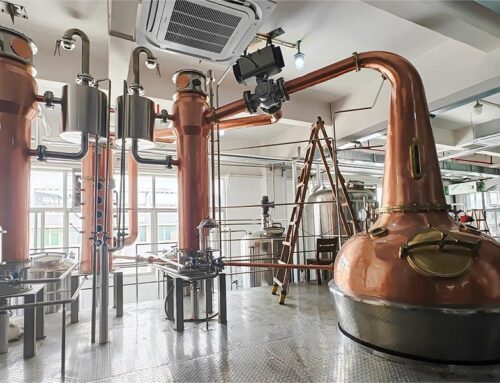
At its core, Pot distillation is a cyclical process. You load the still with wash, heat it, separate the heads, hearts, and tails, empty it, clean the still, and start over. This method is self-contained, with each run acting as a discrete operation.
Continuous distillation, however, operates on a constant flow basis. Wash is fed continuously into the system, steam drives separation, and alcohol is continuously concentrated and drawn off in real-time. There’s no need for the repeated shutdowns and resets that define Pot distillation. Instead, the process runs smoothly, 24/7, with minimal interruptions.
Efficiency does not mean lower quality. In fact, continuous systems can produce extremely pure, stable spirits—provided the operator understands how to manage reflux, draw-off points, and impurity removal.
How a Continuous Still Works
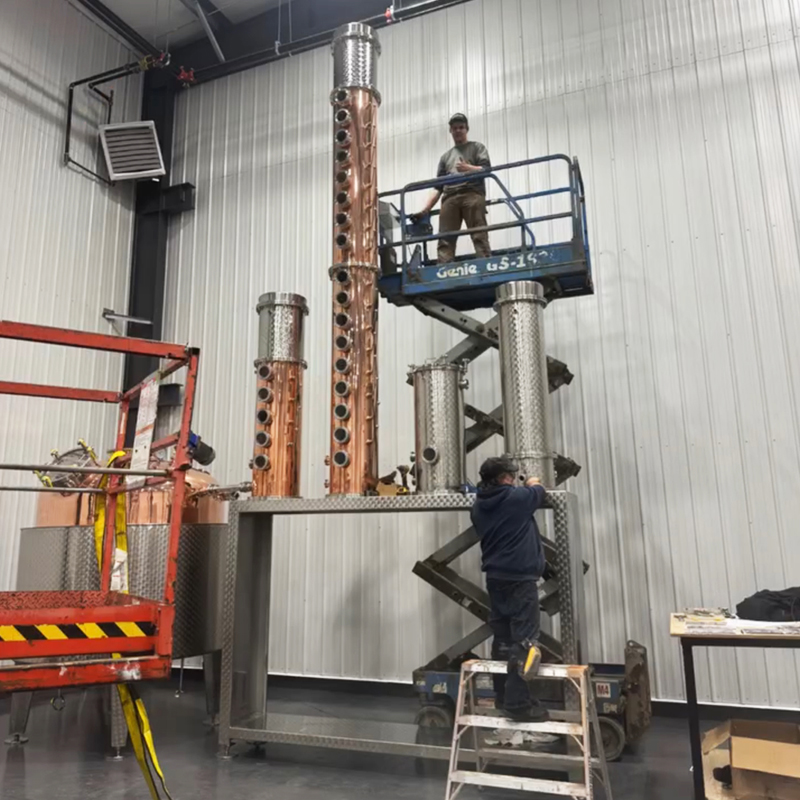
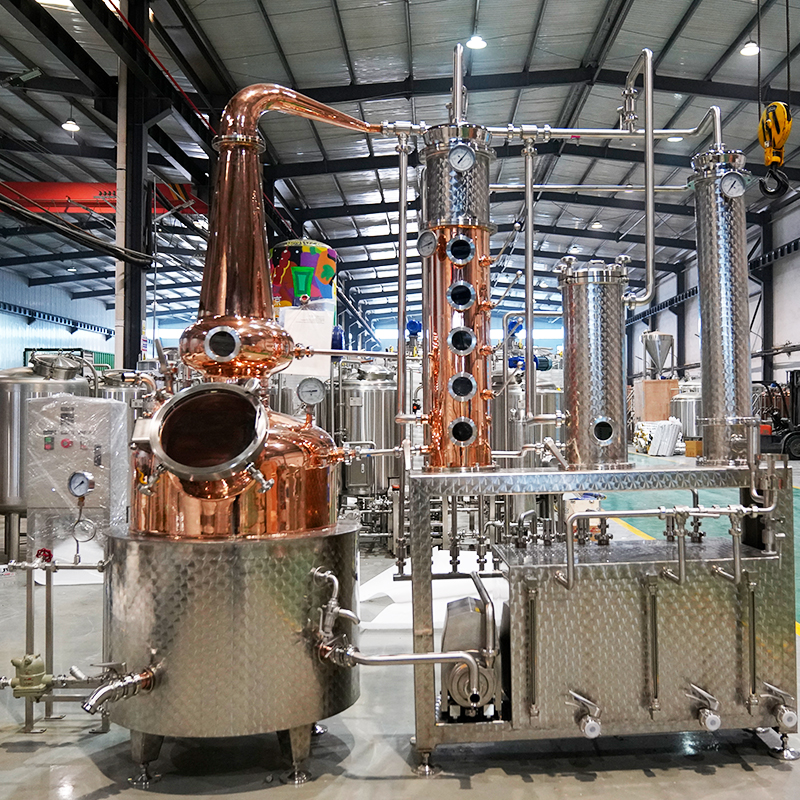
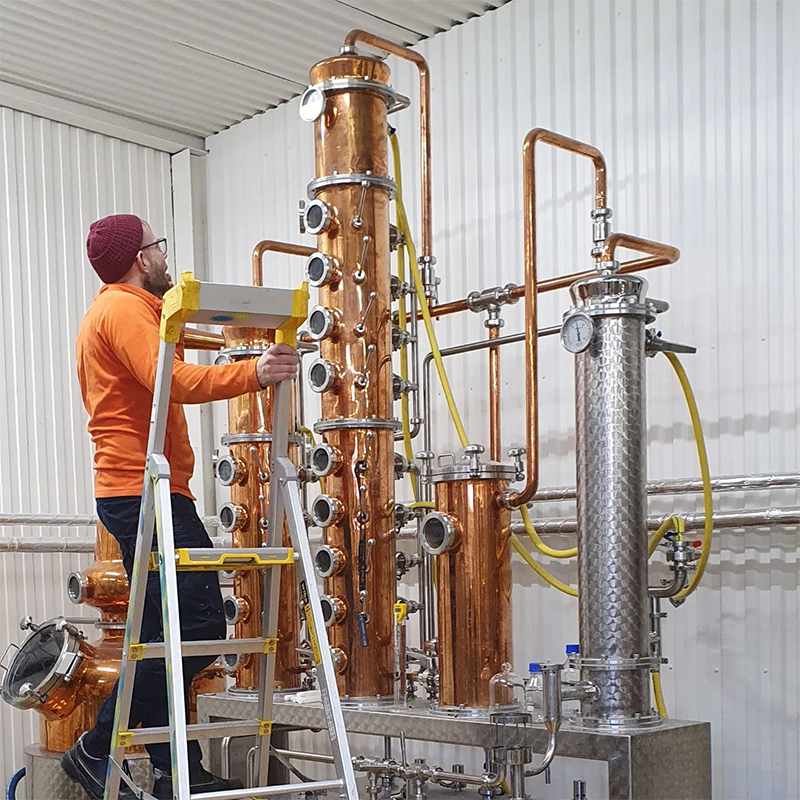
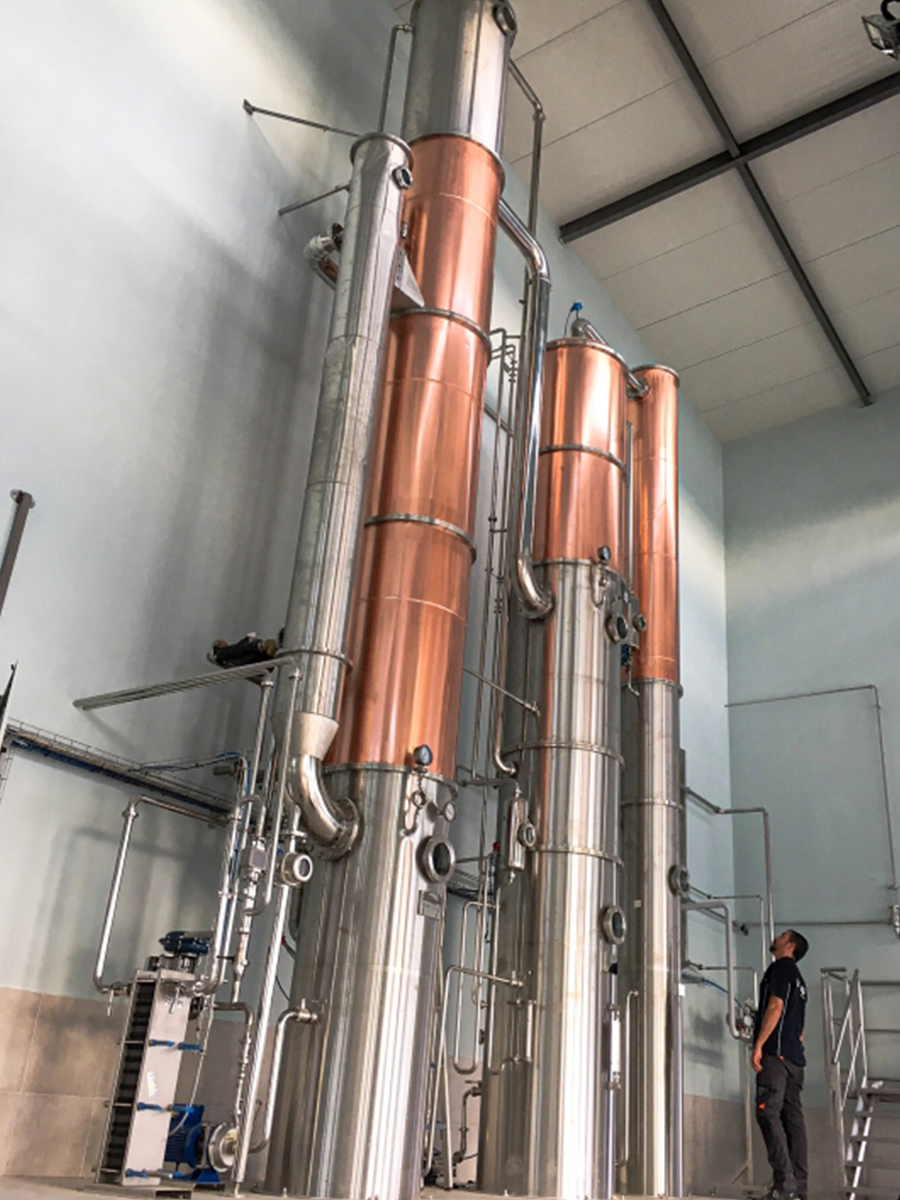
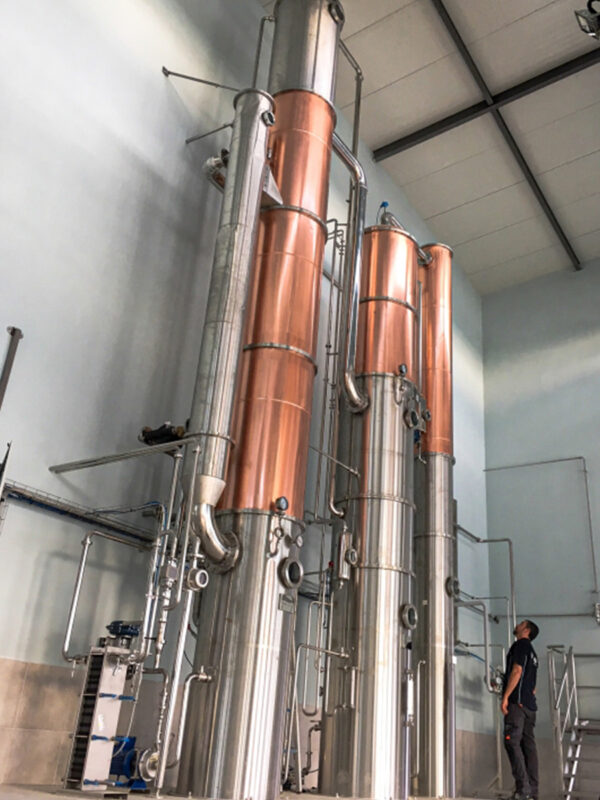
Most continuous distillation systems are built around two core sections: a stripping column and a rectifying column.
The Stripping Column
Wash enters the top of the stripping column and flows downward through a series of trays. Steam is introduced from the bottom. As vapor and liquid meet, ethanol and other volatile compounds vaporize and rise up, while heavier components remain in the descending liquid, exiting at the bottom. The role of the stripping column is simple but vital: efficiently separate the alcohol from the wash.
The Rectifying Column
The alcohol-rich vapor from the stripping column enters the rectifying column, where it undergoes repeated condensation and re-evaporation across additional trays. As the vapor rises, the alcohol concentration increases. By the time the vapor reaches the top of the column, it typically measures between 92% and 96% ABV, depending on the system design and operational settings.
In the rectifying column, heavier fractions accumulate and are drawn off at different points. Unlike in batch distillation, where cuts are made manually, continuous systems remove fusel oils and other unwanted compounds via dedicated draw-off points. This ongoing separation ensures that the spirit is continuously purified without the need for periodic cuts.
Tray Design: The Heart of Efficiency
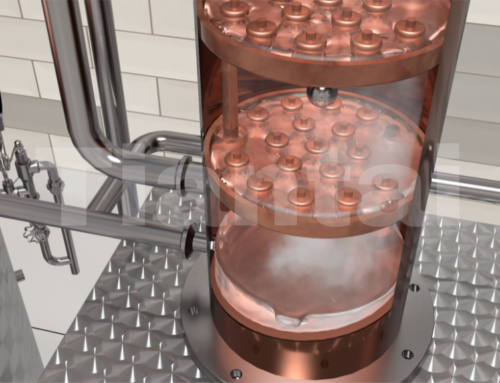
The true efficiency of a continuous distillation system is determined less by the height of the columns and more by the internal tray design. There are several types of trays commonly used in continuous stills:
Sieve Trays
Sieve trays are simple, perforated plates that allow vapor to bubble through liquid.
Strengths: Economical, low resistance to vapor flow, and suitable for operations where extreme rectification isn’t required.
Bubble Cap Trays
Bubble Cap trays feature risers and caps that disperse vapor evenly into the liquid layer.
Strengths: Excellent vapor distribution, stable performance even under fluctuating loads, and effective for foaming liquids.
Valve Trays
Valve trays feature movable valves that adjust to changes in vapor flow, optimizing vapor-liquid contact.
Strengths: Greater flexibility, improved efficiency, and better operational control. They are often used in modern continuous systems where operating conditions can vary.
Each tray type offers a tradeoff in cost, complexity, and performance, but the right choice depends on the specific needs of the distillery.
Continuous Distillation Excels
Continuous systems shine in the production of:
· Vodka and other high-purity spirits
· Grain whisky
· Large-scale neutral alcohol
Because the system effectively performs multiple theoretical distillations in a single pass, it is highly efficient at producing high-ABV, clean spirit.
If you’re looking to build your own distillery, from designing and installing continuous distillation systems to providing ongoing support for optimal performance. With Tiantai expertise, you can access state-of-the-art distillation equipment that balances precision, efficiency, and craftsmanship.