How master distillers use compound classification to perfect their liquor?
Every bottle of premium whiskey, rum, or vodka represents a delicate balancing act. Distillation isn’t merely about separating alcohol from water—it’s an intricate process of selecting which flavor compounds to embrace and which to leave behind. Understanding these “classes of distillation compounds” separates artisanal producers from mass-market operations.
When fermented wash enters a still, it carries dozens, sometimes hundreds, of distinct chemical species. Each has unique boiling points, volatility characteristics, and sensory impacts. Master distillers don’t just heat and hope—they engineer precise separation through professional-grade distillation equipment designed for compound-specific control.
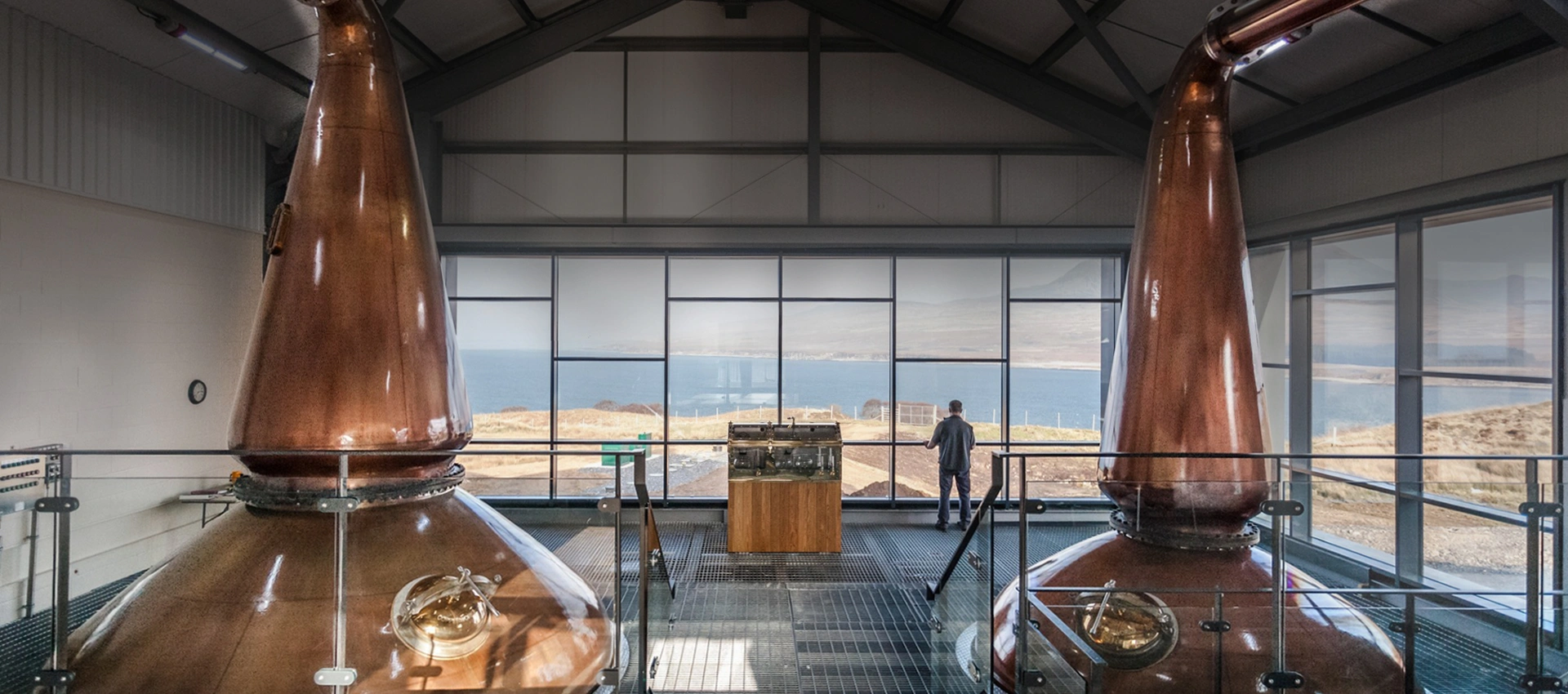
The Foundation: Ethanol and Water
In distillation science, two reference points guide every decision:
Ethanol – This is your target. The compound you’re actively enriching through distillation. Its volatility makes it relatively easy to concentrate, but purity without character creates bland spirits.
Water – The compound you’re excluding. While seemingly simple, water’s non-ideal behavior in ethanol solutions creates complex interactions that demand sophisticated temperature-controlled still systems.
This water /ethanol framework governs everything from pot still design to continuous column configuration. The space between these markers contains the true art of distillation.
Heads: Capturing Fruity Complexity
“Heads” are compounds more volatile than ethanol—meaning they vaporize first during distillation. These include:
- Acetaldehyde (20.2°C) – Sharp, pungent, overwhelming in concentration
- Acetone (56.1°C) – Solvent-like, harsh
- Methanol (64.7°C) – Toxic in quantity, carefully monitored
- Ethyl acetate (77.1°C) – Fruity, wine-like, desirable in trace amounts
The challenge? Some heads contribute beautiful fruity, floral notes that define exceptional spirits. Others are outright toxic or create off-putting solvent characteristics. The difference between a “heads cut” that enhances vs. one that poisons lies in precision distillation monitoring equipment.
Modern Solutions for Heads Management
Traditional distillation relied on intuition and sensory evaluation. Today’s leading distilleries combine art with advanced analytical technology:
- In-line refractometers tracking real-time composition shifts
- Automated fraction collection systems with programmable cut points
- Sensory validation protocols integrated with laboratory analysis
These tools don’t replace the master distiller’s nose—they empower more consistent, safer decision-making. For craft producers scaling operations, automated heads collection systems ensure that first-run volatility never compromises product safety.
Fusels: The Body Builders of Distilled Spirits
Between ethanol and water lies the “Intermediate Key” zone—home to fusel compounds. These higher-order alcohols and fatty acid esters create the mouthfeel, warmth, and complexity that distinguish memorable spirits from forgettable ones.
Common fusel contributors include:
- Isopropyl alcohol (82.5°C)
- 1-Propanol (97°C)
- n-Butanol (117.7°C)
- Active-amyl alcohol (128.7°C)
- Isoamyl alcohol (131.2°C)
At 100-1,000 mg/L concentrations, fusels deliver that satisfying fullness and rounded character. Too little? Your spirit tastes thin and “hot.” Too much? Harsh, solvent-like, unpleasant.
The Equipment Difference
Fusel management requires understanding their unique physical properties. These compounds are typically immiscible with water and only slightly miscible in ethanol solutions. Large carbon backbones—such as those in active amyl alcohol—form substantial Van der Waals interactions, making water a poor solvent for them.
This chemistry demands specialized still configurations:
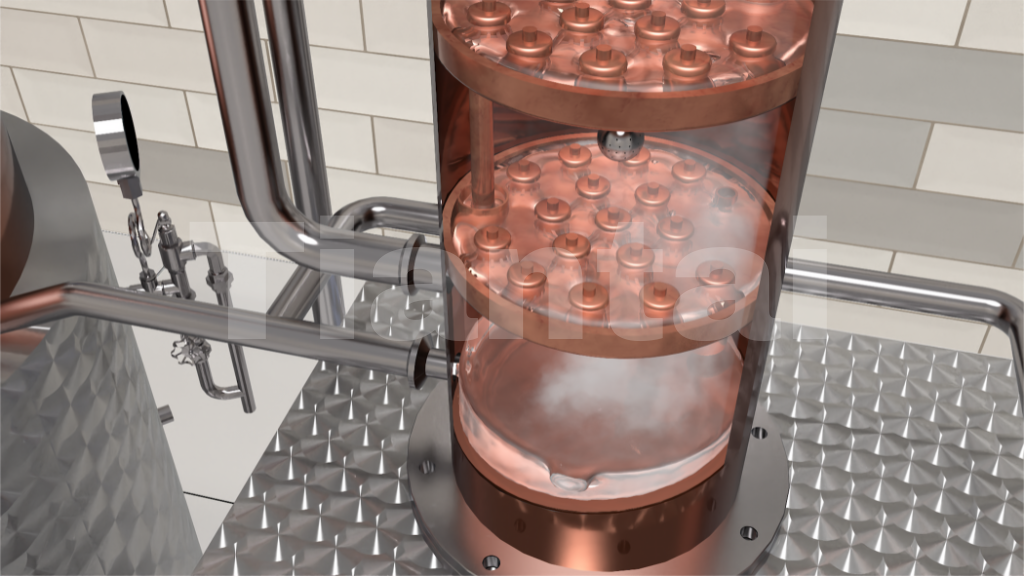
- Column stills with optimized plate spacing for fusel concentration control
- Side-draw capabilities for targeted fusel extraction
- Condenser systems with precise temperature gradients
- Continuous distillation units engineered for organic phase management
Distilleries using generic equipment often struggle with the accumulation of “fusel oil”, creating operational inefficiencies and inconsistent products. Purpose-built distillation systems transform this challenge into a competitive advantage.
Heavy Hitters: Fatty Acid Esters and Beyond
Compounds less volatile than water—”Heavier than Ethanol ” components—include fatty acid esters present in trace amounts. These heavy molecules often carry the most nuanced, desirable flavors: tropical fruit notes, floral aromatics, rich depth.
The paradox? In pure form, many have higher boiling points than water. Yet in ethanol-water systems, they behave as more volatile species, appearing in the distillate through complex azeotropic interactions.
Capturing these compounds without dragging along excessive water requires advanced still technology:
- Vacuum distillation capabilities for low-temperature extraction
- Hybrid pot-column systems combining batch artistry with continuous efficiency
- Multi-pressure distillation trains for component-specific recovery
From Theory to Production: Your Distillation Infrastructure
Understanding compound classes intellectually is step one. Executing that knowledge profitably requires equipment that translates chemistry into commerce.
Essential System Components
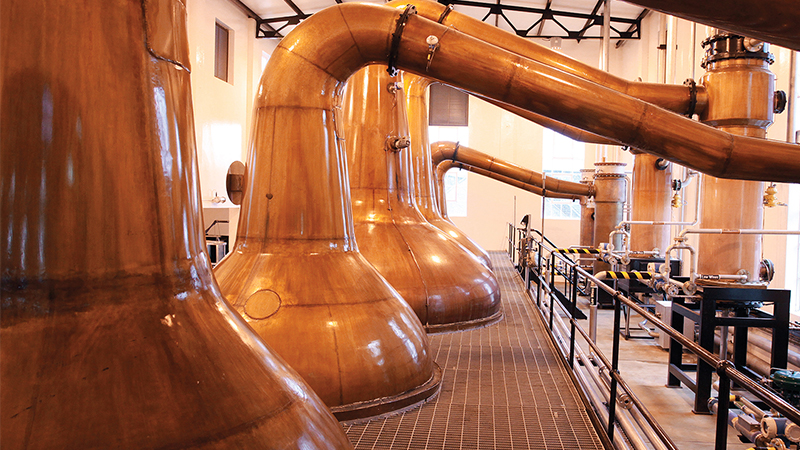
Analysis and Monitoring
- Gas chromatography systems for detailed compound profiling
- Near-infrared spectroscopy for rapid in-process testing
- Automated sampling systems integrated with process control
Primary Distillation
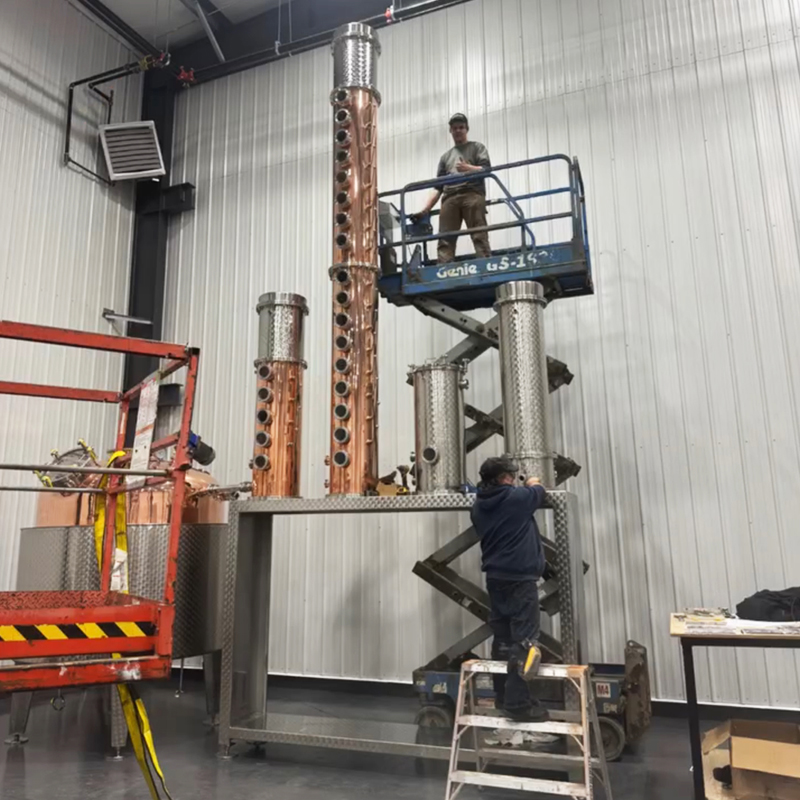
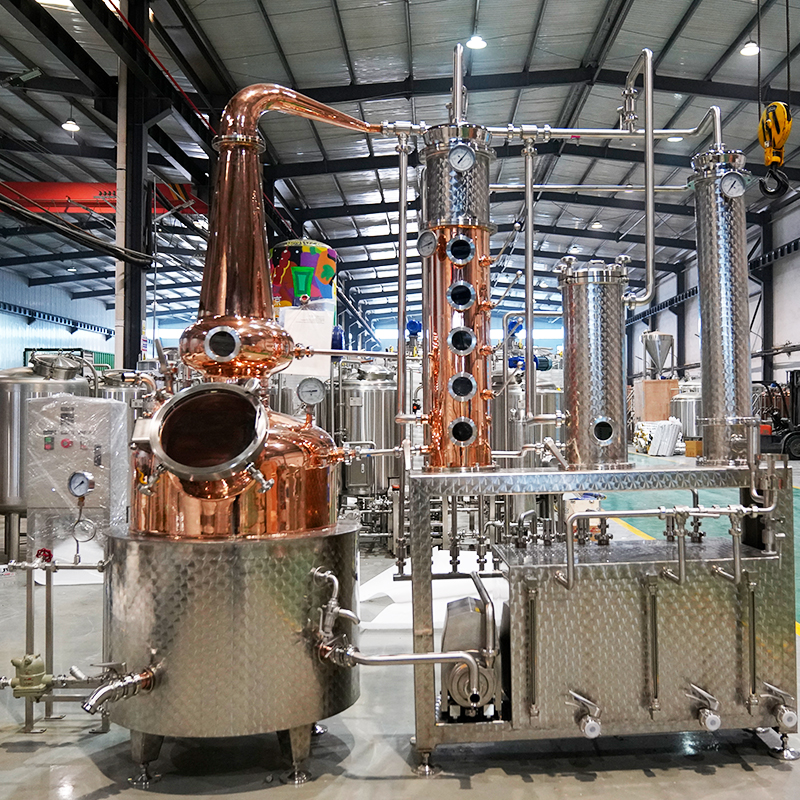
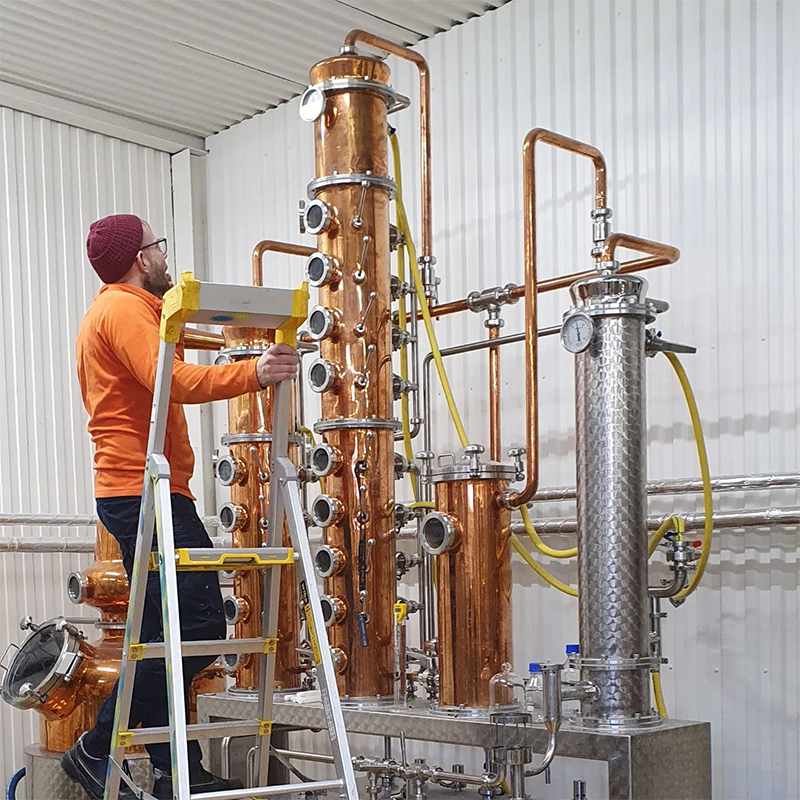
- Copper pot stills with optimized lyne arm angles
- Continuous column stills with variable reflux ratio control
- Hybrid systems combining both approaches
Fractionation and Collection
- Automated heads/hearts/tails separation systems
- Programmable logic controllers with recipe management
- Sanitary collection vessels with integrated cooling
Finishing and Polishing
- Secondary distillation units for purification
- Filtration systems compatible with volatile aromatics
- Blending tanks with precision agitation
Whether you’re launching a new craft distillery, expanding production capacity, or refining existing operations, your equipment choices determine which compound classes you can effectively manage—and which flavor possibilities remain unlocked.
Our distillery engineering team specializes in translating your product vision into equipment specifications. From pot still craftsmanship to continuous column optimization, we provide the tools that transform distillation science into sensory art. Contact our distillation specialists to design a system that captures the heads, hearts, and character your spirits deserve.