Starting a Whiskey Distillery: What to Plan Before Buying Equipment
Starting a whiskey distillery often looks simpler on paper than it is in practice.
There is a still, a mash system, some fermenters, a few storage tanks, and eventually a bottling line. But once a project moves from a small test batch to commercial production, the equipment itself becomes only one part of the investment.
The building, utilities, grain handling, fermentation capacity, waste management, barrel storage, packaging, labor, and working capital all become part of the same equation.
This is especially true for a grain-to-glass whiskey distillery. The business has to produce a consistent spirit today while carrying maturing inventory for months or years before that whiskey becomes a finished product.
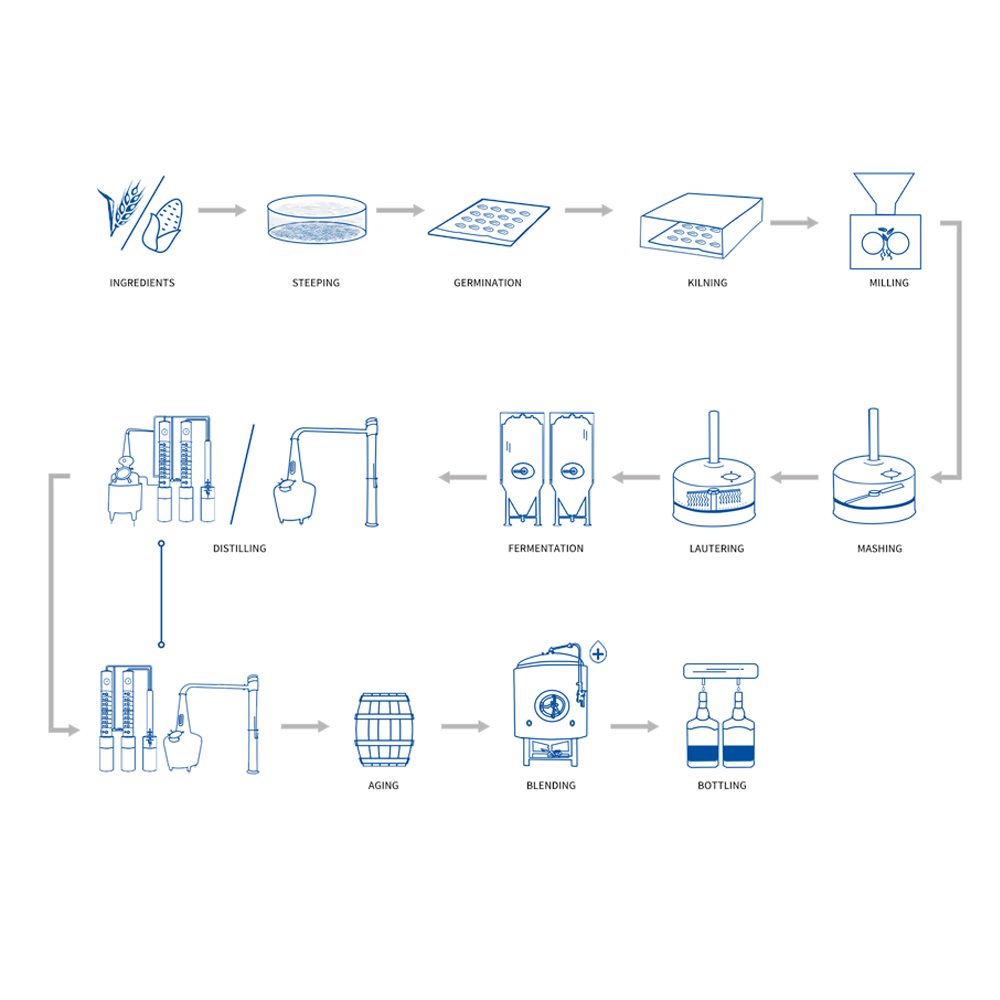
The better approach is to design the distillery around the complete production process rather than starting with a still size and filling in the rest later.

Decide what you are actually going to produce
“Whiskey distillery” is not a sufficient process specification.
A malt whisky plant, a corn-based whiskey operation, a high-rye whiskey distillery, and a facility producing several spirit categories can have very different equipment requirements.
Start by defining the raw materials and intended production method.
Will the distillery process malted barley only, or a combination of rye, corn, wheat, and malted grains? Will the mash be separated before fermentation, or will solids remain in the fermented wash? Will distillation be carried out in a ポットスチル, a combination of stripping and spirit stills, or a hybrid configuration? These decisions affect the entire upstream system.
For example, a distillery processing significant quantities of unmalted grain may require different milling and mashing arrangements than a malt-based whisky plant. The grain characteristics also influence slurry viscosity, heating requirements, pumping, agitation, and how the spent mash is handled.
It is therefore useful to establish a process flow before requesting equipment quotations.
Grain handling is more important than it looks
Commercial whiskey production begins long before the still.
Grain receiving, storage, cleaning, destoning, milling, weighing, conveying, and dust control all affect production reliability.
For a small startup, some of these operations can be relatively simple. As throughput increases, however, manual handling quickly becomes a bottleneck.
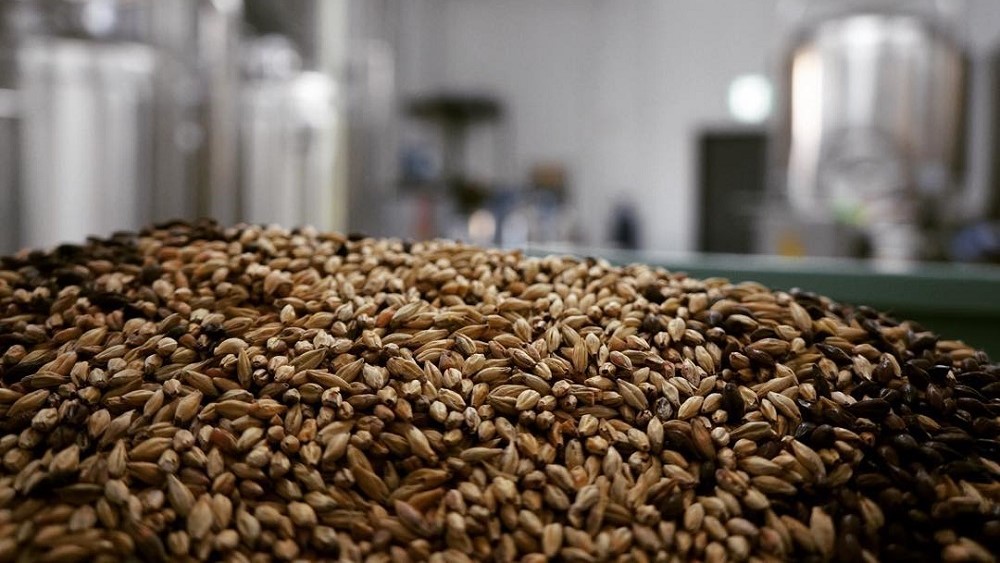
Select the mill based on the raw materials and required grist size, rather than treating it as generic equipment. Malted barley may use a roller mill configuration, while corn, rye, or wheat may require a hammer mill or another milling arrangement capable of producing the desired particle distribution.
Rye deserves particular attention. High proportions of rye can produce unusually viscous mashes. Recent whisky research has confirmed that increasing rye content can raise wort and wash viscosity and create challenges in filtration and fluid handling. Rye also contains significant levels of soluble non-starch polysaccharides, including arabinoxylans, that contribute to these rheological properties.
In a commercial plant, this is not merely a recipe issue.
It can affect agitator sizing, pump selection, pipe diameter, heat transfer, mash discharge, and the design of the fermentation and distillation feed system.
A recipe that works with a small home or pilot setup may therefore require a different process arrangement at commercial scale.
Mashing needs to be designed around the grain bill
The mash system is where the characteristics of the selected grains begin to translate into a process requirement.
A typical grain whiskey process may include hot liquor preparation, grain dosing, mash mixing, heating or temperature staging, enzymatic conversion, and transfer to fermentation.
The required configuration depends on whether the process uses primarily malted grain, unmalted cereal, or a combination.
With high-rye formulations, viscosity deserves particular consideration. A thick mash can reduce circulation and make heat distribution less uniform. Poorly designed transfer lines or undersized pumps can turn an otherwise workable recipe into an operational problem.
Process strategy can include grain formulation, milling specification, temperature profile, mash water ratio, enzyme management where permitted and appropriate, and mechanical agitation. Enzymatic treatment has been studied as a way to reduce viscosity associated with rye-derived non-starch polysaccharides, although the acceptable process aids and production methods depend on the style and applicable regulations.
This is one reason a distillery equipment supplier should understand the recipe instead of quoting a mash tank simply from the desired batch volume.

Fermentation capacity controls more than fermentation
Fermentation is one of the places where production schedules start to become measurable.
The distillery still cannot operate continuously at that theoretical rate unless enough fermented wash is available when it is needed. This creates a relationship between mash production, fermentation volume, number of fermenters, fermentation duration, and still operating hours.
If there are too few fermenters, the still may sit idle.
If there are too many, the capital investment and cleaning workload may become unnecessarily high. The design also needs to consider cooling capacity, headspace, agitation where required, cleaning access, discharge arrangements, and transfer piping.
For a new distillery, several smaller fermentation vessels can sometimes provide more useful operational flexibility than a single very large tank. Different batches can be scheduled independently, and process changes can be tested without affecting the entire fermentation program.
Tiantai’s distillery systems use customized fermenters in different layouts, including indoor, stacked, outdoor, and open-top configurations, according to the process and available space.
Choose the still from the spirit you want, not the other way around
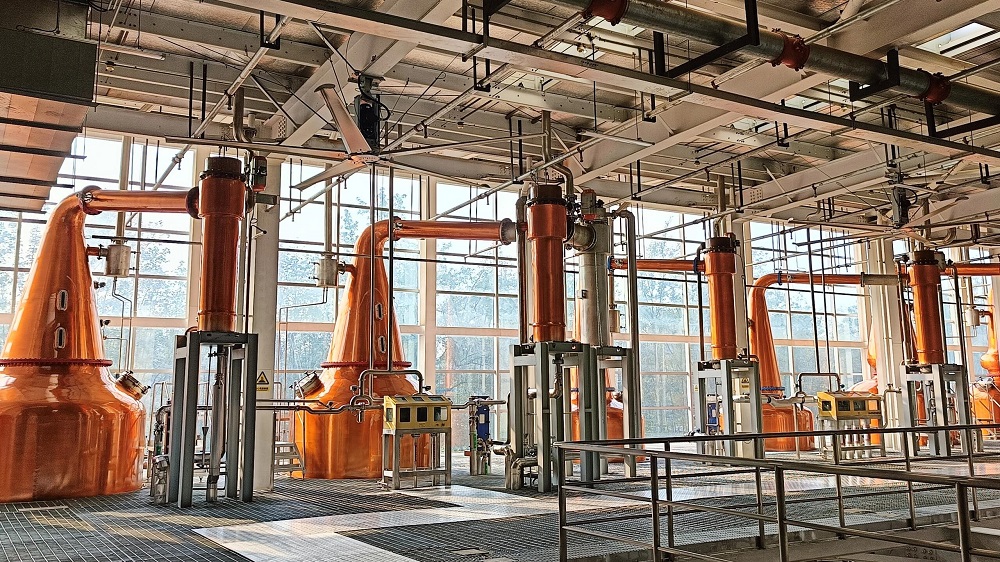
The still is usually the most visible piece of distillery equipment, but purchasing one should come after the production process has been defined.
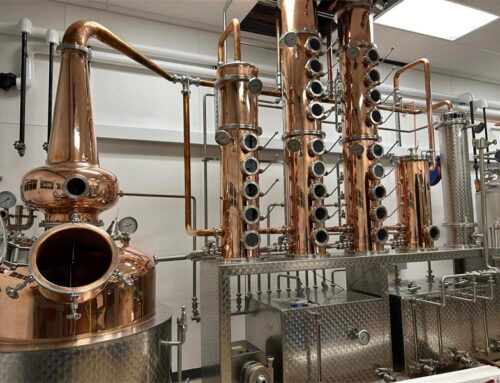
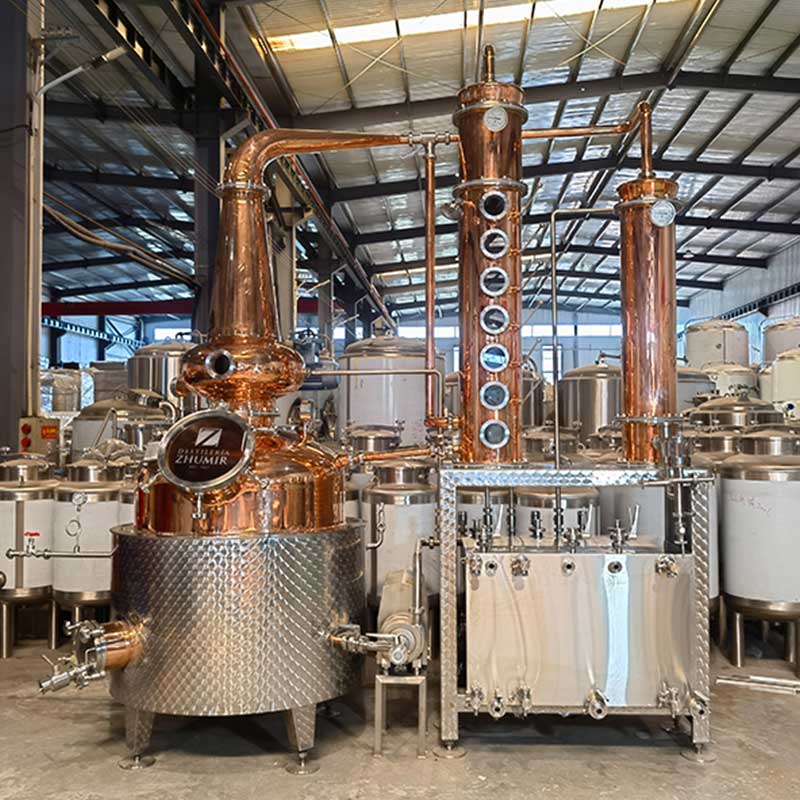
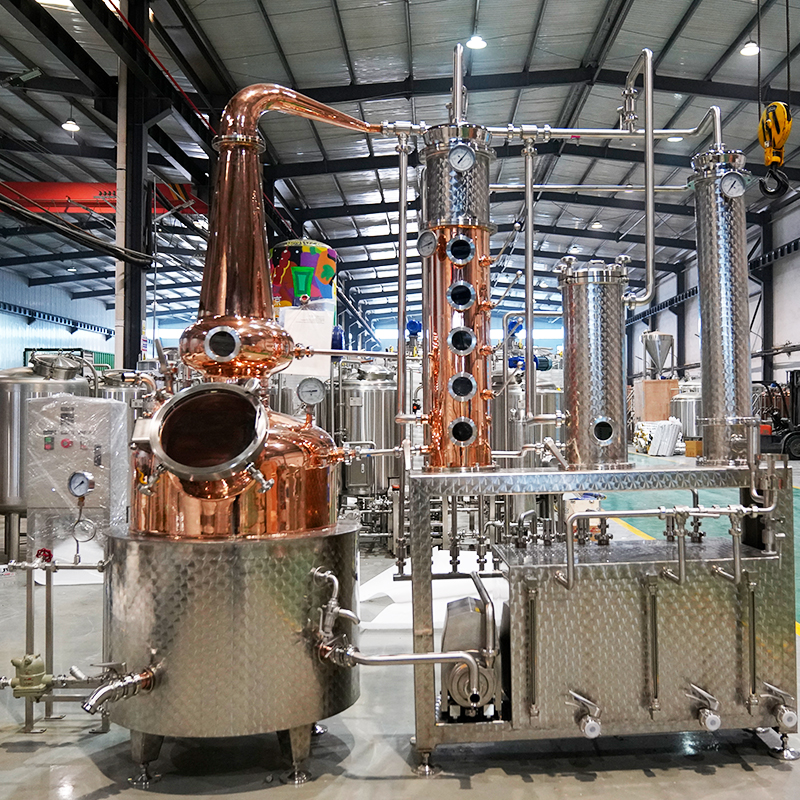
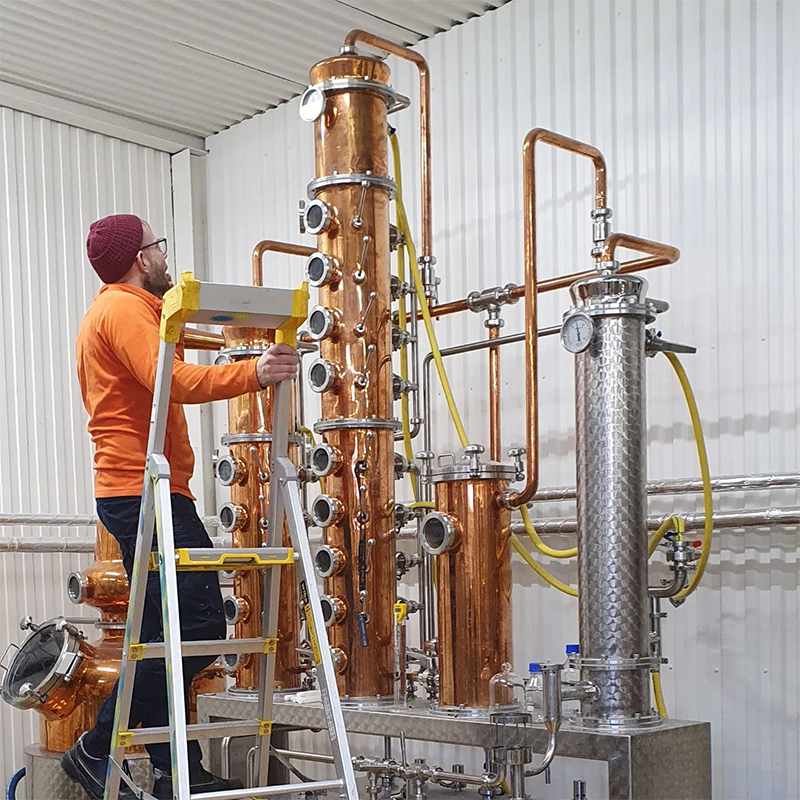
ポット・スチル are commonly selected where batch distillation and retention of flavor compounds are important. Column stills provide continuous operation and higher levels of rectification. Hybrid systems offer a middle ground for craft distilleries that need greater flexibility without building completely separate distillation systems.
For whiskey, the still design can influence the amount of reflux, copper contact, vapor path, and the character of the distillate.
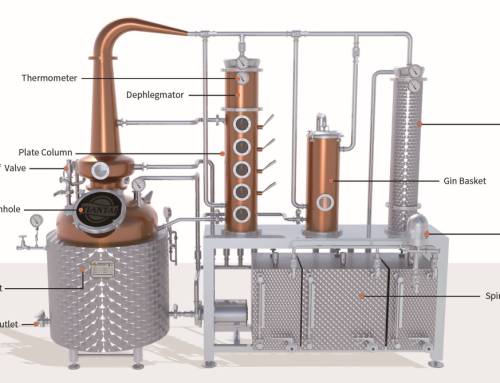
Even apparently small details can be part of the process design. Helmet geometry, lyne arm configuration, column section, condenser arrangement, and optional doublers or thumpers can all be configured according to the intended operation.
Tiantai builds customized pot, hybrid, and column stills and can combine a ポットスチル with additional column sections, doublers, or other modules where the process calls for them. Bypass arrangements can also allow different vapor paths on hybrid systems.
For a startup planning to produce more than one spirit category, that flexibility can be more valuable than simply increasing still capacity.
Do not forget the equipment around the still
A still does not operate by itself. The heating system, boiler or other heat source, condenser cooling, pumps, electrical controls, process water, compressed air where applicable, and drainage system all influence actual distillery output.
This is one of the areas where new operators can underestimate the project.
A steam-heated distillery, for example, needs to account for the boiler and associated steam distribution, condensate handling, water treatment, and installation. A water-cooled condenser requires a dependable cooling-water strategy. A closed-loop system can reduce freshwater consumption but introduces its own chiller capacity, electrical load, heat rejection, maintenance, and installation requirements.
The important calculation is therefore not simply:
How large is the still?
それは:
Can the entire utility system support the still at the intended operating schedule?
Tiantai evaluates heating options according to still size and process, with steam, electric, direct fire, and water or oil bath systems available depending on the model and application. Utility requirements are established as part of the project design rather than treated as an afterthought.
The building is part of the distillery equipment package
A distillery can have excellent production equipment and still be a difficult plant to operate if the building was not prepared for the process.
Floor loading, drainage, ventilation, access for equipment installation, raw-material movement, barrel storage, finished-goods storage, electrical service, heating fuel, cooling systems, and wastewater handling all have to be considered.
Alcohol processing also creates fire and ventilation considerations that vary by jurisdiction and building classification. For example, current fire-safety requirements in New York City specifically address exhaust ventilation and explosion-control measures in areas where flammable vapor hazards may occur. Other jurisdictions use their own codes and classifications, so the final design needs to be reviewed against local requirements rather than copied from another distillery.
This is why the facility layout should be developed together with the process flow.
The position of the mash system affects grain movement. Fermenter placement affects transfer distances and cleaning. Still placement affects steam, cooling water, drainage, and safety zones. Barrel storage affects both logistics and working capital.
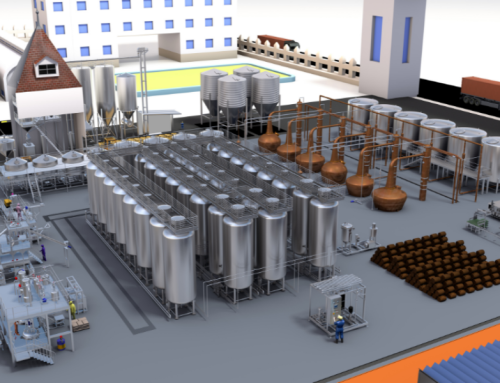
A 2D or 3D layout is therefore not just a drawing for placing equipment. It is a way of testing whether the entire production system will work inside the building.
Wastewater and cleaning need a plan from the beginning
Whiskey production consumes significant amounts of water, and not all of that water leaves the facility as a clean utility stream.
Spent mash, wash water, CIP solutions, bottle-rinsing water, equipment drainage, and other process effluent need to be managed according to local requirements.
CIP should also be considered before the piping is finalized.
A commercial plant with sanitary fittings and appropriately routed cleaning connections can reduce manual cleaning work and improve consistency between batches. At the same time, the CIP system must be matched to the actual tank, piping, still, and process design.
Tiantai can integrate CIP systems and sanitary connections into distillery projects where required, alongside the main process equipment.

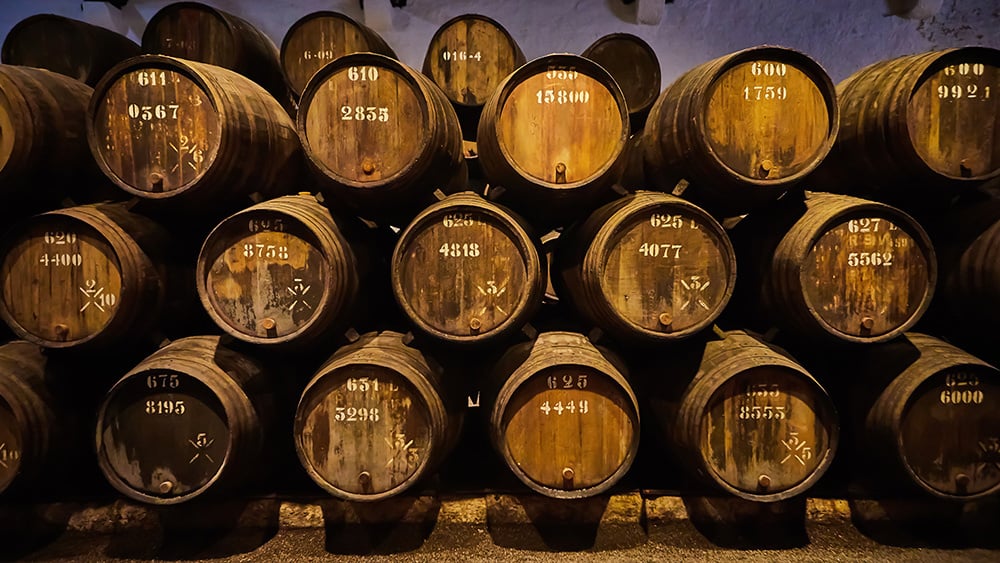
Barrel storage changes the financial model
This is probably one of the most important points for a new whiskey distillery.
The distillery begins spending money on grain, yeast, energy, labor, barrels, storage, insurance, maintenance, and packaging before a mature whiskey can be sold.
This means production capacity cannot be considered independently from maturation capacity.
If the distillery plans to fill a certain number of barrels every month, it needs enough production capacity to maintain that filling schedule, enough storage space for the growing inventory, and sufficient working capital to support the period between distillation and finished-product sales.
Operators participating in the original discussion emphasized this repeatedly: for a grain-to-glass rye or whiskey business, the maturation period can become one of the largest practical constraints because production continues while the inventory remains tied up in barrels.
The exact financial model varies enormously by country, product positioning, land and building costs, barrel program, labor costs, and sales channel. There is no useful universal “startup cost” for a whiskey distillery.
What can be planned is the relationship between production output and cash tied up in inventory.
Consider what pays the bills while whiskey ages
A distillery may have a strong long-term whiskey program and still need products that reach the market sooner.
Depending on local regulations and the company’s business model, this could include gin, vodka, unaged whiskey, white rum, liqueurs, or other spirits. Some businesses may also work with sourced spirits, blending, contract production, or other activities rather than relying entirely on aged house whiskey.
This is not a reason to build an unfocused distillery. It is a reason to consider whether the equipment can support more than one commercial route.
A ハイブリッド・スチル, for example, may be configured to operate with different levels of rectification. Additional blending and proofing tanks can make it easier to manage different products. Separate fermentation vessels can provide greater scheduling flexibility.
The right solution depends on the business plan, but the question should be asked before the equipment is ordered.
Equipment is only as good as the people operating it
Commercial distilling has a significant practical learning curve.
Running a small still is not the same as managing a production system where several hundred or several thousand liters move through milling, mashing, fermentation, distillation, cleaning, storage, and packaging on a repeating schedule.
At commercial scale, operators need to understand process troubleshooting as well as equipment operation.
- What happens when a mash becomes too viscous?
- What happens when a fermentation finishes late?
- What happens when the condenser cannot remove heat at the expected rate?
- What happens when a pump cannot handle the solids content?
- How does the production schedule change when a batch has to be held back?
These are production-management questions, not simply distillation questions.
Experienced operators and consultants can shorten the learning curve, but a good equipment supplier should also provide documentation, commissioning assistance, training, and technical support.
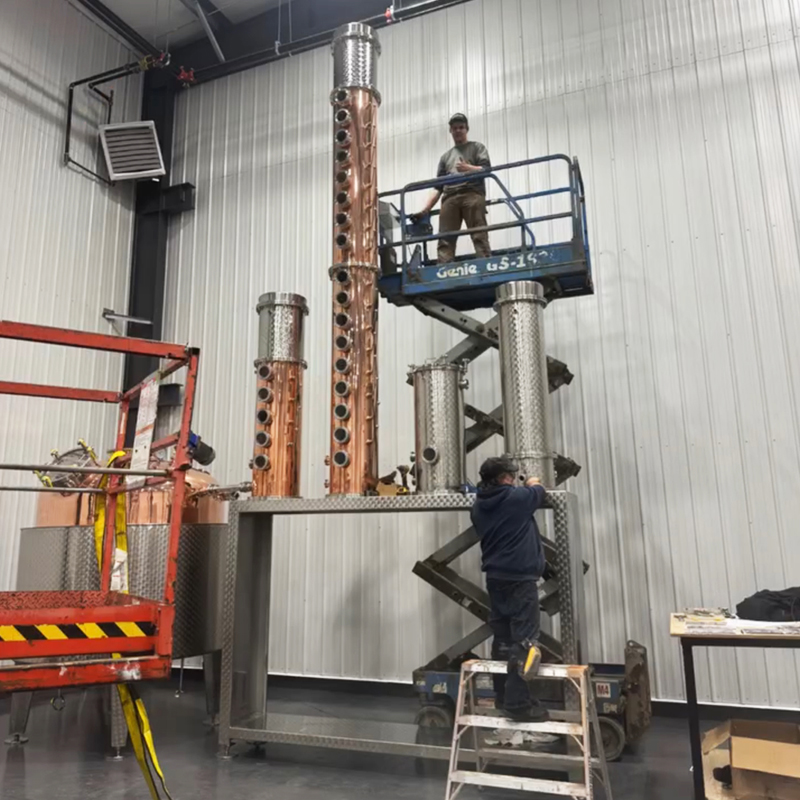
Tiantai’s project scope includes installation, commissioning, operator training, automation and maintenance support, in addition to equipment manufacturing and process/layout planning.
Choose the equipment supplier as an engineering partner
Price is obviously part of a distillery equipment decision, but the lowest equipment quotation does not necessarily represent the lowest project cost.
A more useful comparison includes:
Can the supplier understand the intended mash and fermentation process?
Can the supplier provide a complete process flow and equipment list?
Are the utility requirements defined?
Can the equipment fit the actual building?
Are tanks, pumps, piping, controls, CIP, and distillation systems designed to work together?
Who handles installation and commissioning?
What happens when the plant needs to expand?
These questions become particularly important when buying equipment internationally.
Tiantai combines customized process design with 2D/3D layouts, equipment manufacturing, testing, installation, commissioning, and training. Its distillery solutions currently cover whiskey, gin, vodka, brandy, rum, tequila, and other spirit applications, with projects ranging from small commercial installations to larger production systems.
Start small, but design for the next stage
“Start small” is useful advice only when the starting plant is designed intelligently.
Buying equipment that is too large can tie up capital and create unnecessary utility and maintenance costs. Buying equipment that is too small can force the operator into excessive batch cycles or require an expensive rebuild after the business gains traction.
The better target is a capacity that matches the initial sales plan while leaving a practical path to expansion.
That might mean reserving space for additional fermenters, planning utility capacity for a second still, installing piping in a way that allows future tanks to be added, or choosing a hybrid system that can handle more than one spirit category.
Expansion does not have to mean buying everything on day one.
It does mean knowing what the second stage will look like before the first stage is built.
A whiskey distillery is a manufacturing plant
The most useful lesson from experienced distillers is that a commercial distillery is not simply a larger version of a hobby setup.
It is a manufacturing operation.
Raw materials have to arrive on schedule. Equipment has to be cleaned and maintained. Fermentation has to fit the production calendar. Utilities have to support the process. Waste has to be handled. Spirit has to be stored and monitored. Barrels occupy space and capital. Finished products need to be packaged, sold, and delivered.
For a whiskey producer, the still is central, but the still is only one part of the plant.
A successful distillery equipment project starts by connecting the product strategy to the process flow, then connecting the process flow to the equipment, utilities, building, and operating schedule.
That is the approach Tiantai uses when developing distillery projects: start with the spirit and production requirements, then engineer the system around them.
Whether the project is a rye whiskey distillery, malt whisky plant, craft spirits facility, or a multi-product distillery, the right equipment is the equipment that fits the process today and leaves a realistic path for the business to grow tomorrow.