How to Select the Right Spirit Still for Your Distillery
Many new entrants to the spirits industry are unsure which type of still suits their distillery, or how still design shapes the final spirit profile. Without clarifying these core points, you risk investing in ill-fitting equipment. Today, from the perspective of an fabricante de equipos, Tiantai shares the core principles of spirit distillation and still design.
Classification of Spirit Stills
Three mainstream still configurations are widely adopted globally:
Alambique
A batch distillation system consisting of a boiling pot, swan neck, and lyne arm leading to the condenser. Pot stills deliver moderate separation without stripping away desirable aromatic compounds. They excel at preserving raw-material flavours and mouthfeel, making them the classic choice for whisky, brandy, rum and flavour-forward spirits.
Column / Coffey Still
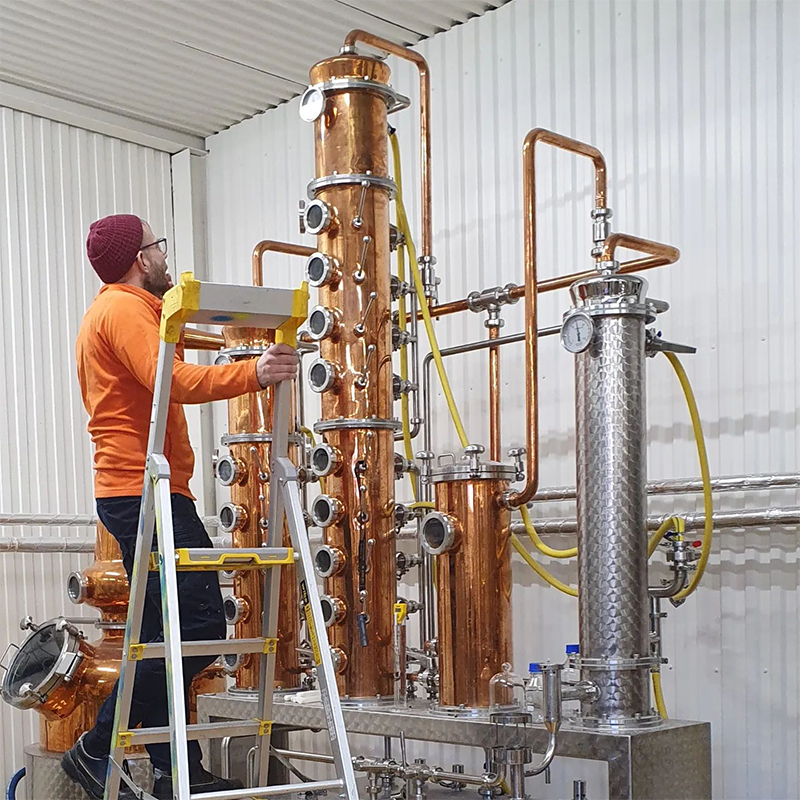
The Coffey still is a twin-column continuous rectification system with high separation efficiency. It runs continuously to produce high-purity neutral spirit. Far higher throughput than pot stills, it is widely used for bulk production of grain whisky and neutral vodka.
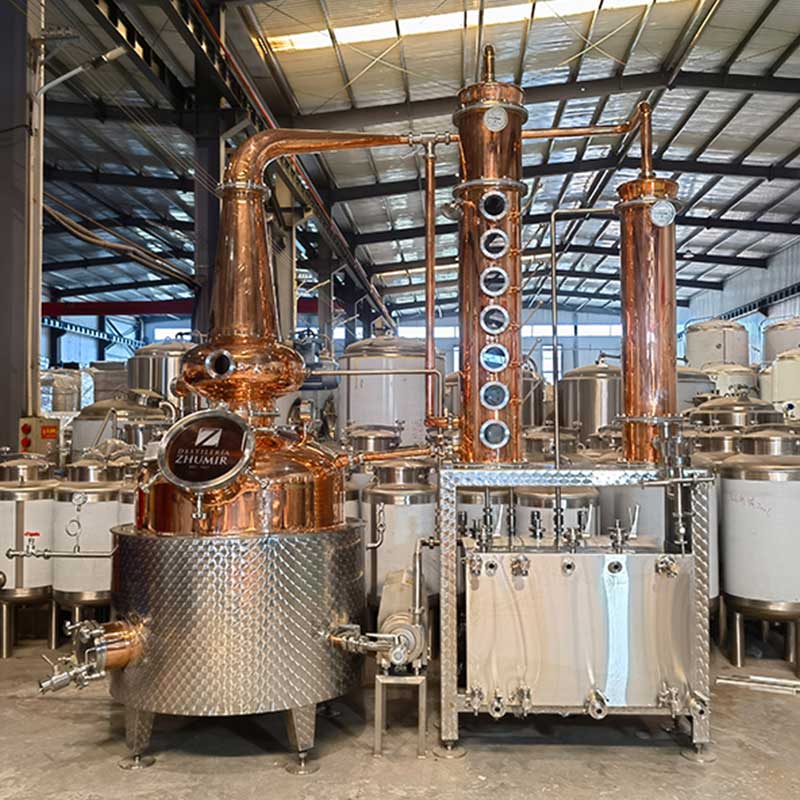
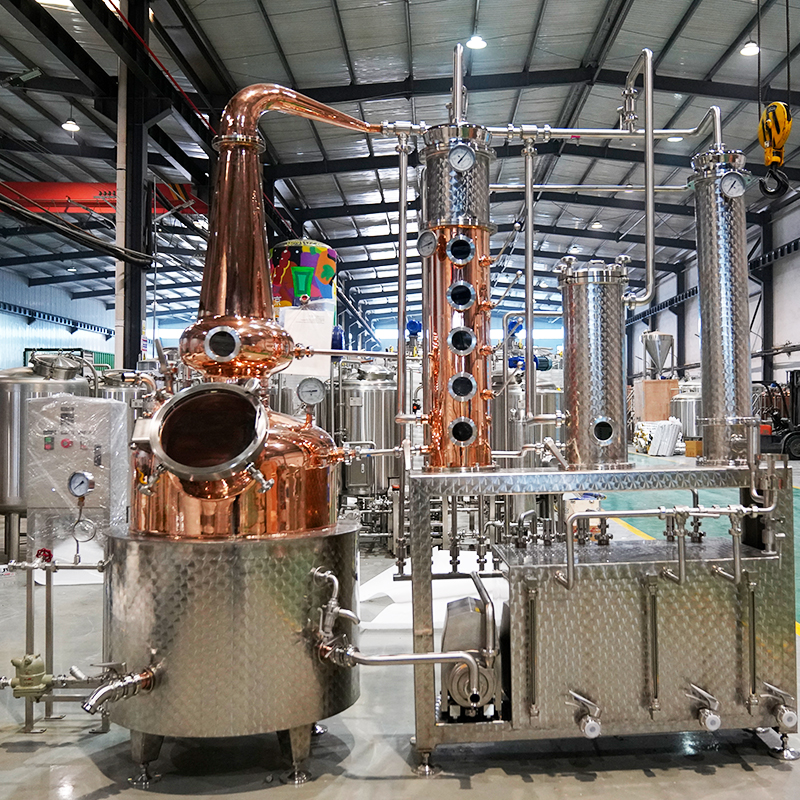
Pot-Column Hybrid Still
This configuration combines a pot still base with a rectification column section. It operates in batch mode with controllable reflux from the column. It retains the rich flavour character from pot distillation while allowing operators to adjust reflux to fine-tune spirit purity and ABV, striking a flexible balance between flavour definition and neutrality.
A common misconception: vodka can only be made in a column still. This is not true. Vodka may be distilled in a pot still to retain subtle grain notes, produced via continuous column distillation for a clean neutral profile, or made in a pot-column hybrid to land at a sweet spot between flavour and purity. Similarly, not all whisky is pot-distilled; grain whisky is typically produced using column stills. There is no universally “best” still — only the one aligned with your product positioning and production workflow.
Still Construction & Key Components
Experienced buyers evaluate engineering details rather than only comparing tank volume and appearance:
Materials
Copper reacts with sulphur compounds in vapour to remove off-notes and refine flavour. Premium pot stills are fabricated primarily from copper. Stainless steel offers structural rigidity and corrosion resistance and is commonly used for jackets, support frames and non-flavour-contact structural parts. In column and hybrid systems, copper trays, copper packing and copper gin baskets perform the same sulphur removal and flavour polishing function.
Core Components
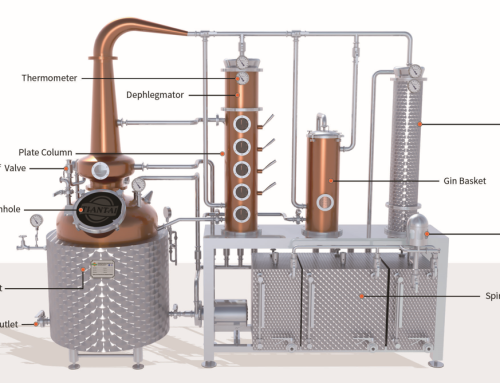
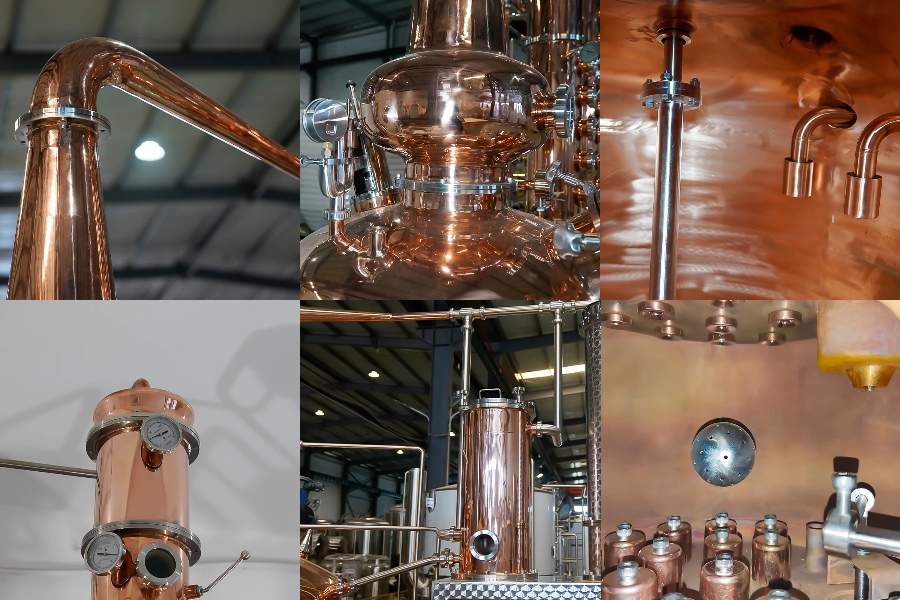
Swan Neck & Lyne Arm: Direct alcohol vapour from the pot to the condenser. Length, internal diameter and angle alter vapour flow and reflux behaviour, directly shaping flavour expression.
Dephlegmator: Partially condenses mixed vapour to regulate reflux ratio. It is critical for tuning separation performance and balancing flavour and final ABV, standard on hybrid and column distillation systems.
Gin Basket: Holds botanicals within the vapour path for vapour infusion, the signature setup for premium gin production.
Bubble Caps / Trays: Installed inside the rectification column to facilitate vapour-liquid contact and fractionate components by boiling point.
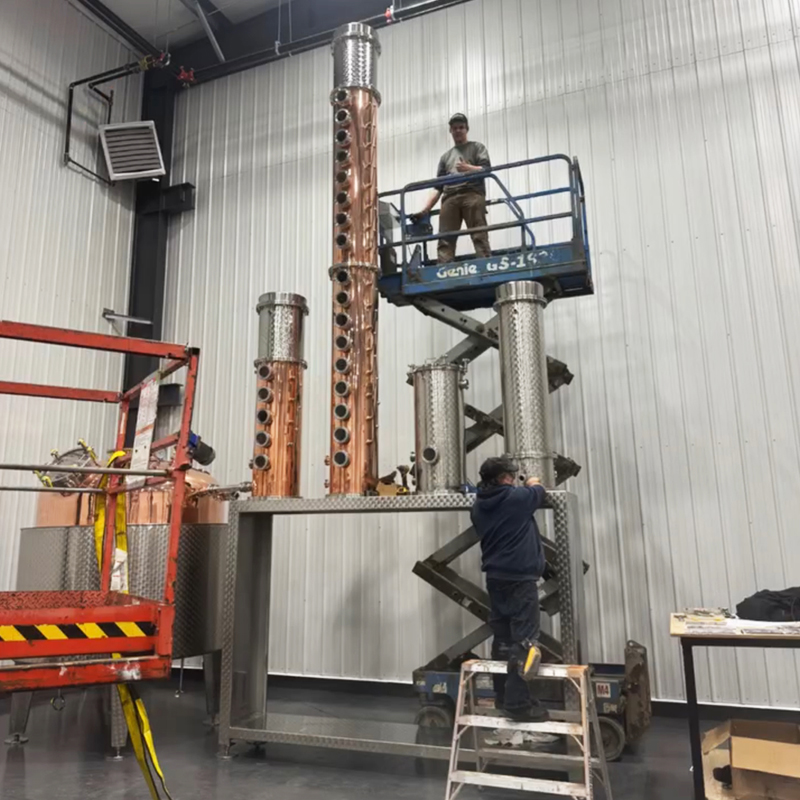
A well-engineered still features modular components that can be customised to match your production recipe.
Process & Equipment Interaction
Reflux ratio, number of trays, vapour flow rate and condenser heat transfer area all govern the cut point for the heart cut. Two stills of identical volume but different internal design can produce distinctly different heart cuts. Distillation is not merely a process to raise alcohol strength; it is fractionation of volatile compounds by boiling point, which forms the foundation of distiller flavour control:
- Heads: Low-boiling compounds including acetaldehyde and light esters distil first.
- Hearts (Core Cut): The balanced, target fraction that forms your finished spirit.
- Tails: High-boiling compounds such as fusel oils and fatty acids distill last.
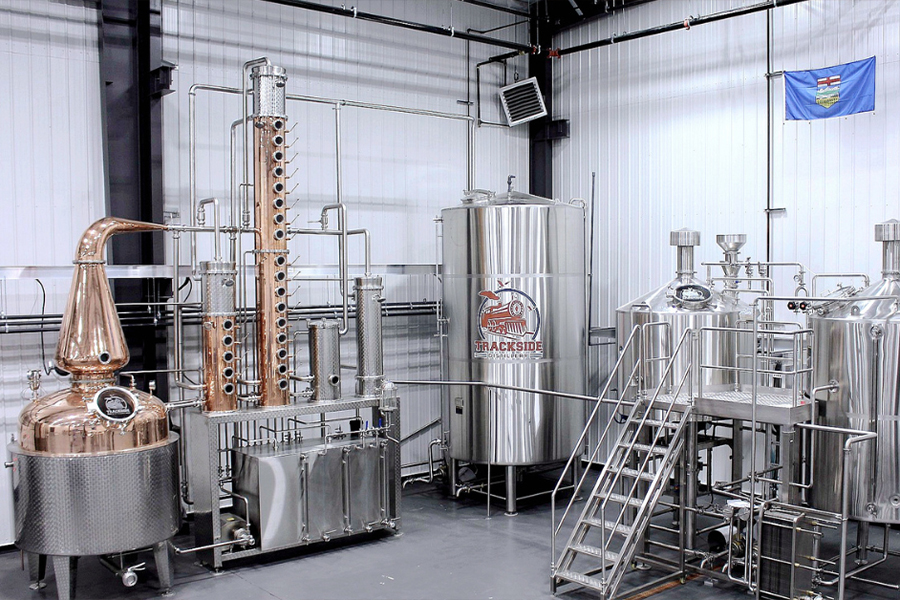
All these design parameters change fractionation efficiency and define where the hearts are collected. This is how still hardware directly impacts your final spirit profile.
Energy Consumption & Production Capacity
Traditional stills suffer from poor insulation and lack heat recovery, leading to high energy consumption. Modern stills integrate preheating and waste heat recovery structures to cut operational energy costs. Select a still size matched to your production schedule instead of overspecifying capacity. Modular expansion is supported as your distillery scales up.
Por qué elegir Tiantai
With long-standing experience manufacturing distillation equipment, we deliver reliable turnkey solutions:
In-House Manufacturing
Full in-house production: copper and stainless steel material sourcing, welding, polishing, assembly and factory acceptance testing are all controlled internally. You are welcome to visit our production base for on-site inspection.
Process-Led Custom Design
Our engineers design around your target spirit profile. Swan neck geometry, lyne arm dimensions, tray counts and reflux setups are tailored to your recipe and flavour goals.
End-to-End Service
Full scope including selection consulting, custom design, fabrication, installation, commissioning and operational training.
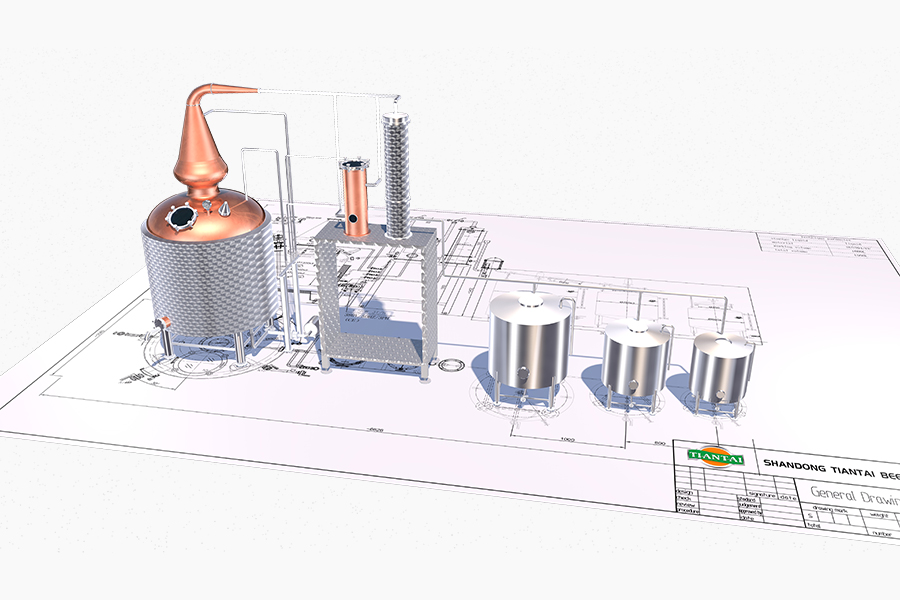
Share your spirit category, batch capacity, site layout and target ABV, and Tiantai will develop a custom distillation solution for you.