Flavor differences—does the distillation equipment decide?
The production process of whisky encompasses raw material treatment, mashing, fermentation, distillation, aging, blending, and bottling. Crucially, the distillation phase establishes the foundational flavor profile of the new make spirit. Subsequent aging and blending processes serve to refine this base, rather than fundamentally alter the flavor bedrock laid during distillation. Consequently, every design element of distillation equipment directly influences flavor development. Tiantai will now elucidate the impact of distillation equipment on whisky flavor and the underlying reasons for these effects.
The objective of distillation is to purify alcohol, remove impurities, and retain desirable flavor compounds. The principle is straightforward: fermented wash is heated in a pot still. Exploiting the difference in boiling points between alcohol and water, alcohol vaporizes first. This vapor is then cooled and condensed into a high-proof liquid, the new make spirit. During this process, variations in distillation equipment design directly affect vapor velocity and condensation efficiency, thereby influencing the retention and removal of flavor congeners, ultimately shaping distinct whisky profiles. This explains why using different distillation equipment, even with identical raw materials and fermentation processes, can result in vastly different whisky flavors.
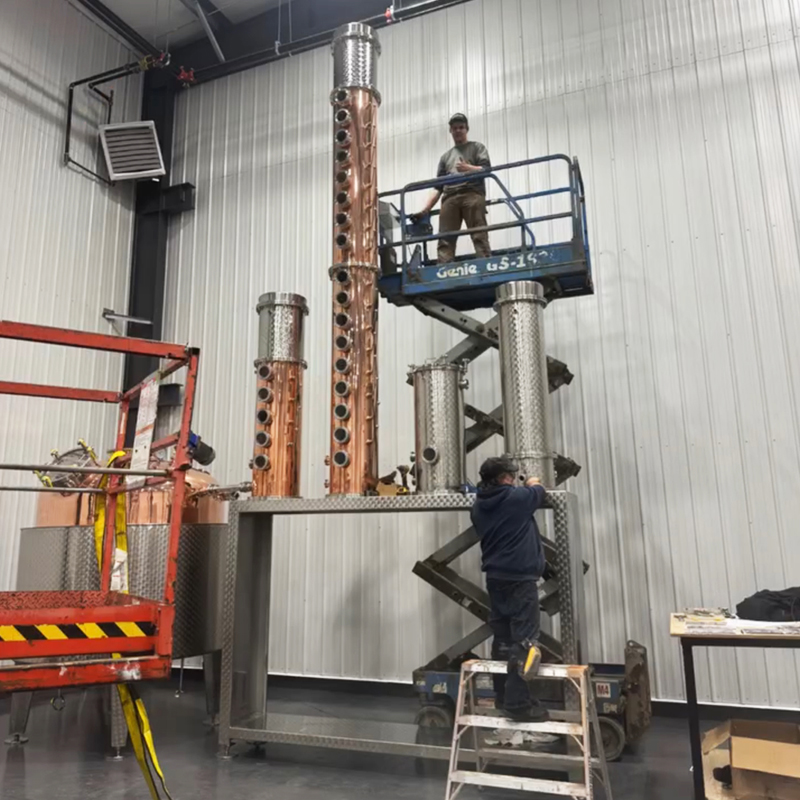
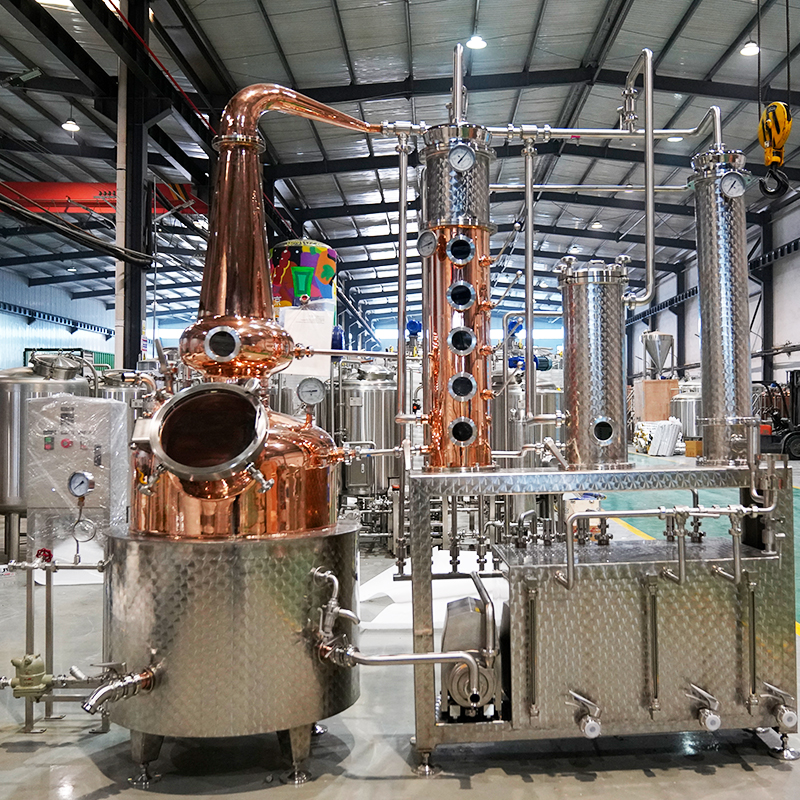
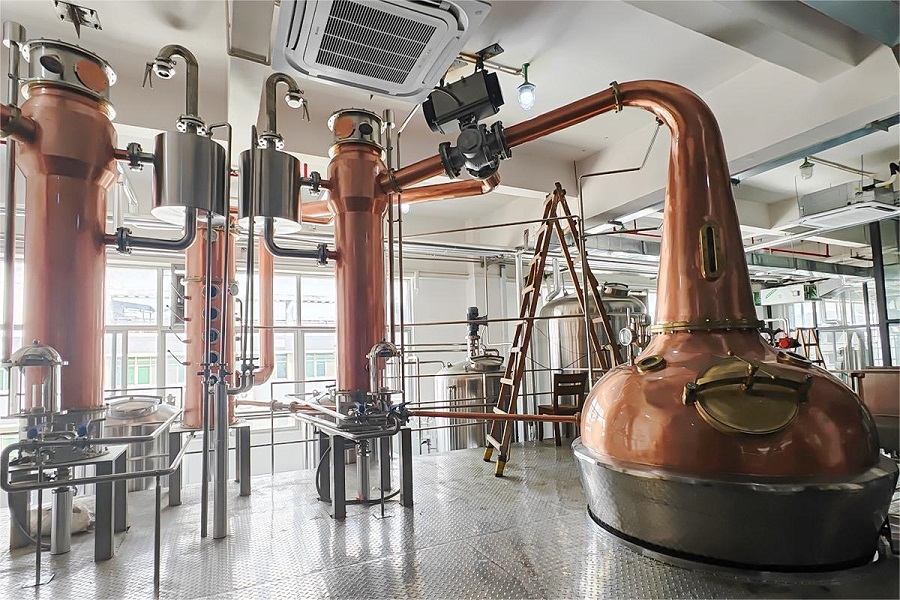
Pot stills are primarily composed of the Pot, Helmet, Swan Neck and Lyne Arm, Condenser, and Spirit Safe. Design variations in each component yield significantly different flavor outcomes, which inform our customized equipment designs for clients as a manufacturer.
As a core component of the still, the shape of the copper pot is the most direct factor influencing whisky flavor. Considering the width and volume of the pot, a wider, larger pot will generate more alcohol vapor during heating. This vapor can carry a greater quantity of flavor compounds, such as esters and phenols, into subsequent condensation stages, ultimately imparting a robust, rich mouthfeel to the whisky. Conversely, a narrower pot produces less alcohol vapor. The longer contact time between the vapor and the interior copper wall allows for more thorough removal of impurities like fusel alcohols and sulfides, while simultaneously reducing the carryover of esters and phenols, resulting in a cleaner, more aromatic, and crisply flavored spirit. The core reason for this difference lies in the varying amounts of vapor and the extent of copper contact—more vapor translates to greater flavor compound transport, while more thorough copper contact ensures more effective impurity removal and a purer flavor profile. It is noteworthy that copper itself possesses unique advantages; it reacts with sulfides in the vapor, eliminating off-odors like hydrogen sulfide and thiols, which is why copper stills are the preferred choice for whisky production.
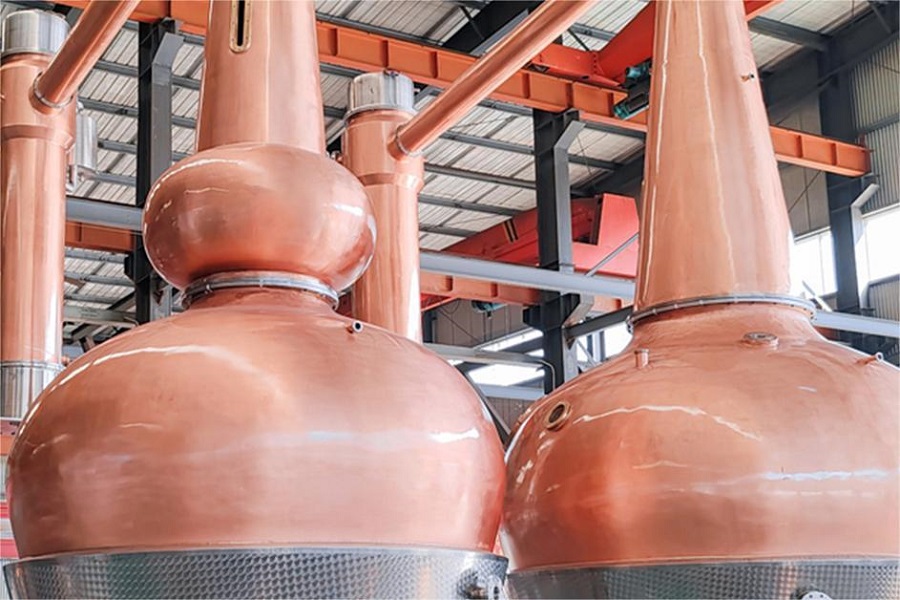
Beyond the copper pot, the height and shape design of the swan neck also impact production outcomes. Regarding swan neck height, a taller swan neck provides a longer vapor path, creating a greater temperature gradient. This leads to a higher proportion of condensed vapor refluxing back into the pot, allowing the alcohol vapor to linger longer in the neck, thus achieving more thorough impurity removal and resulting in a lighter, cleaner, smoother, and more delicate spirit. Conversely, a lower swan neck shortens the vapor transit path, reducing reflux. Flavor compounds and minor impurities in the vapor can then proceed directly to subsequent stages, typically yielding a bolder, more robust spirit with a more complex, distinctive character. Furthermore, if the swan neck features a bulbous or constricted design, it can further enhance reflux, contributing to a purer and more refined spirit—a reason some premium whisky distilleries opt for specially shaped swan necks. We can design the height and form of the swan neck according to clients’ desired spirit flavor profiles.
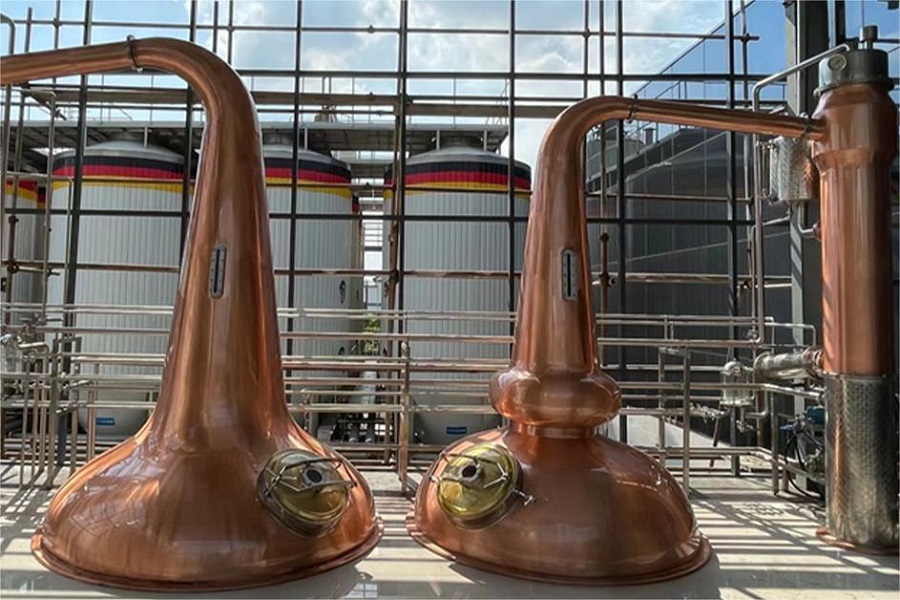
The Lyne Arm, serving as the conduit for vapor transport, features an angle design that critically influences vapor flow direction and residence time, thereby shaping the resulting whisky’s flavor profile. This is a subtle yet highly impactful detail often overlooked in equipment customization.
From a Lyne Arm angle perspective:
- Upward Tilt: Primarily allows only the lightest vapor molecules (associated with delicate flavor compounds) to ascend. Heavier molecules (representing heavier impurities or flavor components) reflux back into the copper pot for re-distillation. This process yields a lighter, more refined spirit, ideal for whiskies targeting a crisp profile.
- Downward Tilt: Facilitates the easy passage of even heavier vapor molecules, with minimal reflux. This retains a greater quantity of robust flavor compounds, resulting in a richer, fuller-bodied spirit, suited for whiskies requiring a pronounced mouthfeel.
- Horizontal Setting: Results in a balanced proportion of light and heavy vapor molecules, leading to a harmonious flavor profile. This configuration is adaptable for the production needs of most standard whiskies.
As professional manufacturers of distillation equipment, we offer bespoke distillation solutions. These nuanced details, such as the Lyne Arm angle, are meticulously incorporated into our equipment customization process at Tiantai. We engage in one-on-one design and manufacturing, tailored to each client’s specific flavor objectives. For any customization needs for distillation equipment, please do not hesitate to contact us.