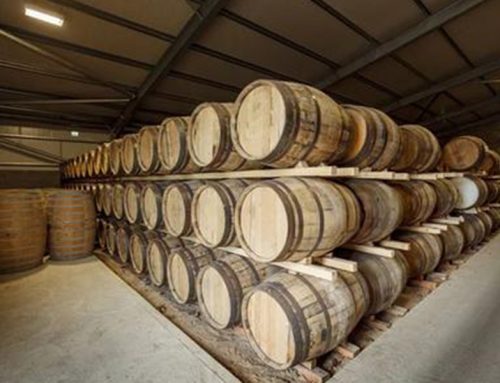
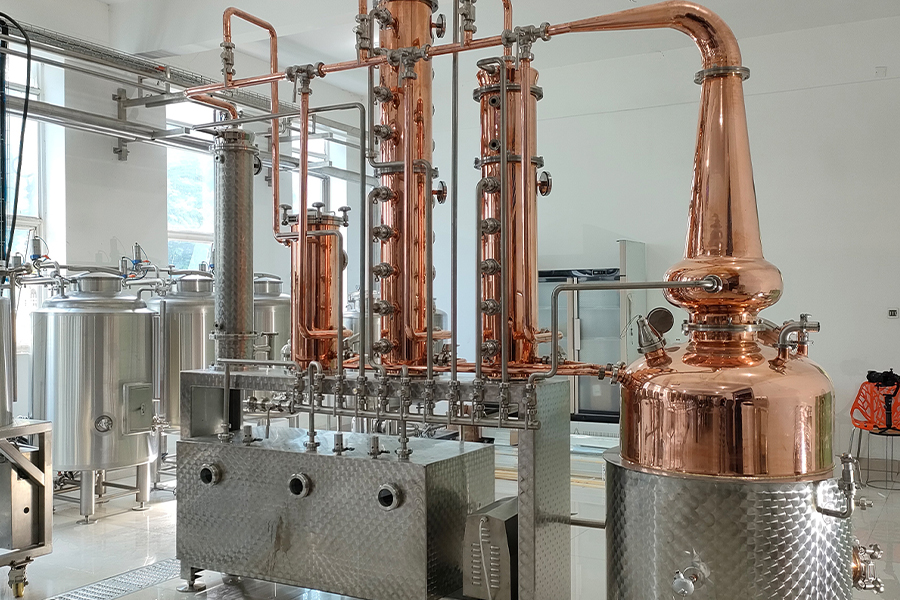
홉을 넣은 맥주를 증류하면 어떤 종류의 술이 만들어질까요?
Distilling beer into spirits may seem like a straightforward way to turn an existing alcoholic beverage into a new product. In practice, the result can be surprisingly different from what the original beer suggests.
A malt-forward beer may produce a spirit with cereal, toasted grain, or caramel-like notes, while a heavily hopped IPA may yield a pronounced herbal, resinous, or vegetal character. Some of these flavors can complement the spirit; others can dominate it. Even when the starting beer tastes appealing, its aroma does not necessarily predict how the finished distillate will taste.
For craft distilleries, breweries exploring spirit production, and producers looking to recover value from surplus beer, the important question is not simply whether beer can be distilled. It is whether the beer’s composition, the distillation process, and the intended spirit style are compatible.
Understanding the relationship between malt, hops, fermentation, and distillation is essential before committing production volumes to a new product.
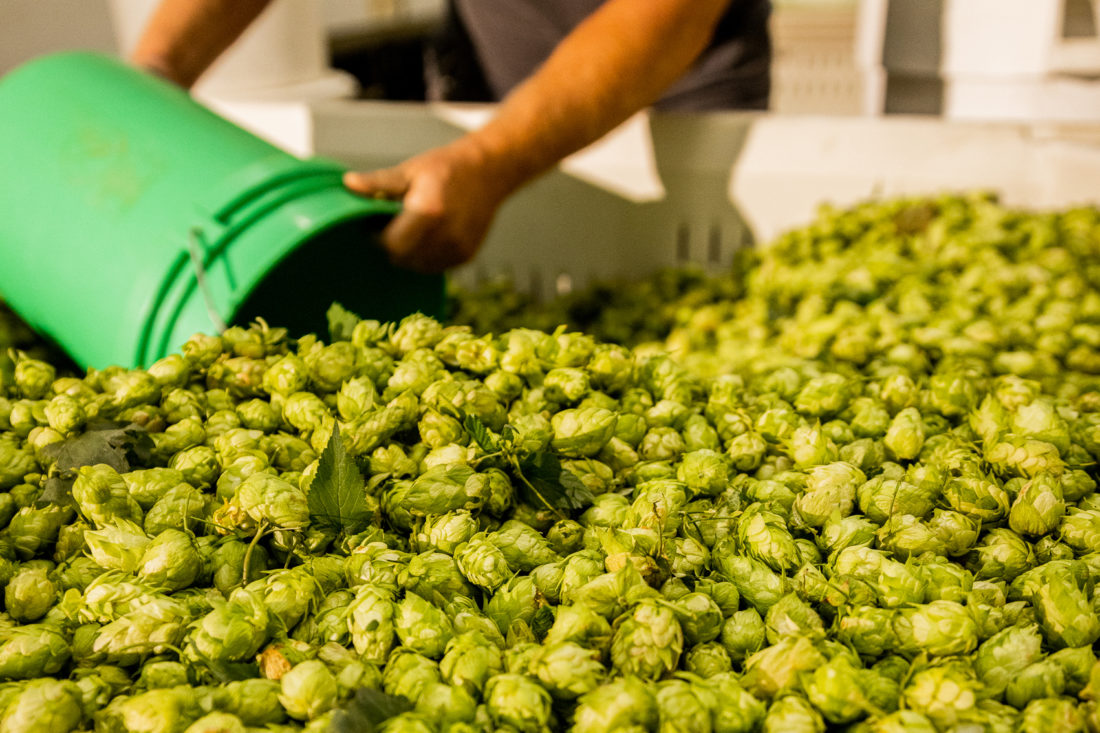
What happens when you distill hopped beer?
Beer already contains ethanol produced during fermentation, along with water, residual extract, organic acids, esters, higher alcohols, and numerous aroma compounds. Distillation separates and concentrates components according to their volatility and their behavior within the mixture.
The resulting spirit is therefore not simply a stronger version of the original beer. Some compounds transfer into the vapor and distillate, some remain largely in the stillage, and others change during heating.
This distinction is especially important when the beer contains hops.
Hops contribute bitterness, aroma, and flavor through several groups of compounds. The bittering compounds and aromatic constituents do not behave identically during distillation.
Iso-alpha acids, which contribute much of the familiar bitterness in beer, are relatively nonvolatile under ordinary distillation conditions and tend to remain behind. Hop essential oils, however, contain volatile constituents that can contribute to the aroma of the distillate.
Heat can also transform some aroma compounds. The final profile depends on the hop variety, hopping method, beer composition, distillation conditions, and subsequent maturation.
As a result, a spirit distilled from hopped beer may not taste intensely bitter in the same way as the original beer. Instead, it may develop concentrated herbal, resinous, floral, citrus-like, or vegetal notes. Whether those characteristics are desirable depends on the intended product.
Why do hop flavors sometimes become unpleasant after distillation?
The challenge is not that every hop-derived compound tastes bad. It is that the balance of flavor compounds can change during distillation.
1. Hop Aroma Can Become More Pronounced
Hop essential oils contain a complex mixture of volatile compounds, including terpenes and their derivatives. These compounds contribute to the citrus, floral, pine-like, and resinous aromas associated with different hop varieties.
Some of these constituents can transfer into the distillate, while others may undergo chemical transformations during heating.
The result may be quite different from the aroma of the original beer. A hop character that seems refreshing in a cold IPA can become sharper or more resinous in a concentrated spirit.
The outcome is not determined by hop quantity alone. Hop variety, oil composition, beer matrix, and distillation conditions all influence which aromas remain perceptible.
2. Vegetal and Resinous Notes May Dominate
Certain hop-derived aromas can become disproportionately noticeable when the surrounding malt and fermentation character is reduced.
This is one reason heavily hopped beers can be challenging raw materials for distillation. The finished spirit may retain a strong herbal or resinous character without preserving the balance that made the original beer enjoyable.
Other beers can produce different results. A rich stout, porter, or malt-forward strong ale may provide a broader flavor base that integrates with some hop-derived notes.
However, dark color or high original gravity alone does not guarantee a successful distillate. The underlying malt profile, fermentation quality, hop composition, and intended maturation all matter.
3. Distillation Can Change the Original Flavor Balance
Distillation does not preserve every aroma compound in its original proportion.
Some volatile compounds transfer readily, while others are retained in the still or behave differently under heat. Their interactions can also change the perceived balance of the final spirit.
For example, a beer with an appealing fruity aroma may not yield a spirit with the same fruit character. Depending on its composition and the process, the result could be more herbal, less expressive, or noticeably different from the original beverage.
For commercial producers, this makes preliminary sensory evaluation and process trials more reliable than choosing a beer solely by its tasting notes.
Which types of beer are better candidates for distillation?
There is no universally suitable beer for spirit production. The best starting material depends on the product being developed and the characteristics the distiller wants to preserve.
Malt-Forward Beers
Beers with substantial malt character and moderate or low hopping are often logical candidates when the objective is a grain-forward spirit.
Strong ales, barley wines, selected Belgian-style beers, and some dark beers may provide useful malt, yeast, and fermentation-derived characteristics.
Their potential value lies in the balance between alcohol yield and flavor contribution. A beer with a higher alcohol content may also reduce the volume of liquid that must be processed for a given quantity of recovered ethanol, although actual recovery depends on the process and operating losses.
These styles still require evaluation. Oxidation, residual sweetness, fermentation defects, and unsuitable flavor compounds can affect the final spirit.
Heavily Hopped IPAs
IPAs, particularly those with substantial dry hopping or intense resinous aromas, present a different challenge.
Their hop-derived volatile compounds may carry through or transform during distillation, producing a spirit in which the herbal, pine-like, or resinous character is more prominent than expected.
That does not make every IPA unsuitable. A deliberately hop-forward spirit may be an interesting product in its own right. The question is whether the result matches the intended flavor profile and whether the production cost is justified.
For a conventional malt whiskey, heavily hopped beer is generally a less predictable starting material than an unhopped or lightly hopped fermented grain base.
Stouts and Porters
Stouts and porters can contribute roasted malt, coffee-like, cocoa-like, and caramel-associated sensory characteristics, depending on the recipe.
These characteristics may create an interesting base for a distinctive spirit. However, dark malt character does not automatically eliminate undesirable hop aromas or other fermentation-related defects.
The distiller should evaluate the beer’s actual composition rather than relying on the style name.
Sour and Mixed-Fermentation Beers
Sour beers introduce additional considerations, including acidity and a more complex mixture of fermentation-derived compounds.
Some of these characteristics may contribute to an intentionally distinctive spirit, while others can be difficult to integrate.
The acidity, fermentation history, and condition of the beer should be assessed before processing. Beer that has developed uncontrolled spoilage or strong vinegar-like defects should not be assumed to become a quality spirit simply because it will be distilled.
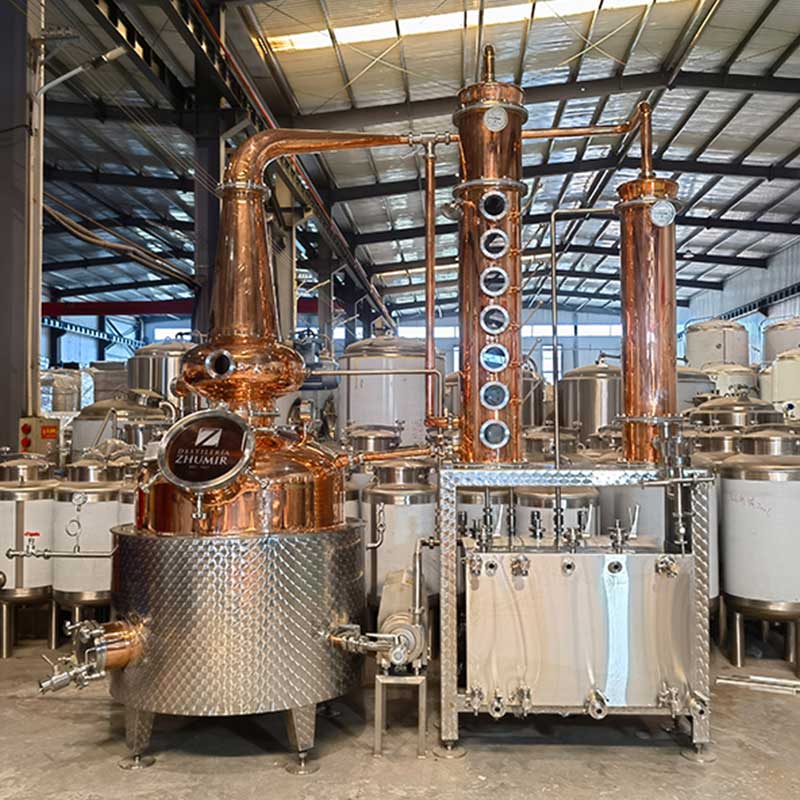
Pot Still vs. Column Still: Which is better for distilling beer?
The choice of still influences how much of the starting material’s character remains in the spirit. Neither configuration guarantees a successful result.
포트 스틸 증류
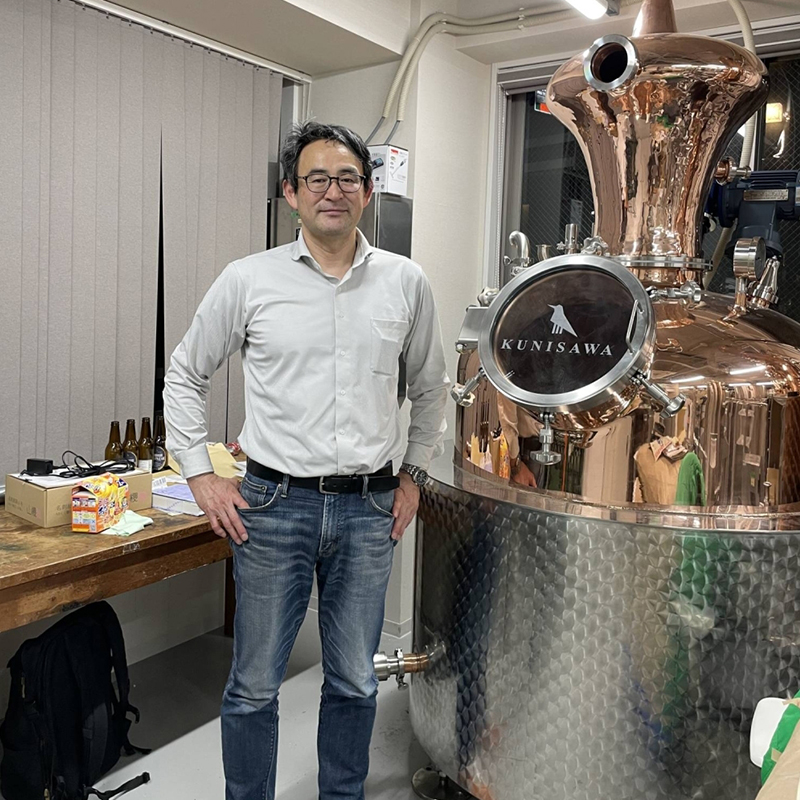
A 냄비 스틸 is often considered when the goal is to retain a recognizable relationship between the raw material and the finished spirit.
Because the process generally provides less rectification than a highly efficient fractionating column, more of the original mixture’s flavor-contributing compounds may remain in the distillate.
This can be advantageous for a malt-forward beer intended to produce a characterful spirit. It can also make undesirable hop-derived or fermentation-related notes more difficult to manage.
냄비 스틸 are therefore worth considering when the desired product depends on a distinctive raw-material character, provided the beer and process have been evaluated first.
컬럼 스틸 증류
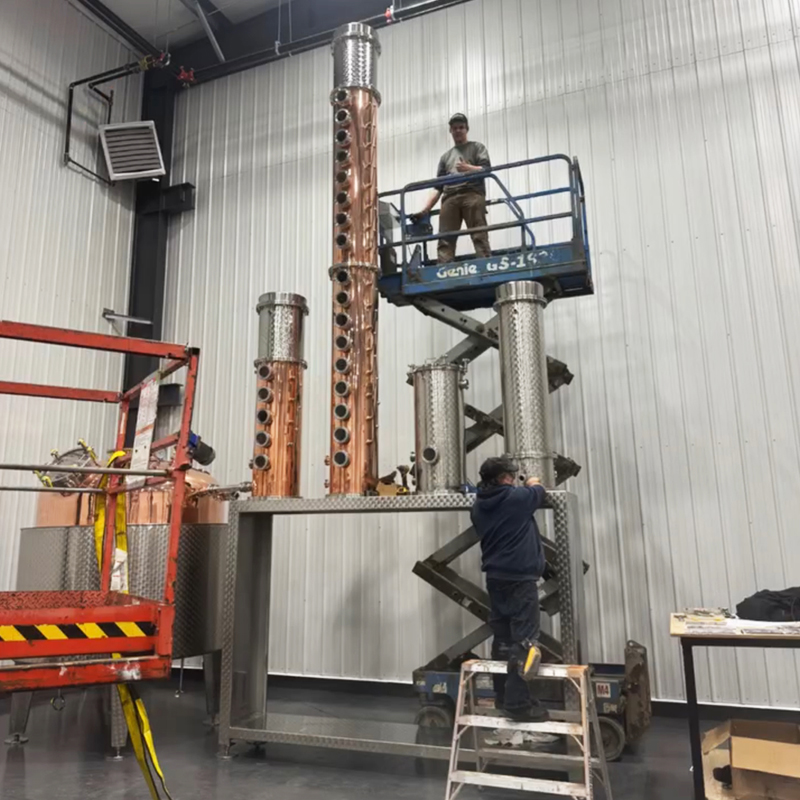
A 열 스틸 provides additional vapor-liquid contact and rectification, allowing the producer to adjust the balance between alcohol concentration and flavor retention.
A more rectifying configuration may produce a cleaner spirit with fewer of certain flavor compounds. However, it should not be assumed that a column will remove every unwanted hop character.
The behavior of individual compounds varies, and the result depends on column configuration, reflux, operating conditions, and the composition of the feed.
For a producer targeting a relatively neutral base spirit, a column system may offer greater control over the desired degree of rectification. For a flavor-led spirit, excessive rectification may remove characteristics that give the product its identity.
하이브리드 스틸
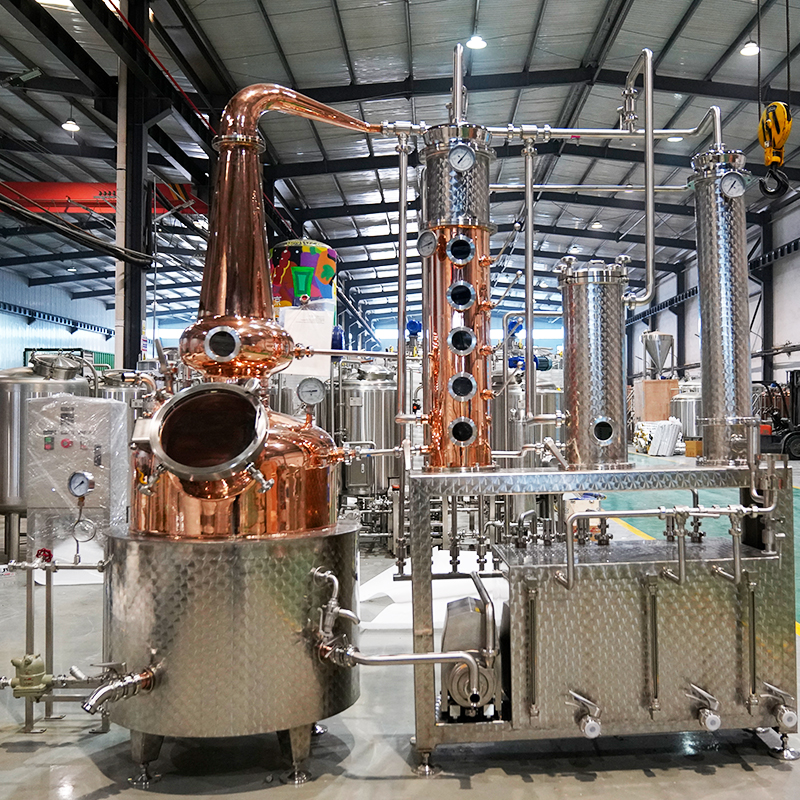
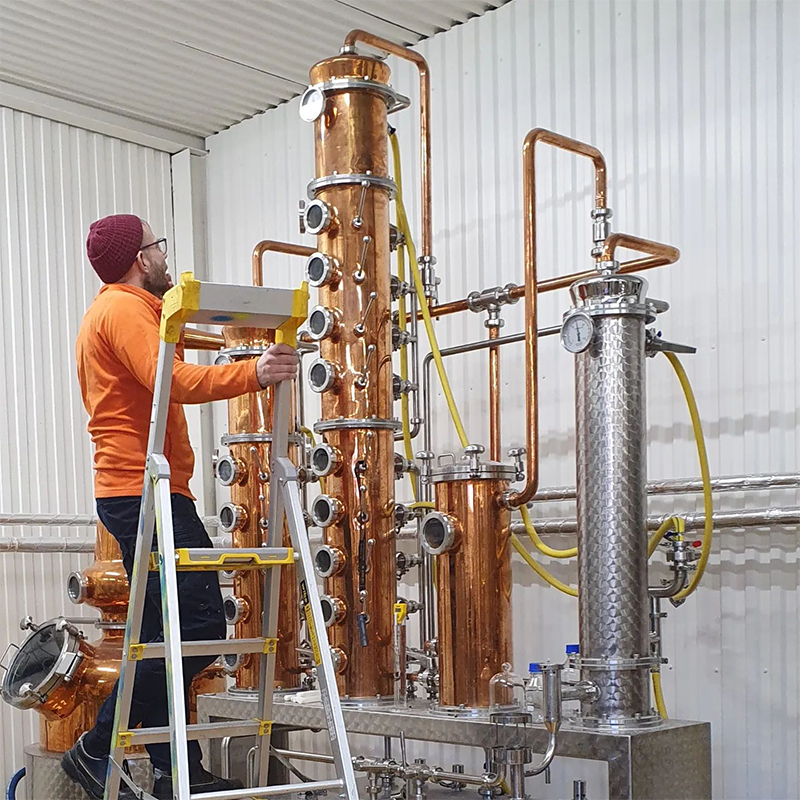
Hybrid stills combine pot-still operation with column sections or other rectification features. They can provide flexibility for producers developing several product styles.
For a distillery experimenting with beer-derived spirits, a hybrid configuration may offer a practical balance between retaining raw-material character and increasing rectification when required.
The appropriate design depends on the target product, production capacity, and the degree of process flexibility the distillery needs.
Can redistillation remove unwanted hop flavor?
Redistillation can change the flavor profile, but it is not a guaranteed solution.
Additional rectification may reduce the concentration of certain flavor compounds in the final product. However, the degree of removal depends on their volatility, chemical behavior, and interaction with the rest of the mixture.
Some unwanted notes may persist, while other desirable characteristics may also be lost.
Repeated distillation also consumes energy, occupies production capacity, and can reduce overall alcohol recovery. A producer should therefore evaluate whether further processing improves the spirit enough to justify the additional cost.
For commercial operations, the more effective approach is often to establish a suitable feedstock specification and evaluate the process before scaling up.
If a beer repeatedly produces an unsuitable flavor profile, adjusting the raw material may be more economical than relying on additional distillation to correct it.
What about using hops after distillation?
Distilling hopped beer is not the only way to develop a hop-inspired spirit.
A producer can also begin with a suitable spirit base and introduce selected botanical or hop-derived characteristics through a separately designed flavoring process, subject to the intended product category and applicable regulations.
For example, a gin-style product may incorporate hop character alongside juniper and other botanicals. A spirit producer may also investigate suitable hop extracts or other permitted flavoring ingredients, depending on the intended market and labeling requirements.
This approach separates the production of the alcohol base from the development of the hop aroma. It can offer more direct control over the final flavor profile and reduce the need to process large volumes of highly hopped beer.
The trade-off is that the product will differ from a spirit made by distilling the beer itself. For producers, that distinction matters both technically and commercially.
Is distilling surplus or unsold beer rconomically viable?
Distillation can offer breweries another route for evaluating surplus beer, but it should not automatically be considered a profitable recovery strategy.
The first consideration is alcohol yield.
A beer with a relatively low alcohol content contains a substantial volume of water compared with the amount of ethanol available for recovery. More liquid must therefore be heated and processed to recover a given quantity of alcohol than with a more concentrated fermented feedstock.
Other costs include:
- Energy for heating and cooling
- Labor and production time
- Equipment cleaning and maintenance
- Alcohol losses during processing
- Storage, maturation, and packaging
- Product development and compliance costs
The original beer also has an opportunity cost. A product that can still be sold as beer may be worth more in its original form than after conversion into a spirit.
The strongest commercial case is likely to arise when the distillate has a clear market position, the raw material is available at an appropriate cost, and the production process can achieve a consistent product.
For breweries and distilleries working together, contract distillation or collaborative spirit development may also be worth evaluating, depending on licensing and production arrangements.
Equipment considerations for beer-based spirit production
Distilling beer requires more than selecting a still with an appropriate nominal capacity. The complete process should be evaluated against the characteristics of the feedstock and the intended spirit.
Still Capacity and Batch Planning
The volume of beer available, its alcohol content, and the required production schedule determine the practical batch size.
A distillery processing occasional surplus beer may have different equipment requirements from a producer developing a dedicated commercial spirit line.
Capacity planning should account for the volume of feedstock, expected alcohol recovery, cleaning time, and any subsequent redistillation or maturation requirements.
Heating and Vapor Management
Beer contains components other than ethanol and water, so the feedstock’s physical properties and operating behavior should be considered when selecting the heating arrangement and still configuration.
The system should be designed for controlled operation, suitable vapor handling, and the relevant safety requirements for alcohol production.
Condensation and Cooling
The condenser must be appropriate for the vapor load and intended operating conditions.
Reliable cooling and controllable operation are important for maintaining stable production. Condenser selection should be coordinated with still capacity, heating duty, and the wider distillery utility system.
Cleaning and Flavor Carryover
Hop-derived oils and other flavor compounds can leave persistent residues in parts of the equipment. Depending on the configuration, deposits or retained aroma compounds may affect subsequent batches.
This is particularly important for distilleries that alternate between highly aromatic feedstocks and products requiring a clean flavor profile.
Cleaning procedures should be developed for the actual materials and equipment configuration. Producers should also consider whether separate product-contact equipment or dedicated processing arrangements are appropriate for their product range.
Process Flexibility
A distillery planning to produce whiskey, gin, fruit spirits, and experimental beer-based products may benefit from a configuration that supports different levels of rectification and different production requirements.
The right equipment should match the planned product portfolio rather than being selected solely for a single experimental batch.
How Tiantai supports distillery equipment projects
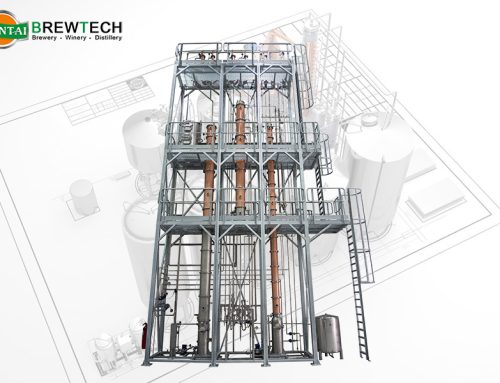
Tiantai supplies distillation equipment and integrated systems for commercial spirit production, with configurations planned around the intended product, batch capacity, process requirements, and available utilities.
For a project involving beer-derived spirits, the equipment discussion should begin with several questions:
- What beer styles or fermented feedstocks will be processed?
- Is the target product a malt-forward spirit, a more highly rectified base, or a botanical spirit with hop character?
- What batch volume and production frequency are required?
- Will the process include redistillation or maturation?
- Will the same equipment process other spirit categories?
- What cleaning, control, and service requirements apply?
These questions help determine whether a 냄비 스틸, 열 스틸, or hybrid configuration is appropriate and what supporting equipment is required.
Tiantai can work with distillery project requirements to develop a suitable equipment configuration, including the still, heating system, condenser, controls, and associated process components as required by the project.
The objective is not to force every application into the same still design. It is to select equipment that supports the intended spirit style, production scale, and operating strategy.
Distilling hopped beer is a product development decision
Beer can be distilled, but the outcome depends on far more than whether the starting beverage contains hops.
Malt composition, fermentation character, hop-derived compounds, beer condition, still configuration, and subsequent maturation all influence the result. Some beers may produce an interesting and distinctive spirit; others may deliver an unbalanced flavor profile or require more processing than the product can economically justify.
For producers targeting conventional whiskey, an unhopped or purpose-made fermented grain base generally offers a more predictable starting point. For those exploring beer-based spirits, the best route is to evaluate the feedstock, define the desired flavor profile, and conduct controlled trials before committing to full-scale production.
That is also the point at which equipment selection becomes important. A properly specified distillation system should support the product the distillery intends to make, rather than relying on the still to correct every limitation in the raw material.