How Fermentation Affects the Flavor of Distilled Spirits
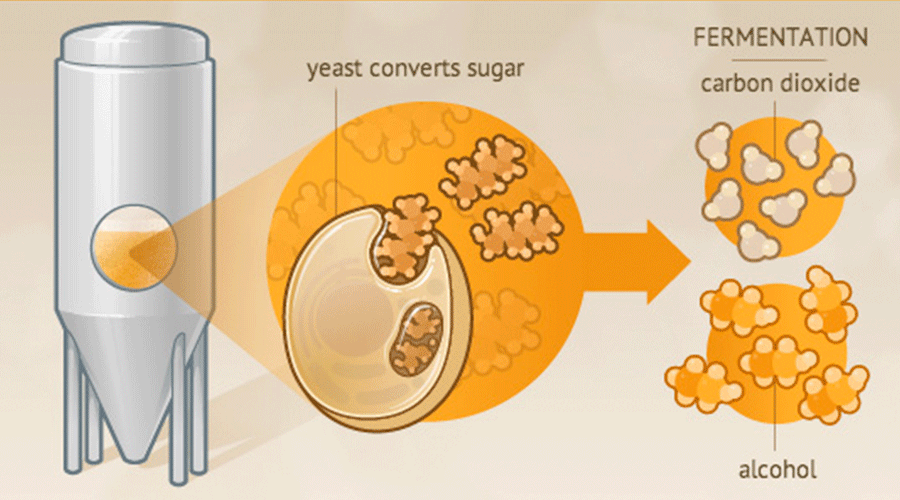
Fermentation is the process in which yeast converts sugars into alcohol and carbon dioxide, and it is the first step in the production of all alcoholic beverages. Simply put, without fermentation, there is no alcohol, and distillation cannot take place. During fermentation, yeast consumes the sugars in the raw materials under anaerobic conditions, continuously producing alcohol while releasing carbon dioxide. This is why bubbles and foam appear inside fermentation tanks.After fermentation is completed, a low-alcohol fermented liquid is obtained, which becomes the raw material for distillation.
Unlike fermentation, distillation does not create new alcohol. Instead, it uses the difference in boiling points between alcohol and water to separate, concentrate, and purify the alcohol contained in the fermented liquid, producing spirits with a higher alcohol content.
Therefore, fermentation determines the production of alcohol, while distillation determines alcohol concentration and product quality. The better the fermentation quality, the better the flavor and overall quality of the distilled spirits will usually be.
The Fermentation Process of Distilled Spirits
Fermentation is a crucial stage in distilled spirit production. It determines both alcohol yield and the final flavor profile of the spirit. A complete fermentation process mainly includes the following stages.
1. Raw Material Preparation
Fermentation begins with the preparation of fermentable sugars. Different spirits use different raw materials, such as grains, fruits, molasses, or potatoes.
For grain-based spirits, the raw materials must first undergo milling and saccharification to convert starch into sugars that yeast can utilize. Fruit-based spirits usually require cleaning, crushing, or pressing before entering the fermentation process.
2. Yeast Inoculation
After the raw materials are prepared, the fermentation liquid is cooled to the appropriate temperature, and yeast is added to begin fermentation.High-quality yeast strains and proper fermentation temperatures ensure smooth fermentation, improve alcohol yield, and reduce the production of undesirable flavors.
3. Primary Fermentation Stage
During this stage, yeast rapidly multiplies and continuously converts sugars into ethanol and carbon dioxide.This is the most active phase of fermentation. A large amount of bubbles and foam are continuously generated inside the fermentation tank, while heat is released at the same time. To achieve optimal fermentation performance, the temperature must be carefully controlled to maintain ideal yeast activity.
4. Completion of Fermentation
As sugars are gradually consumed, yeast activity decreases and the fermentation rate slows down until the process eventually stops.At this point, most of the sugars have been converted into alcohol, producing a low-alcohol fermented mash, which can then proceed to the distillation stage.
Three Key Factors Affecting Fermentation Quality in Distilled Spirits
Fermentation performance not only determines alcohol production but also has a significant impact on the flavor of distilled spirits. Among all factors, temperature, pH value, and nutrient composition are the three most important.
1. Temperature
Fermentation temperature directly affects yeast activity and spirit flavor.Lower temperatures (15–18°C): Fermentation proceeds more slowly and steadily, producing a cleaner spirit with a smoother mouthfeel.Higher temperatures (20–25°C): Fermentation occurs faster but may produce more unwanted flavors and excessive flavor compounds.
2. pH Value
Yeast grows best in a mildly acidic environment, typically with a pH range of 4.5–5.5.Maintaining the proper pH level helps promote efficient fermentation, reduce the risk of microbial contamination, and achieve more stable fermentation results.
3. Nutrient Composition
In addition to sugars, yeast requires nutrients such as nitrogen sources, vitamins, and minerals.Adequate nutrients improve yeast activity and ensure stable fermentation. If nutrients are insufficient, yeast may produce undesirable compounds, negatively affecting the quality of the distilled spirit.
How Distillation Concentrates Fermentation Products
After fermentation, the fermented mash is a complex mixture containing ethanol, water, residual sugars, acids, esters, fusel oils, aldehydes, and other trace compounds. This mixture becomes the raw material entering the distillation system.
The composition of the fermented mash largely determines the characteristics and results of the distillation process.
The principle of distillation is based on heating. Ethanol has a boiling point of 78.37°C, while water boils at 100°C. By precisely controlling temperature, the distillation equipment can selectively vaporize ethanol and other volatile compounds, collect the vapor, and condense it into a liquid with a higher alcohol concentration.
However, ethanol is not the only compound that evaporates during distillation. Every volatile compound produced during fermentation, including esters, aldehydes, and fusel oils, has its own boiling point and behaves differently inside the distillation system.
This is why the composition of the fermented mash is so important. A mash rich in desirable esters can produce a distillate with fruity aromas and complex fragrances. On the other hand, if the mash contains excessive fusel oils or undesirable compounds, these problems may carry over into the distillate and must be controlled through careful fraction separation. In some cases, they cannot be completely removed.
Precise Separation of Three Distillation Fractions
The most technically demanding step during distillation is cutting the fractions, which means accurately separating the heads, hearts, and tails.
Heads
The first fraction collected during distillation. It contains low-boiling compounds such as methanol and acetaldehyde. It usually has a harsh aroma and unpleasant taste, so it is normally discarded.
Hearts
The highest-quality fraction. It has a clean taste, rich aromas, and balanced flavors. This is the main portion used for aging and bottling.
Tails
The final fraction collected during distillation. It contains higher levels of fusel oils and heavier flavor compounds. Depending on the production process, it may be collected for redistillation or discarded.
Fermentation quality directly affects the purity and quality of the fractions. Good fermentation produces a cleaner heart cut and increases the proportion of high-quality spirit. Poor fermentation conditions may create more undesirable compounds, reducing both yield and quality.
Why Fermentation Determines Spirit Quality
There is a saying in the distilling industry:“You can only distill what you have fermented.”This highlights the fact that fermentation quality is the foundation of spirit quality.
A well-controlled fermentation process produces a clean, balanced fermented mash with fewer unwanted compounds, providing better raw material for distillation. This allows distillers to make more precise cuts, preserve desirable aromas, and achieve better flavor balance.
If fermentation is poorly controlled, excessive undesirable compounds may be produced. These compounds can negatively affect the distillation process, reduce the yield of premium-quality spirit, and may not be completely removed through distillation.
Therefore, although the still is one of the most important pieces of equipment in a distillery, the true foundation of spirit quality often begins with every detail inside the fermentation tank.