Distillery Heating System Design: Direct Fire & Steam
Heating is one of the most important considerations in distillery design. It determines how quickly a still reaches boiling temperature, how consistently heat is supplied during a distillation run, and how efficiently the plant uses fuel or steam. It also affects equipment construction, operating costs and, in certain applications, the character of the finished spirit.
A small craft distillery may operate one or two pot stills with independent heating systems. A larger production facility may have several wash stills and spirit stills connected to a central steam boiler. Although both facilities rely on heat to generate alcohol vapour, their heating requirements and utility arrangements can differ significantly.
Choosing a suitable heat source is only the first step. The design must also account for how heat reaches the charge, how combustion gases or steam are managed, how heating intensity is regulated, and whether waste heat can be recovered.
Understanding these details helps distillers select equipment that meets their production schedule without introducing unnecessary energy consumption or operating complexity.

Direct-Fired Stills: Combustion and Heat Transfer
In a direct-fired still, heat is generated by burning fuel beneath or around the lower section of the still. The flame and hot combustion gases transfer heat directly through the pot’s metal surface to the liquid inside.
Natural gas and LPG are commonly considered for direct-fired installations. Other fuels may be technically possible, but their suitability depends on local fuel availability, emissions regulations, burner design and the operating environment.
Still Construction for Direct Firing
A direct-fired still must be designed to withstand repeated exposure to high temperatures and localized thermal loads. The bottom of the pot, the areas exposed to the flame, and the surrounding structure experience different heating conditions from the upper sections of the vessel.
For this reason, the material thickness, copper fabrication, base geometry and supporting structure must be considered together. The specifications should be established through mechanical and thermal design rather than applying one material thickness to every part of the still.
The still normally sits above a dedicated hearth or furnace structure. Depending on the installation, this may be constructed from brick or steel and lined with suitable refractory materials. The lining protects the supporting structure from excessive heat and helps maintain a controlled combustion environment.
The design of the burner and furnace should distribute heat as evenly as practicable across the intended heating area. Poor flame distribution can create localized overheating, accelerate surface fouling and place unnecessary thermal stress on the still.
Flue Gas and Draft Management
Combustion gases must be safely discharged through a properly designed flue and chimney. These may be constructed from suitable masonry or steel, depending on the installation requirements.
Where several stills operate in the same facility, their exhaust systems may be connected to a common flue arrangement. Each branch needs suitable draft control and isolation provisions so that the operation of one burner does not adversely affect another.
Burner firing rate and combustion control regulate the heat supplied to the still. Flue dampers, meanwhile, manage exhaust flow and draft. These functions should be coordinated but should not be treated as interchangeable.
Safe installation also requires consideration of combustion air supply, exhaust temperature, fuel-system protection and applicable fire and emissions regulations.
Preventing Scorching in Direct-Fired Wash Stills
One operating concern with directly fired wash stills is the accumulation of solids or deposits on heated surfaces. When these materials remain in contact with a hot metal surface, they can char and form a layer that interferes with heat transfer.
Traditional direct-fired wash stills may use a mechanical device known as a rummager. It consists of rotating arms or chains suspended from a driven shaft. As the shaft rotates, the assembly moves across the base and heating surface, helping prevent deposits from remaining in one place for extended periods.
The purpose is not simply to stir the liquid. It is to reduce localized charring, maintain more effective heat transfer and limit the operational problems associated with deposits on the bottom of the still.
The need for a rummager depends on the still design, feedstock characteristics and heating arrangement. Its materials, operating speed and clearance from the still surface must be considered during equipment design.
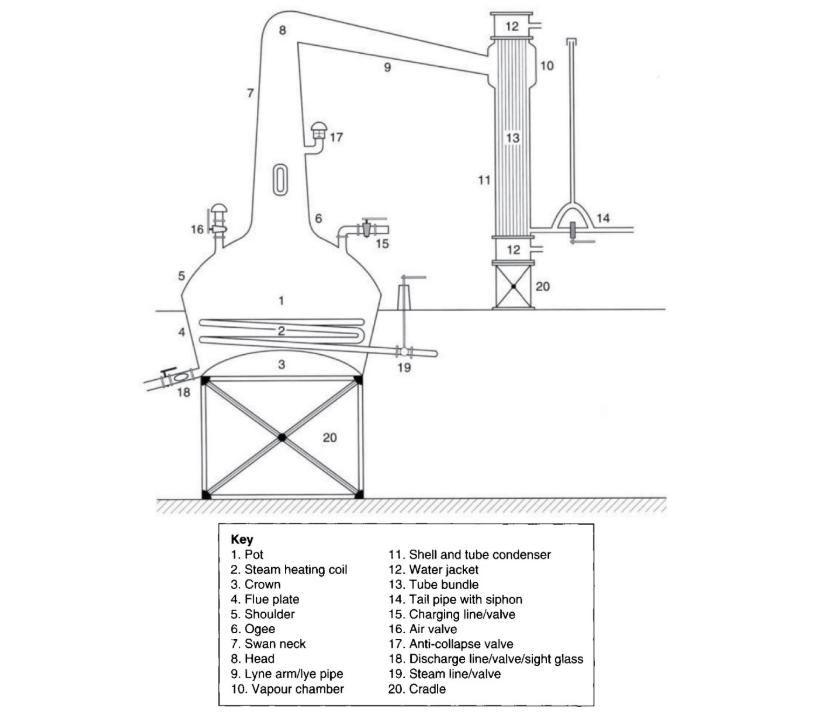
Steam Heating: Designing the Boiler and Distribution System
For commercial distilleries with multiple stills or a relatively high production schedule, indirect steam heating is often a practical solution.
In this arrangement, a boiler supplies steam to a distribution header. Steam is then delivered to individual stills through a network of pipes, valves and pressure-control components. Heat passes through the wall of a heating jacket, internal coil, pan or kettle rather than coming into direct contact with the distillation charge.
This arrangement allows a central boiler to serve several pieces of equipment, while individual stills operate at the pressure and heat input required by their respective processes.
Boiler Capacity and Peak Steam Demand
Boiler sizing should be based on the actual operating schedule of the distillery, not simply the nominal capacity of one still.
Consider a facility that operates a wash still, a spirit still and a heated process-water tank. If all three require heat during the same period, their combined steam demand may be considerably higher than the demand calculated from any single vessel.
The calculation should take into account:
- The volume and initial temperature of each charge.
- The target heating time before distillation begins.
- The number of stills and auxiliary tanks operating simultaneously.
- The heating duty required to maintain the desired boiling rate.
- Steam losses through distribution pipework and connected equipment.
- A reasonable allowance for future production requirements.
The target heat-up time should be established from the production schedule. A distillery operating several batches per day may require a different boiler configuration from a facility conducting occasional small-batch distillation.
Once peak demand has been calculated, the boiler can be selected with appropriate operating capacity and reserve. Oversizing without a demand analysis can increase capital expenditure and may also result in inefficient boiler operation under low-load conditions.
Steam Pressure Regulation and Distribution
Steam generated by a central boiler does not necessarily enter every still at the same pressure at which it leaves the boiler.
A main steam header distributes the supply throughout the facility. Pressure-reducing stations and control valves then adjust the operating conditions for individual heating circuits according to the requirements of each still.
This is particularly important when several vessels use different heating surfaces or operate at different stages of the production cycle.
For example, a wash still may require a relatively high initial heat input to reach boiling temperature, followed by a lower and more stable input during distillation. A spirit still may require finer adjustment as the operator manages the progression of the run and the separation of distillate fractions.
Independent control of individual heating circuits allows these requirements to be addressed without changing the operating conditions of the entire boiler system.
Heating Coils and Minimum Liquid Level
Internal steam coils and heating jackets need to be designed around the actual working volume of the still.
For an internal coil, one important consideration is liquid coverage. The heating element should remain immersed in the charge at both the beginning and the end of the distillation cycle, including when the liquid level has fallen to its operating minimum.
An exposed section of a steam coil can create excessive local surface temperatures and unnecessary thermal stress. It can also reduce the effective heating area available to the remaining liquid.
Coil position, surface area, steam pressure and condensate drainage should therefore be considered together.
Some low wines and feints stills may use an additional heating coil or an independently controlled heating section. This gives the operator more flexibility to reduce heat input during the spirit run and maintain a steady vapor rate. Where the still incorporates reflux features, stable heat input also supports more predictable reflux management.
Steam Traps and Condensate Recovery
Steam does not transfer all its energy to the heating surface without changing state. As it releases latent heat, it condenses into water. This condensate must be removed from the heating circuit efficiently.
Steam traps are installed at appropriate low points and equipment outlets to discharge condensate while preventing live steam from escaping unnecessarily.
If condensate remains in the pipework or heating coil, it can restrict steam flow and reduce heat-transfer performance. Poor condensate drainage may also contribute to water hammer, uneven heating and increased maintenance requirements.
A well-designed steam system should consider the following components:
- Steam traps positioned according to the pipework layout and equipment configuration.
- Drainage points at locations where condensate is likely to accumulate.
- Appropriate pipe slopes and condensate return arrangements.
- Pressure control and isolation valves for individual heating circuits.
- Inspection and maintenance access for traps and other components.
Returning Condensate to the Boiler
Condensate still contains useful thermal energy and has already undergone treatment as boiler feedwater. Rather than discharging it unnecessarily, a properly designed condensate return system can collect it and send it back to the boiler feedwater tank.
This reduces the amount of fresh makeup water and the additional energy required to heat that water before it enters the boiler.
For a distillery running several steam-heated vessels every day, condensate recovery can make a meaningful contribution to overall utility efficiency.
The return system must account for condensate temperature, pressure, contamination risks and the suitability of the recovery route. Any condensate suspected of contamination should be isolated rather than returned directly to the boiler circuit.
Insulation and Heat Management Around the Still
Insulation can reduce heat loss from the still and associated pipework, but it should be applied according to the function of each component.
Steam distribution pipes, boiler surfaces and designated heating sections are common insulation points. Insulating these areas reduces unnecessary heat transfer to the surrounding environment and helps maintain more stable operating conditions.
However, not every part of a pot still should automatically be insulated.
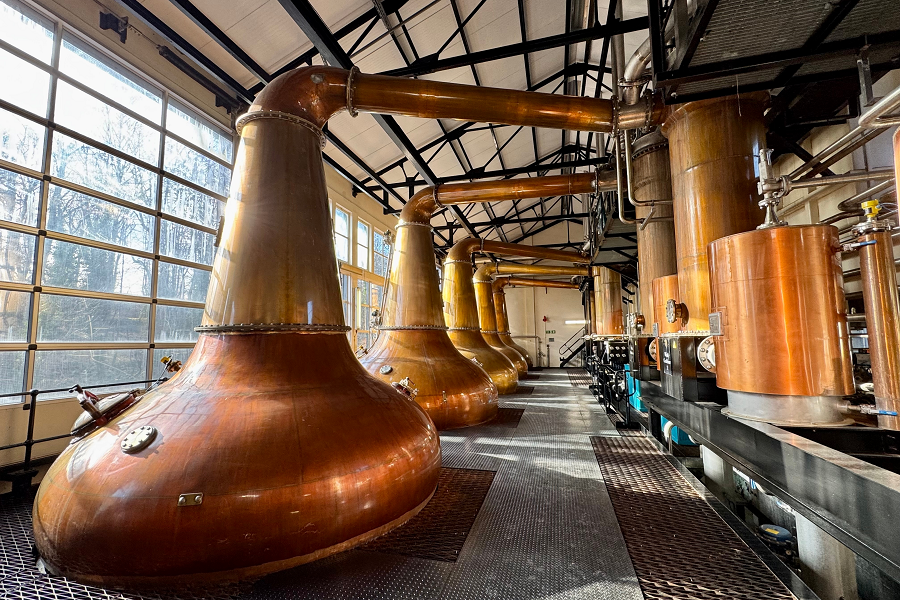
The helmet, neck and lyne arm are involved in vapor movement, heat loss and condensation behavior. Depending on the still design and spirit style, heat exchange in these sections contributes to the way vapors develop and reflux occurs. Insulating them without considering the process can alter the thermal behavior of the still.
The objective is to reduce unwanted energy loss without interfering with the heat exchange required for the intended distillation profile.
Insulation should also be inspected periodically. Damaged cladding, wet insulation, exposed steam pipes and deteriorated insulation around fittings can gradually increase heat loss and operating costs.
Recovering Heat from the Distillation Process
A distillery does not need to treat every source of residual heat as waste. Heat recovered from one stage may be useful in another part of the production process.
Preheating the Wash
Where the process allows, fermented wash can be preheated before entering the still. Raising its initial temperature reduces the additional heat needed to reach boiling temperature.
This can shorten the heating stage and improve the overall production schedule, particularly in facilities operating repeated distillation batches.
The preheating method must suit the characteristics of the wash and the distillery’s process arrangement. Material compatibility, cleaning requirements and temperature control should all be considered.
Recovering Heat from Condensers
Condensers transfer heat from alcohol vapors to a cooling medium. The resulting warm water may be recovered for suitable process applications instead of being discharged immediately.
For example, recovered hot water can be directed to a hot-water storage tank and used as part of the first brewing or mashing water in whisky production, provided its temperature and water quality meet the requirements of the process.
Some systems also use a secondary cooling stage, or subcooler, after the main condenser. This allows useful heat to be recovered from the main cooling circuit while the distillate is cooled further before reaching the spirit safe.
The additional cooling step is important when the temperature of the collected distillate must remain within the operating limits of the spirit safe and its measuring instruments.
Heat recovery should be evaluated across the entire distillery rather than as an isolated feature of the condenser. The value depends on whether another process has a simultaneous or scheduled demand for the recovered heat.
Matching the Heating System to the Distillery Project
There is no single heating arrangement that suits every distillery. A suitable configuration depends on several interconnected factors:
Still capacity and production frequency: A small pot still operating a few batches per week has different utility requirements from a facility running several large stills every day.
Spirit type and distillation method: Whisky, brandy, rum, gin and neutral spirits may use different still configurations and operating conditions. The required heating response should match the process and desired spirit character.
Feedstock characteristics: The composition of the fermented charge, particularly its solids content and tendency to form deposits, can influence the choice of heating surface and maintenance arrangement.
Available utilities: Natural gas, LPG, electricity, steam and thermal oil may each be considered depending on the project location, energy prices, infrastructure and environmental requirements.
Future expansion: The heating system should account for planned production growth, possible additional stills and the capacity of the existing utility network.
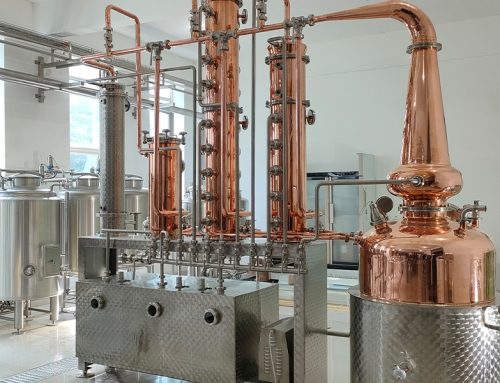
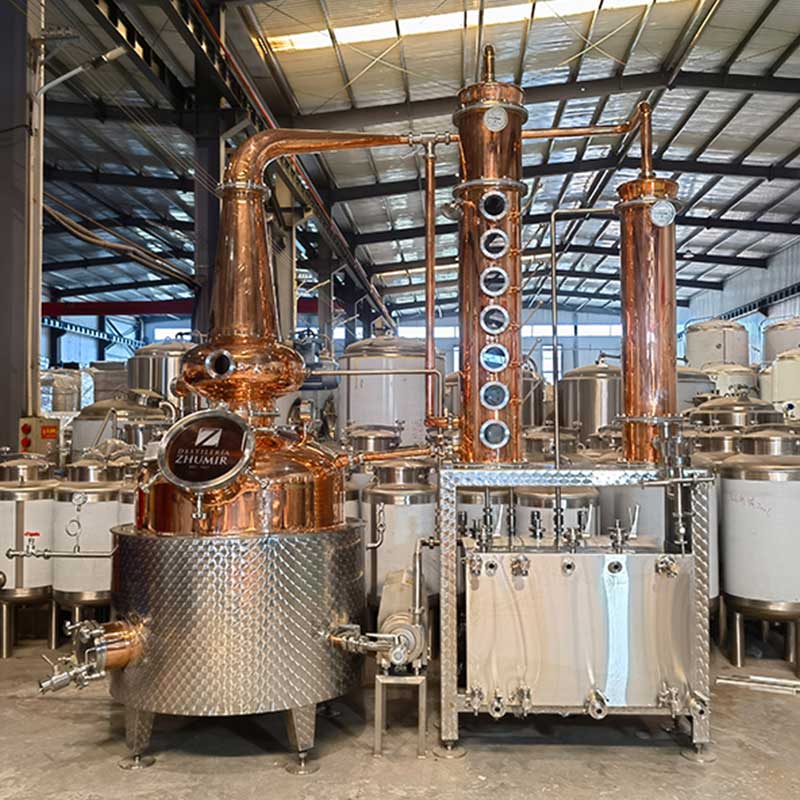
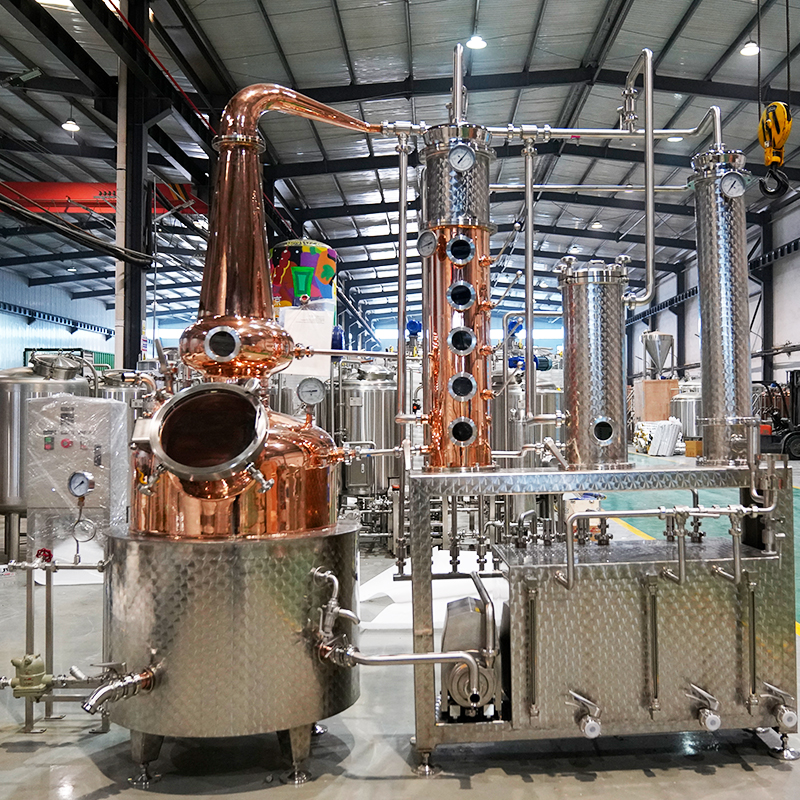
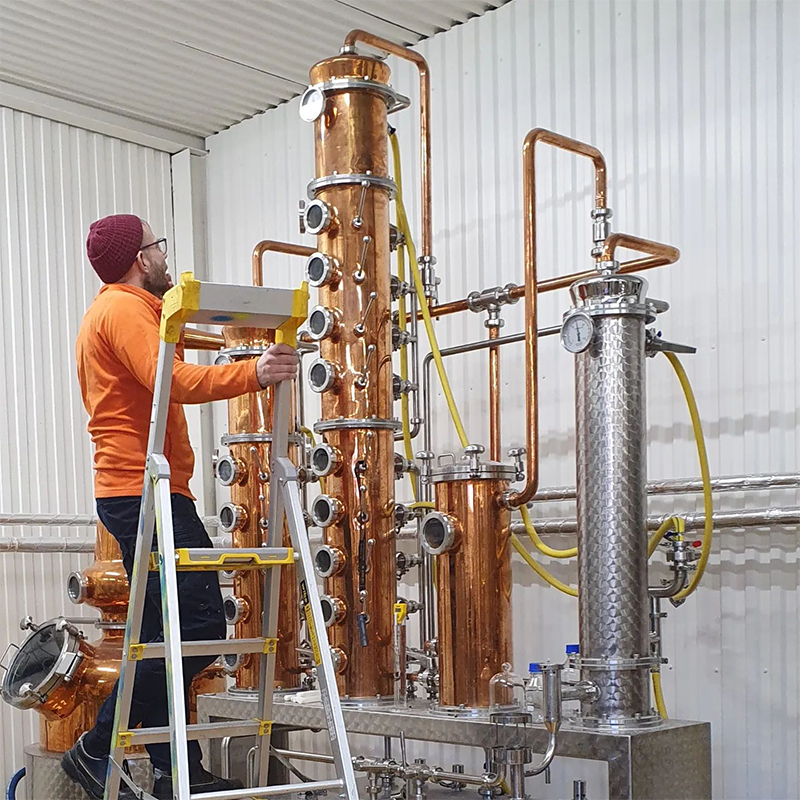
At Tiantai, distillery equipment projects are developed around the intended production process rather than selecting a still in isolation. Pot stills, hybrid stills and column stills can be configured with suitable heating arrangements, including direct fire, steam and electric heating, depending on the model and project requirements.
For distilleries planning equipment in the 100L–8,000L per-batch range, the engineering process can also consider the relationship between still capacity, boiler demand, heating control, condensers, cooling systems and auxiliary process tanks.
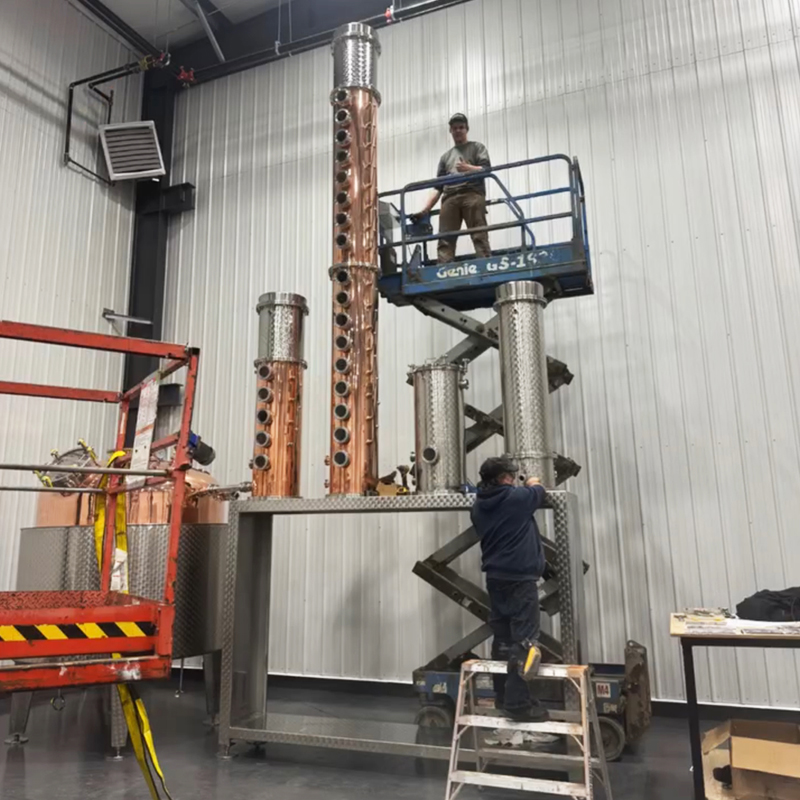
Tiantai provides distillery equipment design, manufacturing, layout planning, installation and commissioning support. Coordinating these elements at the project stage helps avoid situations where the still itself meets the required capacity but the heating utilities cannot support the intended production schedule.
Conclusion
An effective distillery heating system involves more than choosing between direct fire and steam. Still construction, burner or boiler capacity, heat distribution, condensate removal, insulation and heat recovery all influence how efficiently the distillery operates.
For smaller installations, an independent heating arrangement may offer the simplicity required. For larger production facilities, a central steam network with individually controlled heating circuits and condensate recovery may provide better coordination across multiple vessels.
The most practical solution is the one designed around the actual charge, distillation schedule, spirit characteristics and available utilities. Considering these requirements before equipment manufacturing helps establish a heating system that supports consistent operation, manageable energy consumption and future production needs.
Planning a new distillery or upgrading an existing still system? Contact Tiantai to discuss your required batch capacity, spirit type, heating source and production schedule. The engineering team can help develop an equipment configuration that matches your distillation process and project requirements.