Safety Design and Operating Precautions for Distillation Equipment
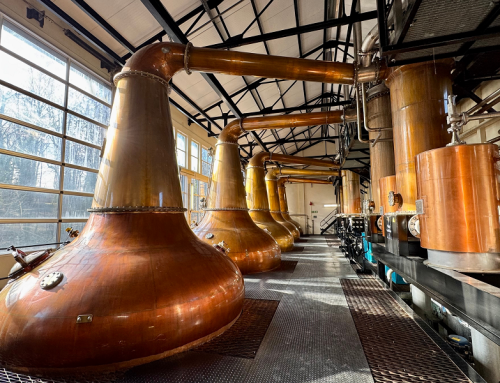
For a spirits distillery, distillation equipment affects not only the quality, production efficiency, and flavor of the final product but also the safety of the entire production process. Whether producing whiskey, vodka, gin, brandy, or rum, the process involves heating, alcohol vapor generation, condensation, and liquid transfer. Improper equipment design or incorrect operating procedures may lead to steam leaks, excessive pressure, fire, or even explosions.
Therefore, when planning a spirits production line, it is important to consider more than just equipment materials, capacity, and production output. Safety protection systems, auxiliary equipment, and daily operating procedures must also be taken into account.
So, what safety features should reliable distillation equipment include? What precautions should operators follow during actual production? This article explores these questions from three perspectives: equipment safety design, daily operation, and overall distillery planning.
一、Key Safety Design Features of Distillation Equipment
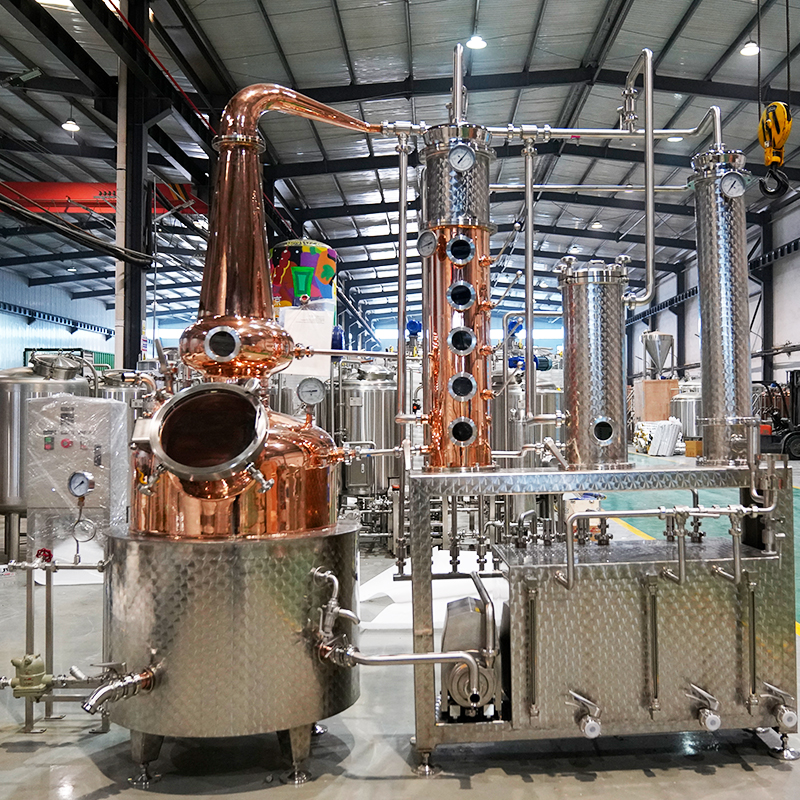
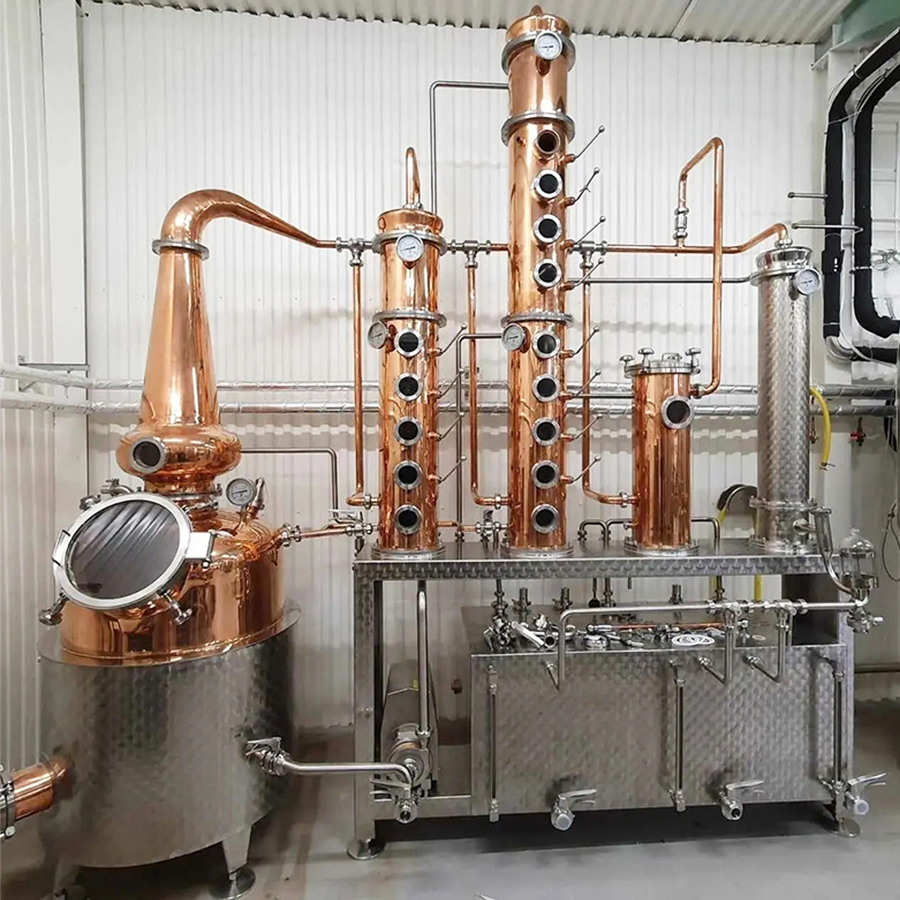
The safety of distillation equipment depends on several systems working together, including equipment materials, heating systems, pressure protection, condensation systems, electrical components, and ventilation facilities.
1.Choose Suitable Equipment Materials
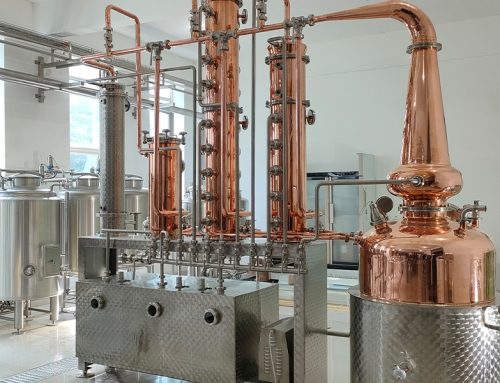
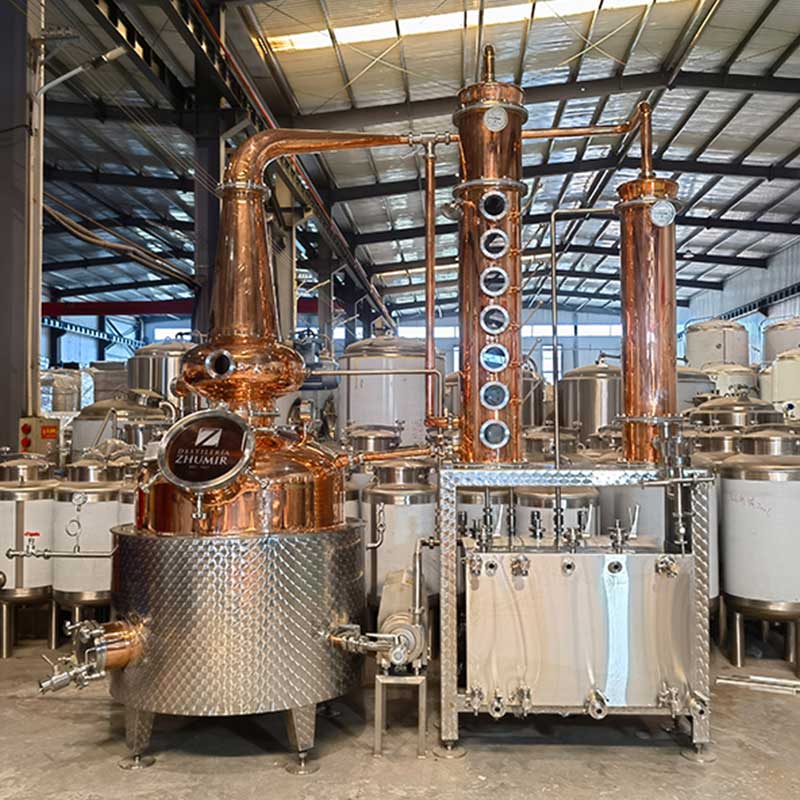
Distillation equipment is commonly manufactured from copper, 304/316L stainless steel, or a combination of copper and stainless steel. The appropriate material should be selected according to the type of spirits being produced and the specific distillation process.
Copper offers excellent thermal conductivity and can react with certain sulfur compounds during distillation, helping improve the flavor characteristics of the spirit. For this reason, copper is commonly used in traditional whiskey and brandy distillation equipment.
Stainless steel, on the other hand, provides excellent corrosion resistance, hygienic properties, and ease of cleaning. It is widely used in modern distillation equipment and associated piping systems.
2.Install Appropriate Pressure and Temperature Protection Devices
A large amount of vapor is generated during distillation. If the vapor passage becomes blocked, the outlet is restricted, or the control system malfunctions, abnormal pressure buildup may occur inside the equipment.
Therefore, pressure monitoring, temperature monitoring, and appropriate pressure-relief devices should be selected and installed according to the equipment structure and design pressure. For equipment and systems that may be exposed to overpressure, properly sized and calculated pressure-relief devices should be provided.
It is important to understand that atmospheric distillation stills and pressure-rated distillation equipment have different safety requirements. They should not simply be equipped with identical pressure protection configurations. In addition, pressure-relief devices must remain unobstructed and should never be closed, removed, or modified without authorization.
For automated distillation systems, additional features such as abnormal temperature alarms, pressure alarms, and heating interlocks can be installed to improve operational safety.
3.Properly Design the Heating and Condensation Systems
Heating and condensation systems are two essential components of distillation equipment. They must work together to ensure stable and reliable operation.
Common heating methods include steam heating and electric heating. Steam heating systems should be equipped with properly designed steam pipelines, pressure-reducing devices, steam traps, and condensate drainage systems to prevent abnormal steam pressure and condensate accumulation.
Electric heating systems should include appropriate overload protection, short-circuit protection, grounding, and temperature protection. Electrical equipment must also meet the applicable explosion-protection requirements based on the hazardous area classification.
The condenser converts the alcohol vapor generated during distillation back into liquid form. Its heat exchange capacity should be properly matched to the output of the distillation equipment. A stable cooling water supply is also essential to ensure sufficient condensation and prevent uncondensed alcohol vapor from escaping.
For critical distillation systems, cooling water flow monitoring, abnormal-condition alarms, and heating interlocks can be added. These features help stop the heating process promptly if the cooling water supply is interrupted or the condensation system malfunctions.
4.Pay Attention to Fire Prevention, Explosion Protection, and Ventilation
Alcohol and alcohol vapor are highly flammable, making fire prevention and explosion protection essential considerations in distillery safety design.
During equipment selection and facility planning, the following measures should be considered:
· Classify hazardous areas according to the potential release of alcohol vapor and install electrical equipment that meets the applicable explosion-protection requirements.
· Provide effective natural or mechanical ventilation to prevent flammable vapor from accumulating inside the production area.
· Implement appropriate anti-static grounding and equipotential bonding for equipment, pipelines, and storage tanks.
· Maintain adequate separation between potential ignition sources, including open flames and hot surfaces.
· Install fire extinguishers, fire alarm systems, and emergency evacuation facilities in accordance with local fire safety regulations.
It is particularly important to recognize that alcohol vapor can accumulate in low-lying areas. Therefore, ventilation design should not focus solely on the upper part of the workshop. Ground-level areas, drainage channels, and spaces around equipment must also be considered.
These safety measures should be incorporated into the initial distillery design rather than added only after equipment installation has been completed.
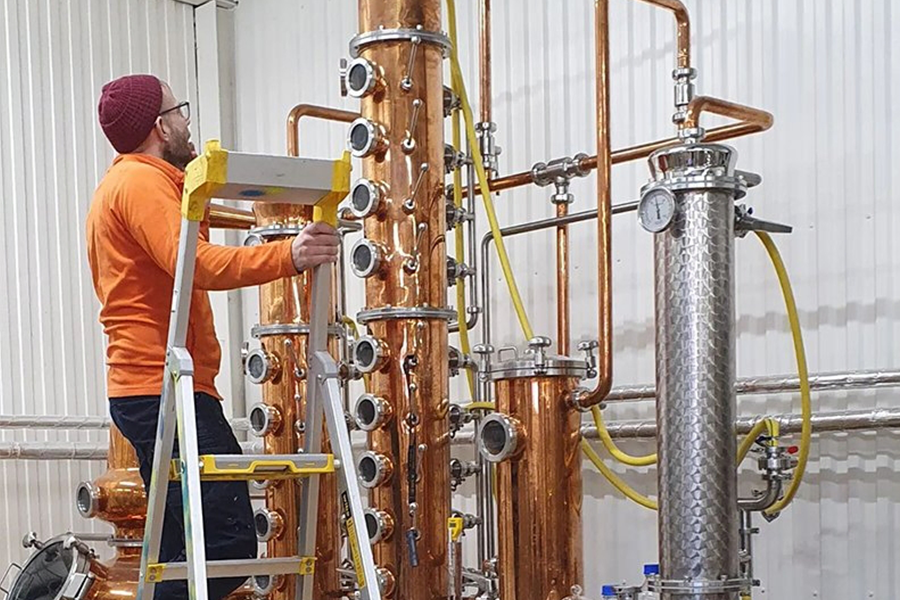
二、Daily Operating Precautions for Distillation Equipment
Proper equipment design provides the foundation for safe production, but standardized operation and regular maintenance are equally important. Distilleries should establish clear operating procedures to ensure that equipment remains in good working condition.
1.Inspect Equipment Before Startup
Before starting the distillation equipment, operators should carry out the necessary inspections, including:
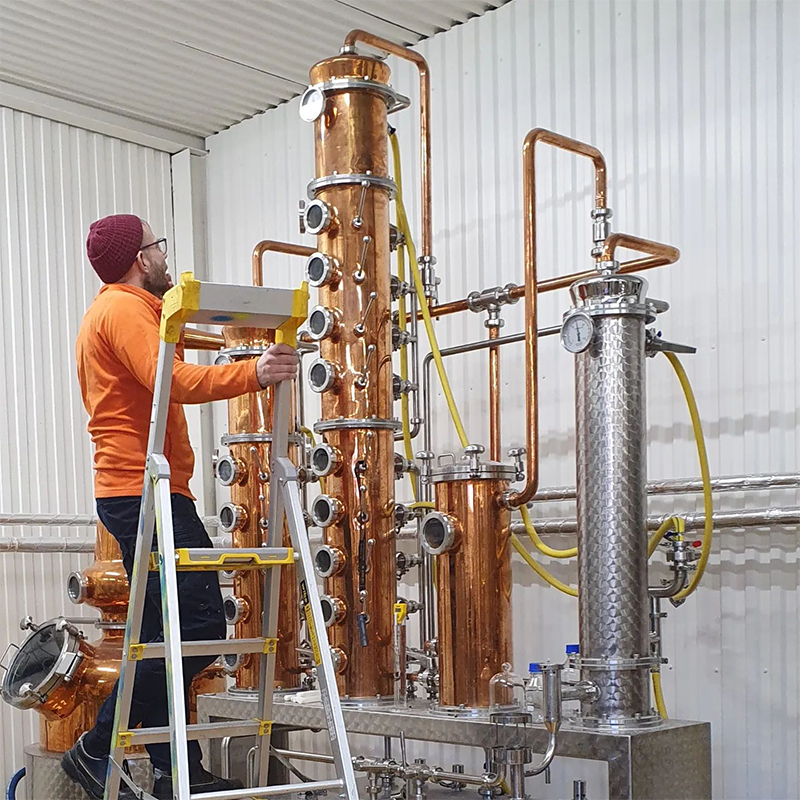
· Check the distillation still, condenser, pipelines, and valves for leaks or visible damage.
· Confirm that pressure gauges, temperature monitoring instruments, and safety protection devices are functioning properly.
· Inspect the heating system, cooling water system, and associated pipeline connections.
· Ensure that ventilation, electrical systems, and grounding facilities are operating correctly.
· Check the internal cleanliness of the equipment and confirm that the feed volume is within the specified operating limits.
· Make sure that vapor passages, vapor outlets, and related pipelines are unobstructed and have not been incorrectly closed.
In particular, atmospheric distillation equipment must never be operated as a sealed system unless it has been specifically designed and protected for pressure operation.
2.Control Distillation Temperature and Operating Parameters
Different types of spirits require different distillation processes. Operators must therefore adjust heating temperature, equipment pressure, and distillation speed according to the product characteristics and production requirements.
For production lines equipped with rectification columns, operators should also monitor key parameters such as column temperature, pressure, reflux ratio, and liquid level to maintain stable distillation performance.
Sudden increases in heating power and operation beyond the equipment’s specified design limits should be avoided. If abnormal pressure, uncontrolled temperature, or alcohol vapor leakage occurs, operators should follow established emergency procedures to stop heating and the relevant feed operations, then arrange for qualified personnel to inspect and resolve the problem.
3.Maintain a Stable Cooling System
The condenser requires a continuous and stable cooling water supply to effectively convert alcohol vapor into liquid. Insufficient cooling water flow or an interrupted supply may reduce condensation efficiency and increase the risk of vapor leakage and flammable vapor accumulation.
Therefore, operators should regularly check cooling water flow, pressure, and inlet and outlet temperatures to ensure that the condensation system operates properly.
For highly automated production lines, additional flow monitoring, abnormal-condition alarms, and heating interlocks can be installed to improve operational safety.
4.Implement Fire and Explosion Prevention Measures
Ignition sources must be strictly controlled in distillation workshops, particularly in areas where alcohol vapor may be present.
Smoking and open flames should be strictly prohibited during daily production. Hot work activities, including welding and cutting, must not be carried out without proper authorization and safety procedures.
Alcohol pipelines, storage tanks, and connection points should also be inspected regularly. If a leak is detected, operators must follow the emergency response plan and take appropriate action while ensuring adequate ventilation in the production area.
Firefighting equipment, alarm systems, and emergency facilities should also be inspected regularly to ensure that they are ready for use when needed.
5.Perform Regular Equipment Cleaning and Maintenance
Distilleries should establish a regular equipment maintenance program. Key maintenance tasks include:
· Regularly clean the distillation still, condenser, and associated pipelines to prevent residue buildup from affecting equipment performance.
· Inspect valves, flanges, gaskets, and welded joints, and promptly repair any leaks or damage.
· Calibrate pressure gauges, temperature sensors, and safety valves according to the required maintenance schedule.
· Inspect steam pipelines, cooling systems, and electrical protection devices.
· Maintain detailed records of equipment operation, fault handling, and maintenance activities.
Regular inspection and maintenance help identify potential problems early, reduce equipment failures, and extend the service life of the entire distillation system.
How to Reduce Distillery Safety Risks from the Start
For investors planning to establish a distillery, safety management should begin during the initial project planning stage rather than only after the equipment has been put into operation.
三、Daily Operating Precautions for Distillation Equipment
Proper equipment design provides the foundation for safe production, but standardized operation and regular maintenance are equally important. Distilleries should establish clear operating procedures to ensure that equipment remains in good working condition.
1.Inspect Equipment Before Startup
Before starting the distillation equipment, operators should carry out the necessary inspections, including:
· Check the distillation still, condenser, pipelines, and valves for leaks or visible damage.
· Confirm that pressure gauges, temperature monitoring instruments, and safety protection devices are functioning properly.
· Inspect the heating system, cooling water system, and associated pipeline connections.
· Ensure that ventilation, electrical systems, and grounding facilities are operating correctly.
· Check the internal cleanliness of the equipment and confirm that the feed volume is within the specified operating limits.
· Make sure that vapor passages, vapor outlets, and related pipelines are unobstructed and have not been incorrectly closed.
In particular, atmospheric distillation equipment must never be operated as a sealed system unless it has been specifically designed and protected for pressure operation.
2.Control Distillation Temperature and Operating Parameters
Different types of spirits require different distillation processes. Operators must therefore adjust heating temperature, equipment pressure, and distillation speed according to the product characteristics and production requirements.
For production lines equipped with rectification columns, operators should also monitor key parameters such as column temperature, pressure, reflux ratio, and liquid level to maintain stable distillation performance.
Sudden increases in heating power and operation beyond the equipment’s specified design limits should be avoided. If abnormal pressure, uncontrolled temperature, or alcohol vapor leakage occurs, operators should follow established emergency procedures to stop heating and the relevant feed operations, then arrange for qualified personnel to inspect and resolve the problem.
3.Maintain a Stable Cooling System
The condenser requires a continuous and stable cooling water supply to effectively convert alcohol vapor into liquid. Insufficient cooling water flow or an interrupted supply may reduce condensation efficiency and increase the risk of vapor leakage and flammable vapor accumulation.
Therefore, operators should regularly check cooling water flow, pressure, and inlet and outlet temperatures to ensure that the condensation system operates properly.
For highly automated production lines, additional flow monitoring, abnormal-condition alarms, and heating interlocks can be installed to improve operational safety.
4.Implement Fire and Explosion Prevention Measures
Ignition sources must be strictly controlled in distillation workshops, particularly in areas where alcohol vapor may be present.
Smoking and open flames should be strictly prohibited during daily production. Hot work activities, including welding and cutting, must not be carried out without proper authorization and safety procedures.
Alcohol pipelines, storage tanks, and connection points should also be inspected regularly. If a leak is detected, operators must follow the emergency response plan and take appropriate action while ensuring adequate ventilation in the production area.
Firefighting equipment, alarm systems, and emergency facilities should also be inspected regularly to ensure that they are ready for use when needed.
5.Perform Regular Equipment Cleaning and Maintenance
Distilleries should establish a regular equipment maintenance program. Key maintenance tasks include:
· Regularly clean the distillation still, condenser, and associated pipelines to prevent residue buildup from affecting equipment performance.
· Inspect valves, flanges, gaskets, and welded joints, and promptly repair any leaks or damage.
· Calibrate pressure gauges, temperature sensors, and safety valves according to the required maintenance schedule.
· Inspect steam pipelines, cooling systems, and electrical protection devices.
· Maintain detailed records of equipment operation, fault handling, and maintenance activities.
Regular inspection and maintenance help identify potential problems early, reduce equipment failures, and extend the service life of the entire distillation system.
四、How to Reduce Distillery Safety Risks from the Start
For investors planning to establish a distillery, safety management should begin during the initial project planning stage rather than only after the equipment has been put into operation.
Select Equipment Based on the Spirit Type and Production Capacity
Whiskey, vodka, gin, brandy, and other spirits have different production processes. As a result, their requirements for distillation stills, rectification columns, condensers, and auxiliary equipment also vary.
The equipment configuration should be selected according to the target spirit, expected production output, and production schedule. This ensures that the processing capacity of the distillation system matches actual production requirements.
Evaluate Equipment Safety Configurations
Before purchasing distillation equipment, investors should check whether it includes the necessary temperature monitoring, pressure protection, pressure-relief devices, and abnormal-condition alarms.
It is also essential to confirm that the equipment design, manufacturing, and installation comply with the applicable safety standards and regulations in the project location.
For distillation equipment, safety configurations are important not only for protecting individual machines but also for ensuring the stable operation of the entire production system.
Pay Attention to the Overall Production Line Layout
Distillation equipment does not operate independently. It must work together with heating systems, cooling systems, liquid transfer pipelines, and spirit storage tanks.
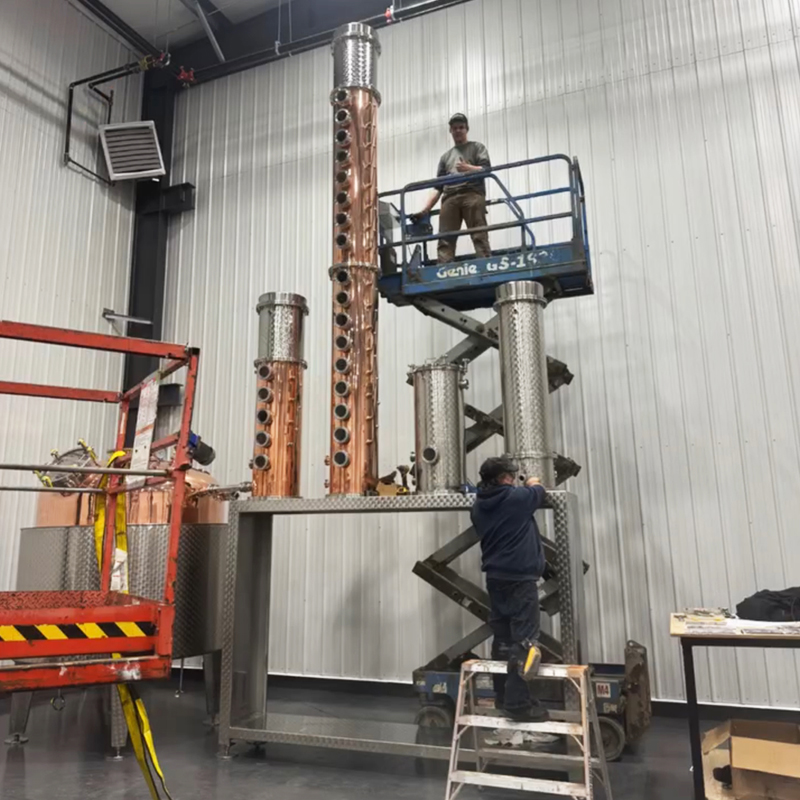
Proper planning of equipment locations, pipeline routing, ventilation facilities, fire exits, and operating spaces can improve production efficiency while reducing potential safety risks. Sufficient space should also be reserved for equipment inspection, cleaning, and routine maintenance.
A professional equipment supplier should provide more than equipment manufacturing. Depending on customer requirements, services may also include production line design, equipment installation, commissioning, and operator training to help customers complete their distillery projects more efficiently.
Tiantai Brewtech specializes in the design and manufacturing of distillation equipment and complete spirits production lines. Based on each customer’s spirit type, production scale, and processing requirements, Tiantai provides customized solutions to help build safer, more stable, and more efficient spirits production facilities.