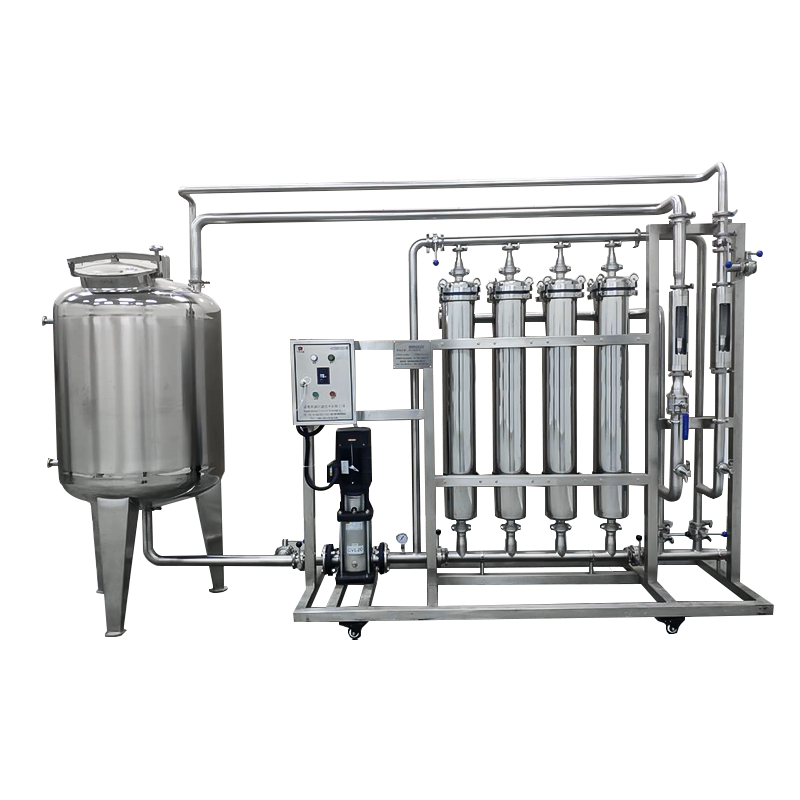
Common Filtration & Separation Equipment for Spirits Production
Distillation does most of the work in a spirits production line, but it does not necessarily leave the spirit ready for storage or bottling.
Depending on the spirit and the process, further separation may be needed to remove solids from a fermented wash, clarify a newly distilled spirit, remove barrel char, take out carbon particles, or prevent haze after blending and proofing.
This is why filtration equipment should be selected according to the job it needs to perform rather than simply according to its nominal filtration rating.
A distillery may use a centrifuge at the beginning of the process, a depth filter during clarification, and a cartridge filter immediately before bottling. Another producer may need only one or two of these stages. Whisky may require a dedicated chill-filtration process, while vodka may require activated carbon treatment followed by particle filtration.
The following equipment covers the main filtration and separation options encountered in commercial spirits production.
Common Filtration and Separation Equipment in Distilleries
| Equipment / Technology | Main Function | Typical Spirits Applications |
|---|---|---|
| Decanter Centrifuge | High-solids solid-liquid separation | Selected fermentation and specialty spirit processes |
| Disc Stack Centrifuge | Fine centrifugal clarification | Fermented wash, yeast and suspended solids separation |
| Bag Filter | Coarse or intermediate filtration | Pre-filtration, carbon particle removal, equipment protection |
| Plate & Frame Filter | Pressure filtration with filter sheets | Whisky, vodka, rum, brandy, liqueurs |
| Depth Filter / Filter Sheets | Clarification, polishing and haze reduction | Whisky, brandy, vodka, white and aged spirits |
| Diatomaceous Earth / Kieselguhr Filter | Precoat filtration and clarification | Selected whisky, brandy, rum and other spirits |
| Cartridge Filter | Fine and final particle filtration | Whisky, vodka, gin, rum, brandy |
| Activated Carbon Filtration | Adsorptive treatment | Vodka and neutral spirits |
| Microfiltration (MF) | Fine particle and microbial reduction | Selected spirits and specialist applications |
| Vacuum Filter | Coarse solid-liquid separation | Limited upstream applications |
| Ultrafiltration (UF) | Macromolecular separation | Specialist process applications |
| Nanofiltration (NF) | Selective molecular separation | Specialist process or water-treatment applications |
The table is not intended as a simple ranking from coarse to fine. Centrifuges and filters work in fundamentally different ways, and membrane systems solve a different type of separation problem altogether.
For most distilleries, the equipment selection is driven by three questions:
What needs to be removed?
At what stage of production does it need to be removed?
How much of the spirit’s original character needs to be retained?
Those questions are more useful than choosing the smallest available micron rating.
Plate & Frame Filters
Plate and frame filtration remains a practical choice for batch clarification in many distilleries.
The filter is assembled from plates and filter sheets. As the spirit is pumped through the system, suspended material is retained by the filter media. Different sheet grades can be selected for different products and filtration objectives.
This makes the equipment particularly useful when a distillery wants flexibility rather than a single fixed filtration specification.
Plate and frame filters can be used for:
- Whisky clarification
- Vodka and neutral spirit polishing
- Brandy and rum filtration
- Liqueur clarification
- Filtration after blending or maturation
The same basic filter can handle different products by changing the filter sheets and filtration area.
For smaller and medium-sized distilleries, the equipment is also relatively straightforward to operate and maintain. The trade-off is that conventional open systems require filter-sheet replacement and cleaning by operators. Where production is highly automated, enclosed depth-filtration systems may be preferred.
Depth Filtration and Filter Sheets
Depth filtration is particularly useful when a spirit contains fine suspended material that should be removed without relying entirely on a very tight surface filter.
Instead of stopping particles only at the surface, a depth-filter medium provides a three-dimensional structure in which particles are retained. The composition of the filter sheet can also influence adsorption and the removal of haze-forming material.
This makes depth filtration useful for both clarification and polishing.
In a distillery, filter sheets may be selected for different duties:
Coarser grades for removing particulate matter and protecting subsequent filters.
Finer grades for polishing a spirit before bottling.
Specialized grades for haze control and applications where the interaction between the filter medium and the spirit needs to be carefully controlled.
The choice of filter sheet therefore depends on more than particle size. Spirit composition, alcohol strength, temperature and the desired final appearance can all affect the result.
This becomes particularly important with whisky and brandy, where inappropriate filtration media can contribute undesirable extractables or affect the stability of the finished spirit.
Diatomaceous Earth / Kieselguhr Filtration
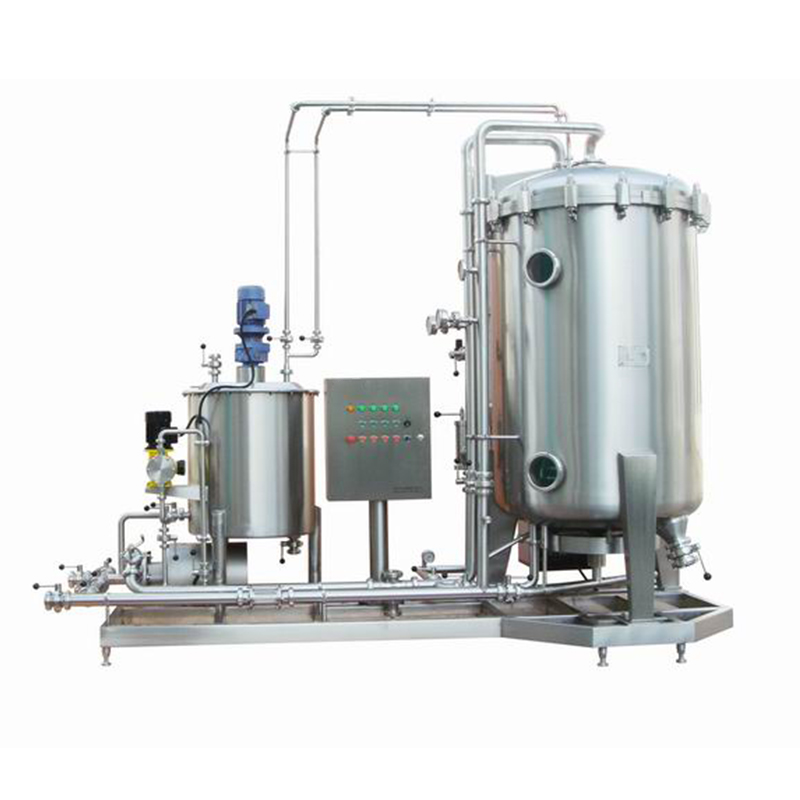
Diatomaceous earth, commonly known as DE or kieselguhr, is a filter aid used in precoat filtration.
Before the product is filtered, the filter aid is deposited onto the filtration surface to create a porous filter cake. The spirit then passes through this layer, while suspended material is trapped within the cake.
DE filtration can provide effective clarification and can handle a relatively high particle load. It may be considered for:
- Whisky
- Brandy
- Rum
- Liqueurs
- Other spirits requiring depth clarification
Different DE grades provide different filtration characteristics, so the filter aid needs to be selected according to the spirit and the desired degree of clarification.
There is, however, a practical distinction between DE precoat filtration and modern depth-filter sheets. DE is a consumable filter aid, which means the spent material must be removed and disposed of after operation. Preparing the precoat layer also adds another process step.
For this reason, a distillery may choose between a traditional DE system and a sheet-based or enclosed depth-filtration system depending on production scale, labor requirements, operating cost and product recovery.
DE should therefore be regarded as one useful option within the broader field of depth and precoat filtration, rather than as the default filter for all spirits.
Cartridge Filters
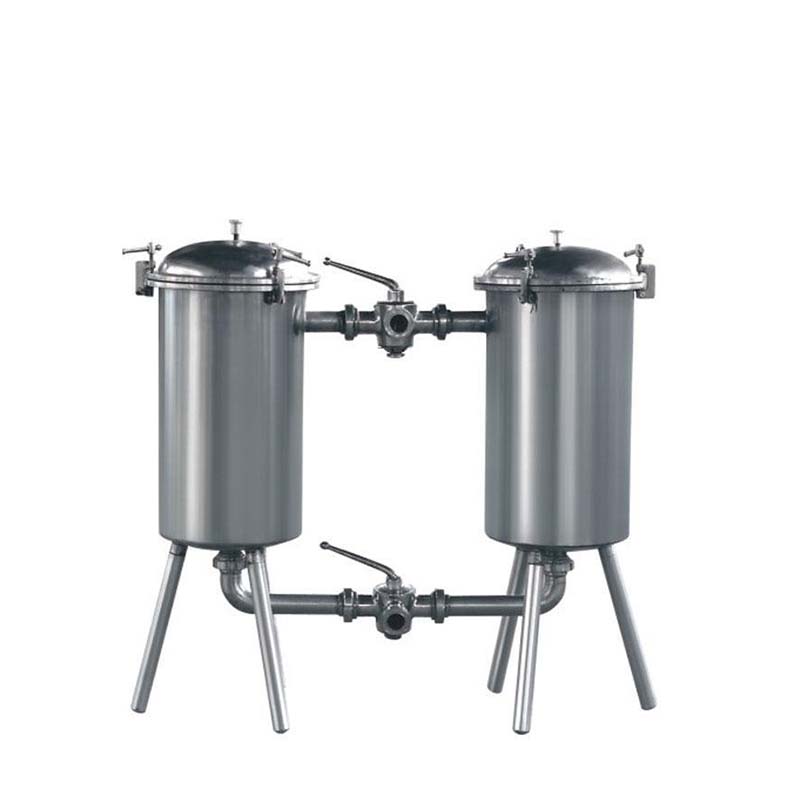
Cartridge filtration is generally used when a distillery needs controlled fine filtration in a closed system.
The filter elements are installed in a sanitary housing, and the spirit passes through the selected cartridge before moving to storage, blending or bottling.
One of its biggest advantages is that it fits naturally into a modern production line. A cartridge housing occupies relatively little floor space, the filter elements can be exchanged quickly, and the system can be incorporated into automated transfer and filling operations.
Typical duties include:
- Final polishing
- Fine particle removal
- Removal of carbon fines
- Protection of filling equipment
- Filtration after maturation or blending
It is often more efficient to use a coarse filter before the cartridge rather than asking the fine cartridge to handle all of the solids.
For example:
Coarse Particle Removal → Depth Filtration → Cartridge Filtration → Bottling
This approach reduces premature loading of the final filter and can improve overall filtration economy.
Bag Filters
Bag filters are normally used upstream of finer filtration.
The filter bag captures suspended particles as the liquid passes through it. Because the bag can accommodate a relatively high particle load, it is useful when the spirit contains barrel particles, carbon fines, or other material that would quickly load a fine cartridge.
In a distillery, a bag filter may be installed:
- Before a cartridge filter
- After activated carbon treatment
- During barrel-char removal
- As a protection filter on a transfer line
- Before another polishing stage
The equipment is relatively simple, and filter replacement is straightforward.
Its role is therefore mainly practical: remove the larger particle load first and protect the more expensive fine filtration stage downstream.
A bag filter is not normally selected simply because a project requires “final fine filtration.”
Disc Stack Centrifuges
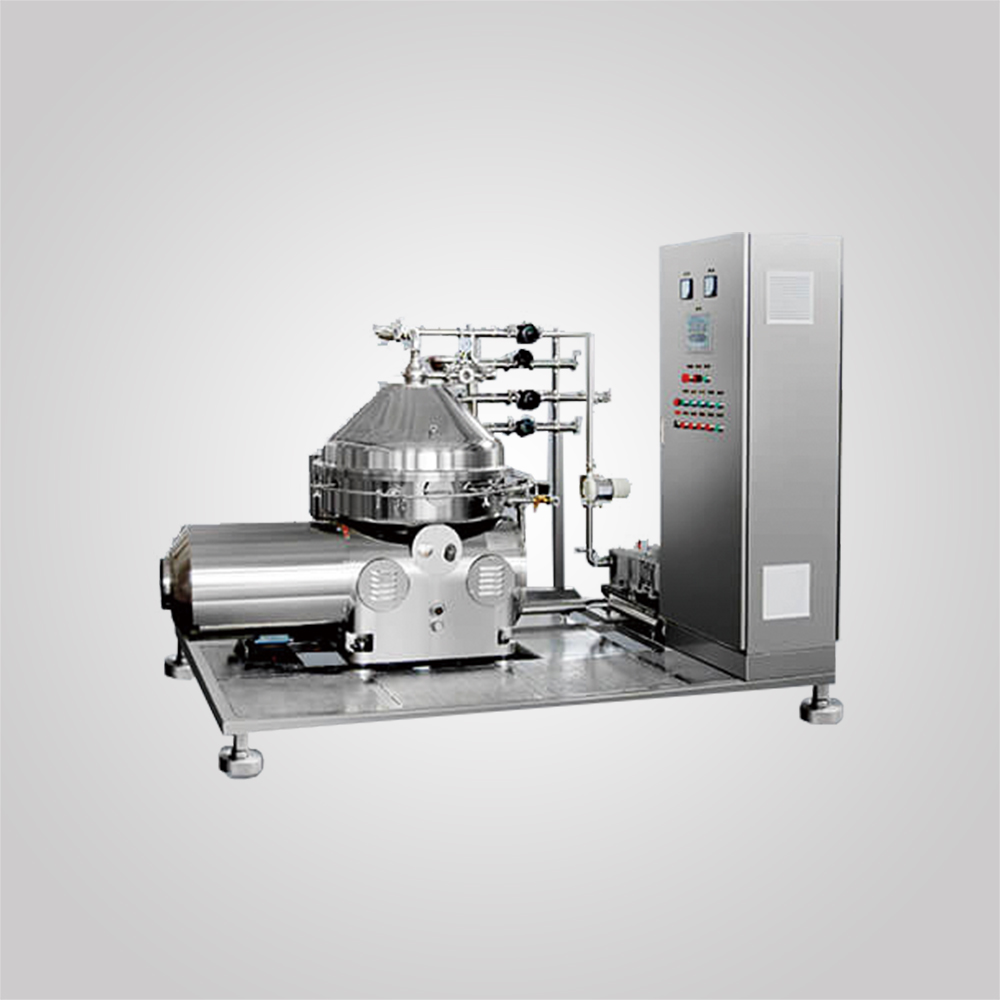
A disc stack centrifuge performs separation without a conventional filter medium.
The liquid is subjected to high centrifugal force inside the rotating bowl. Fine suspended particles, yeast and other solids can then be separated according to their density.
This makes the technology useful when clarification is required but the incoming stream still contains enough solids to make fine filtration inefficient.
In distilleries, possible applications include:
- Clarification of fermented wash
- Yeast removal
- Fine solid-liquid separation
- Reduction of solids entering downstream equipment
- Selected agave and specialty spirit processes
The key point is that a centrifuge is not simply a replacement for a filter.
A disc stack centrifuge is most useful when separation is driven by density differences and the process benefits from continuous operation. A downstream cartridge or depth filter may still be required when the finished spirit needs a higher level of particulate removal.
Decanter Centrifuges
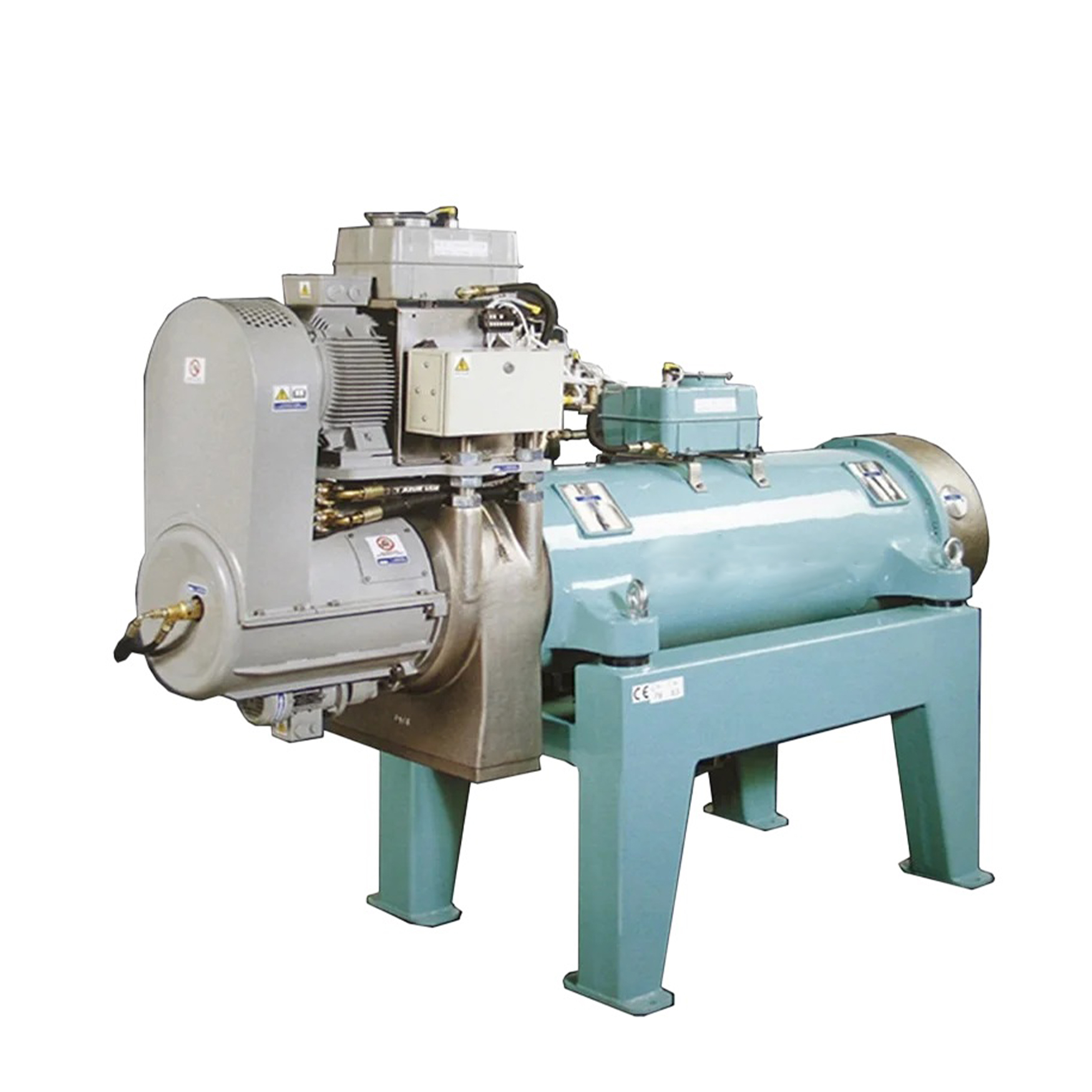
A decanter centrifuge is intended for streams with a considerably higher solids concentration than the liquid normally seen at the final filtration stage.
Inside the horizontal rotating bowl, solids settle under centrifugal force and are continuously conveyed toward the solids outlet by the screw conveyor.
This makes a decanter suitable for upstream processes such as:
- High-solids fermentation
- Agave and other plant-based feedstocks
- Selected fruit-spirit production
- Solid-liquid separation before distillation
- Specialty processes where large quantities of solids need to be removed continuously
A decanter is therefore more closely related to solid-liquid separation than final spirit filtration.
For a conventional whisky, vodka, gin or rum plant processing an already clarified wash, there may be little reason to install a decanter. Its value becomes much clearer when the production process generates a substantial solids load.
Activated Carbon Filtration
Activated carbon treatment is not conventional particle filtration.
Its primary function is adsorption: certain compounds are attracted to and retained by the carbon. This makes activated carbon particularly relevant to vodka and neutral-spirit production, where reducing unwanted color, aroma, or flavor components may be part of the process.
A simplified production sequence can be:
Distillation / Rectification → Activated Carbon Treatment → Particle Filtration → Proofing → Final Filtration
Carbon treatment should be carefully controlled. The purpose is not to remove every compound from the spirit, because excessive treatment can also reduce characteristics that the producer wants to retain.
After carbon treatment, a separate particle-filtration stage is commonly used to remove carbon fines before the spirit moves further through the production line.
Membrane Filtration: MF, UF and NF
Membrane filtration can be used in alcohol processing, but it belongs mainly to specialist applications rather than routine final filtration of conventional spirits.
Microfiltration (MF)
Microfiltration uses a membrane with relatively large pores compared with UF and NF. It can be used for fine particulate removal and, depending on the membrane and operating conditions, microbial reduction.
Potential applications include selected white spirits, process streams and specialized clarification requirements.
Ultrafiltration (UF)
Ultrafiltration is based more on molecular-size separation than conventional particle filtration. It can retain proteins, colloids and other larger molecules.
UF can therefore be useful for specific process streams where the objective is to separate macromolecular components. It is not normally necessary simply to make a finished whisky or vodka visually clear.
Nanofiltration (NF)
Nanofiltration provides still more selective separation and is mainly relevant to specialist process applications, concentration, or water treatment.
For most standard distillery bottling operations, MF, UF and NF are not a substitute for a well-designed depth or cartridge filtration system.
How Filtration Requirements Differ by Spirit
Filtration is not standardized across all spirits. The appropriate setup changes with the raw material, distillation method, maturation process and desired character of the final product.
Whisky
Whisky filtration may have several different objectives.
After maturation, relatively large particles such as barrel char may need to be removed. After blending and proofing, the producer may also want to control haze and achieve a consistent appearance.
For a chill-filtered whisky, a simplified sequence may be:
Maturation → Coarse Filtration → Chilling → Fine Depth Filtration → Final Polishing → Bottling
The filtration conditions depend on the bottling strength, chilling temperature, and desired product style.
A whisky producer who chooses not to chill filter may use a less intensive clarification process, particularly where retaining more naturally occurring compounds is part of the product positioning.
Vodka
Vodka is generally produced with an emphasis on clarity and a neutral sensory profile.
Where activated carbon is part of the process, filtration serves two separate purposes. First, carbon treatment modifies the spirit through adsorption. Second, downstream filtration removes carbon fines and remaining suspended particles.
A practical sequence can be:
Rectification → Carbon Treatment → Particle Filtration → Proofing → Final Filtration
The filtration system should be designed so that the final product is clear without unnecessarily stripping the character created during distillation.
Gin
Gin is more dependent on the botanical process.
Vapor infusion normally introduces less solid material into the spirit than methods involving direct botanical steeping. Maceration and other extraction methods can leave fine botanical particles that need to be removed before bottling.
A possible process is:
Botanical Extraction / Distillation → Coarse Filtration → Fine Filtration → Proofing → Bottling
For a relatively clean botanical distillate, a single fine filtration stage may be sufficient. Where the spirit contains more suspended botanical material, a bag or depth filter can be used upstream to protect the final cartridge.
Rum
Rum does not have one universal filtration requirement.
A light rum may be polished more heavily to achieve a clean appearance, while a heavier style may intentionally retain more of the compounds that contribute to its characteristic aroma, flavor and mouthfeel.
The objective is therefore controlled clarification rather than maximum filtration.
Brandy
Brandy can present additional separation challenges because the process begins with fruit.
The amount of suspended material before distillation depends on how the fruit is processed and fermented. In suitable applications, centrifugal separation can reduce the solids load before distillation.
After maturation and blending, depth or cartridge filtration may be used for final clarification.
Filter-media selection is particularly important for spirits containing components that can interact with extractable minerals from the filter media. This is one reason why filter specifications should be considered as part of the product design rather than selected only by nominal retention rating.
Tequila and Agave Spirits
Agave-based production can generate a significant solids load before distillation, depending on the extraction and fermentation process.
Where required, centrifugal solid-liquid separation can be incorporated before distillation to reduce the solids entering the still and downstream equipment.
After distillation, the filtration requirement depends on whether the spirit is bottled young, rested, or matured and blended.
A possible process is:
Agave Processing → Fermentation → Solid-Liquid Separation → Distillation → Maturation / Blending → Final Filtration
This again illustrates the different roles of a centrifuge and a final filter: one deals with solids earlier in the process, while the other prepares the spirit for the finished-product stage.
How to Select the Right Filtration System
The correct filtration system should be determined from the process backwards.
Start with the finished spirit and define the required appearance, stability and sensory profile. Then identify what needs to be removed to achieve that result and at which stage it should be removed.
Several factors should be considered.
Spirit type: Whisky, vodka, gin, rum, brandy and tequila have different filtration requirements.
Solids load: A high-solids stream may require centrifugation or coarse filtration before finer equipment is used.
Filtration stage: A filter installed before distillation has a very different purpose from one installed directly before bottling.
Target clarity: The required visual appearance determines the appropriate filtration strategy.
Haze stability: Whisky and some other spirits may require specific filtration conditions to remain clear after chilling or dilution.
Activated carbon treatment: Carbon-treated spirits need downstream particle removal.
Product character: Excessive filtration can remove compounds that contribute to aroma, flavor, color or mouthfeel.
Production capacity: As capacity increases, filter area, flow rate, filtration cycles, product recovery, labor and consumable costs become increasingly important.
Cleaning and hygiene: Product-contact materials, sanitary design and the overall CIP strategy should be considered when integrating filtration equipment into a distillery.
Filtration as Part of the Complete Distillery
There is no universal filtration system for every distillery.
A craft gin producer may need only a fine cartridge filter after botanical distillation. A whisky distillery may need coarse particle removal followed by depth filtration and, where required, chill filtration. A vodka producer may combine rectification, activated carbon treatment and final particle filtration. A tequila producer may have a much greater need for solid-liquid separation before distillation.
The equipment should therefore be designed around the complete production process rather than selected as a standalone filtration machine.
Tiantai provides complete distillery solutions for whisky, vodka, gin, rum, brandy, tequila and other spirits, with process configurations developed according to raw materials, fermentation methods, distillation equipment, production capacity and the characteristics of the finished spirit.
Filtration and separation equipment can be integrated into the complete distillery line, from upstream solid-liquid separation to clarification, polishing and final filtration.
The goal is not simply to achieve the finest possible filtration.
It is to remove the right material at the right stage while maintaining the desired clarity, stability, spirit character and product yield.
For a new distillery or an existing plant upgrade, Tiantai can configure the appropriate filtration and separation equipment according to the spirit, production capacity and complete process requirements.