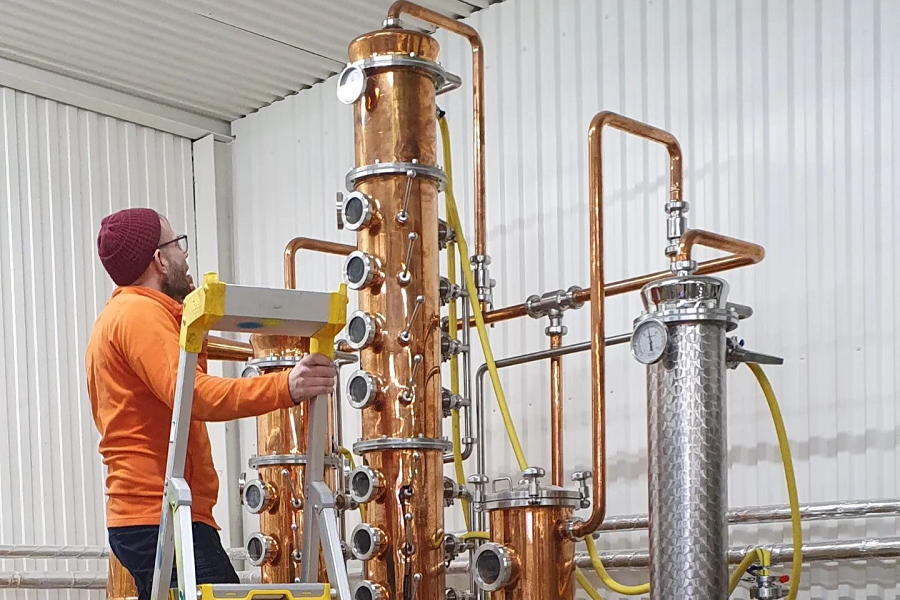
Copper: The Undisputed Material for Distillation Equipment
We frequently receive inquiries from distilleries around the world: What is the best material for distillation equipment? Do different materials affect the taste of spirits? After countless tests, comparisons, and practices with distilleries worldwide, we can give a clear answer: Copper is the unrivaled choice for distillation equipment.
A Brief History of Distillation Equipment Materials
In the early stages of the development of distillation technology, the primary materials for distillation equipment were ceramics and glass. These materials were easy to obtain and process but had obvious limitations: poor thermal conductivity, low durability, and most importantly, they could not optimize the flavor of spirits.
With the development of the distillation industry, distillers and equipment manufacturers have continuously explored and tried a variety of materials, including iron, aluminum, stainless steel, and copper. After hundreds of years of practice and verification, copper has gradually stood out as the standard material for high-quality distillation equipment. Copper distillation equipment is the first choice for most distilleries, especially in the field of flavor-focused spirits such as whiskey and brandy.
Why Copper?
As a material for distillation equipment, copper is favored not only for its excellent physical properties but also for its unique chemical properties that directly optimize the quality of spirits. Its advantages are mainly reflected in the following aspects:
- Excellent Physical Properties: Ensuring Stable and Efficient Distillation
First of all, copper has excellent ductility and malleability, which allows equipment manufacturers to process it into various shapes of distillation equipment, such as pot stills, column stills, and stills of different designs.
Secondly, copper has excellent thermal conductivity. During the distillation process, it can ensure stable heating of the mash, avoid local overheating (which would cause the wine body to burn and produce peculiar smells), and greatly improve distillation efficiency. For distilleries, higher efficiency means lower production costs and higher output, which is one of the important reasons why manufacturers favor copper equipment.
In addition, copper has good corrosion resistance. During the distillation process, the mash and alcohol vapor are somewhat corrosive, and copper can resist the erosion of these substances for a long time, ensuring the service life of the equipment.
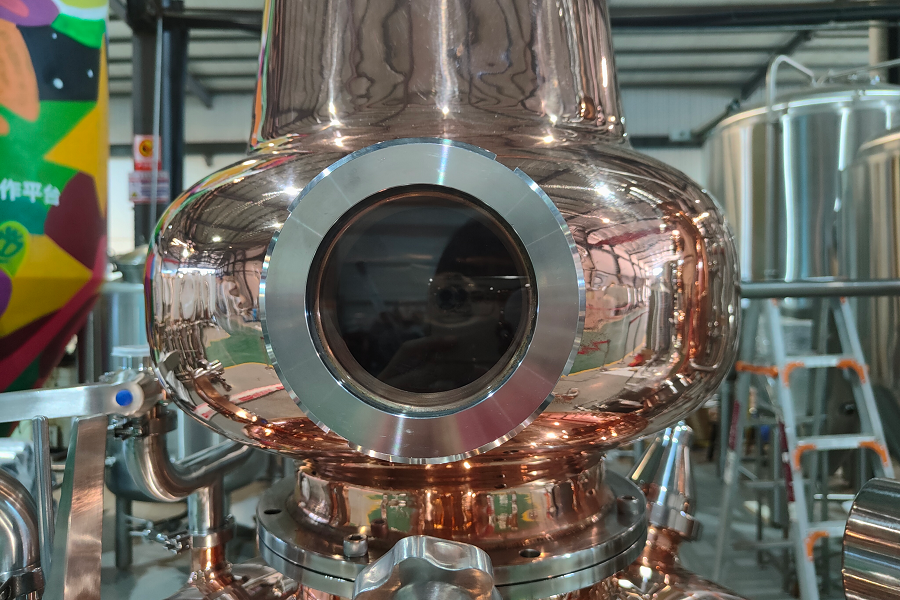
- Unique Chemical Properties: Purifying the Wine Body and Enhancing Flavor
For distillation equipment, the advantage of copper lies in its unique chemical reaction ability, which can directly improve the flavor and purity of spirits—a benefit that no other material can match so far.
As we all know, during the fermentation process of grain raw materials, yeast converts various compounds into sulfide homologs, which in turn produce unpleasant odors such as sulfur and rotten eggs. These impurities not only affect the taste of spirits but also reduce the quality of the final product. Copper can react with these sulfides during the distillation process, effectively removing these harmful impurities and making the wine body purer and cleaner.
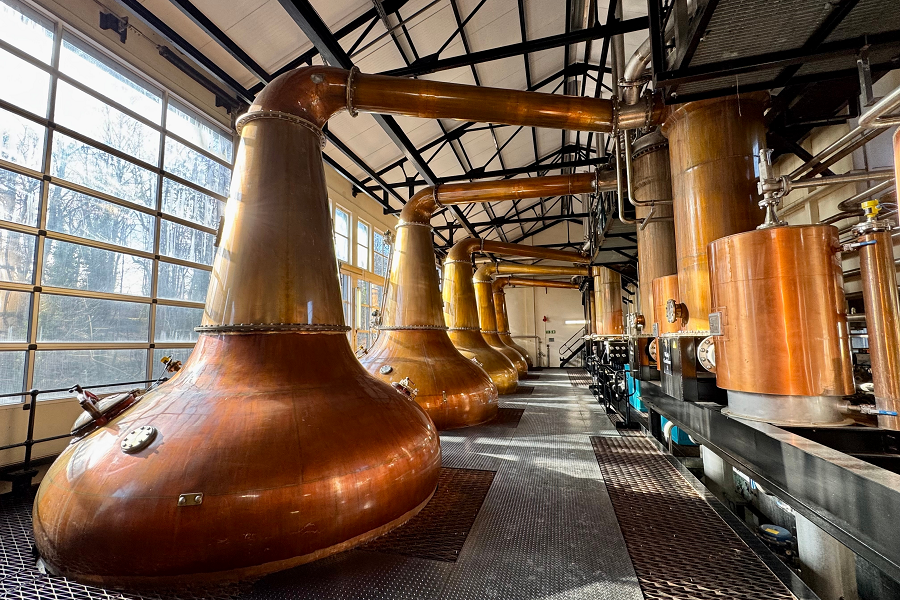
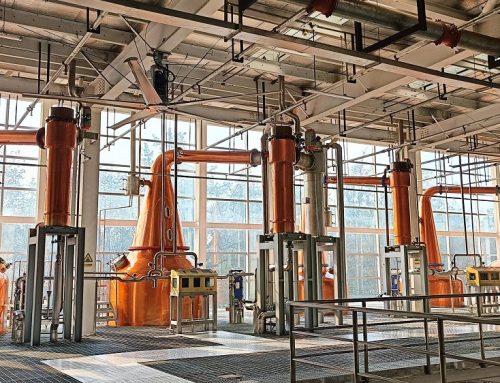
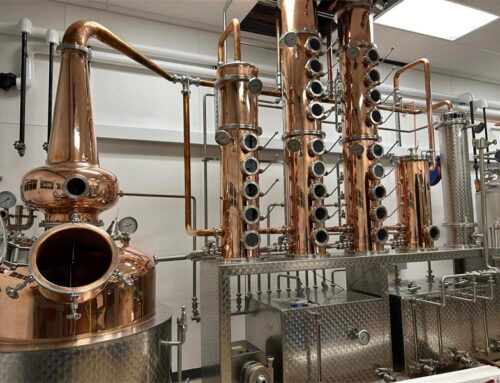
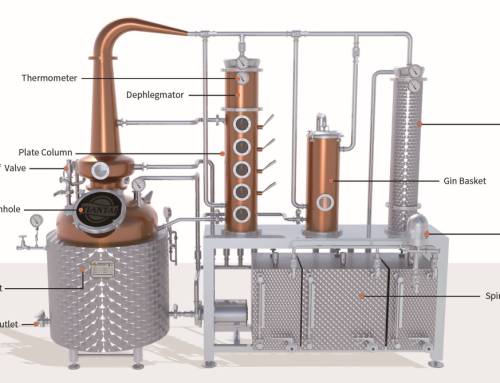
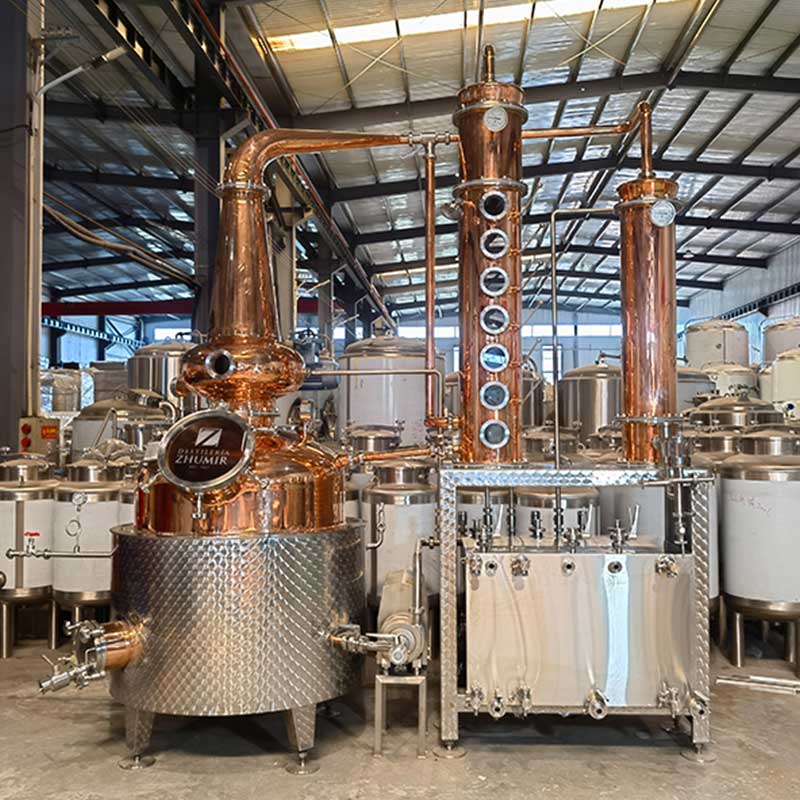
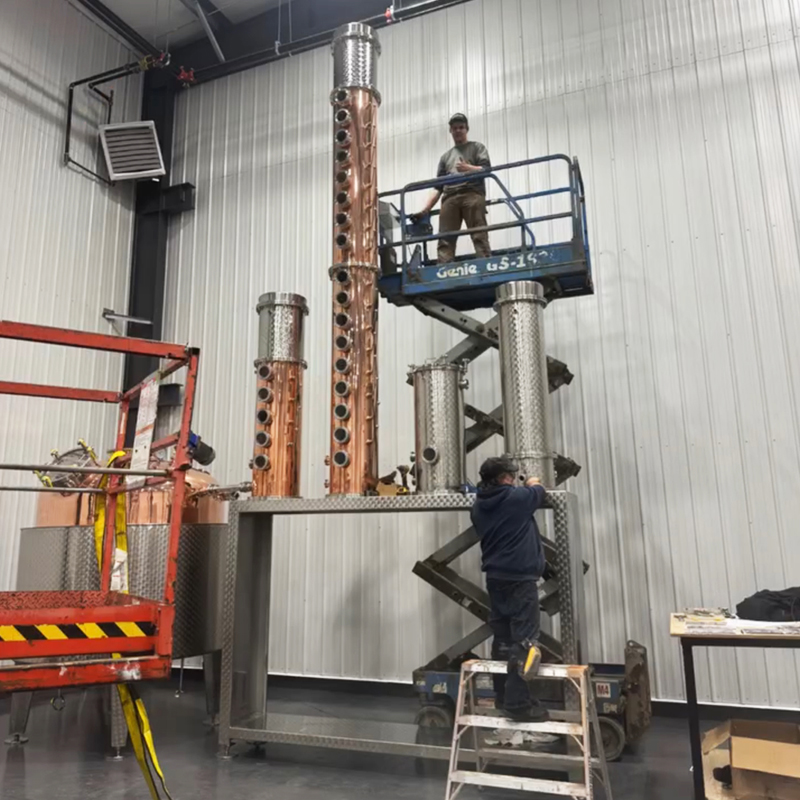
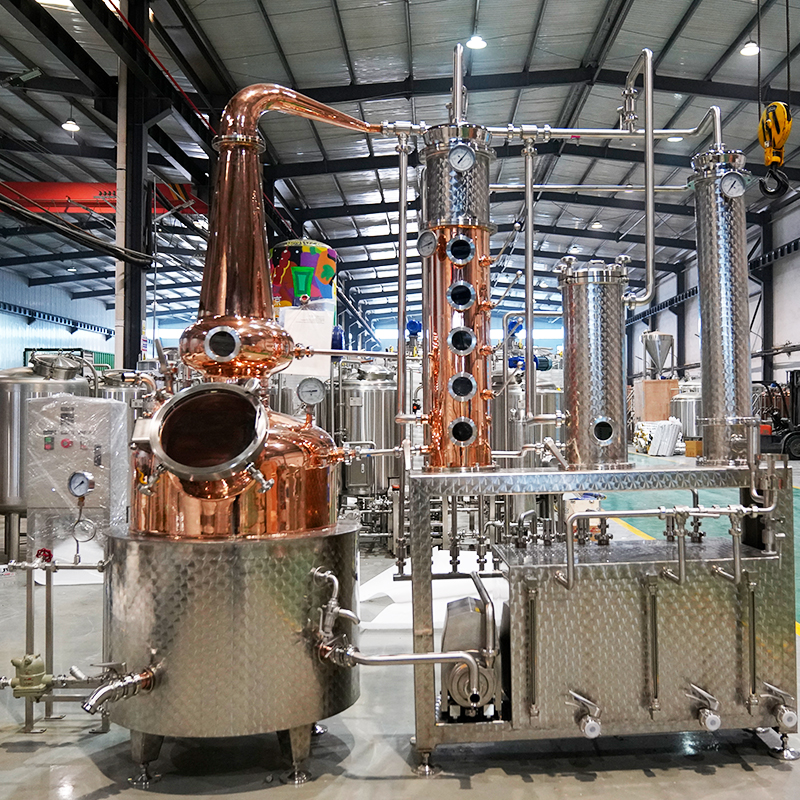
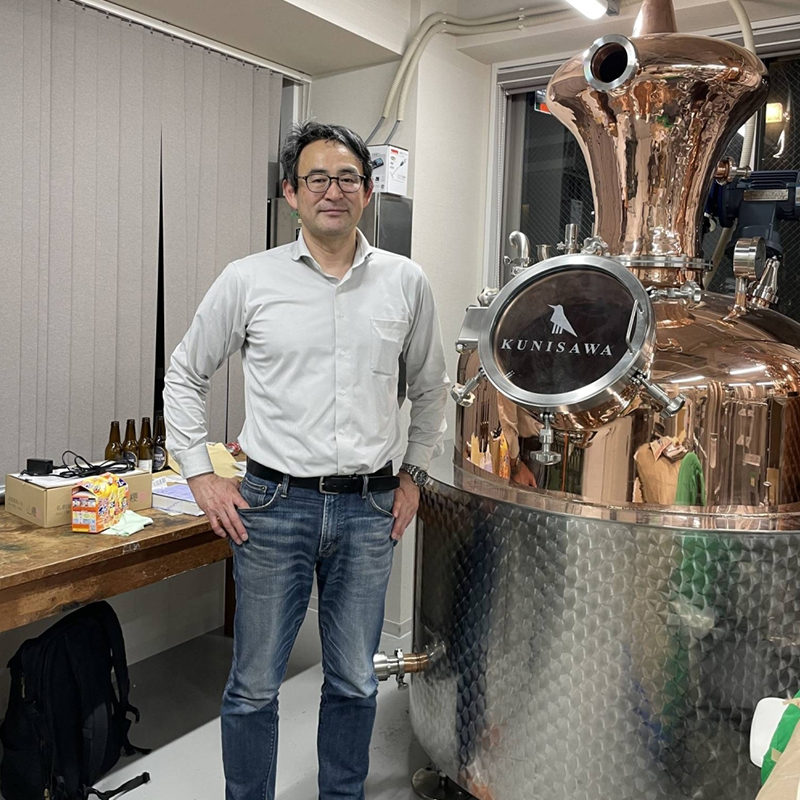
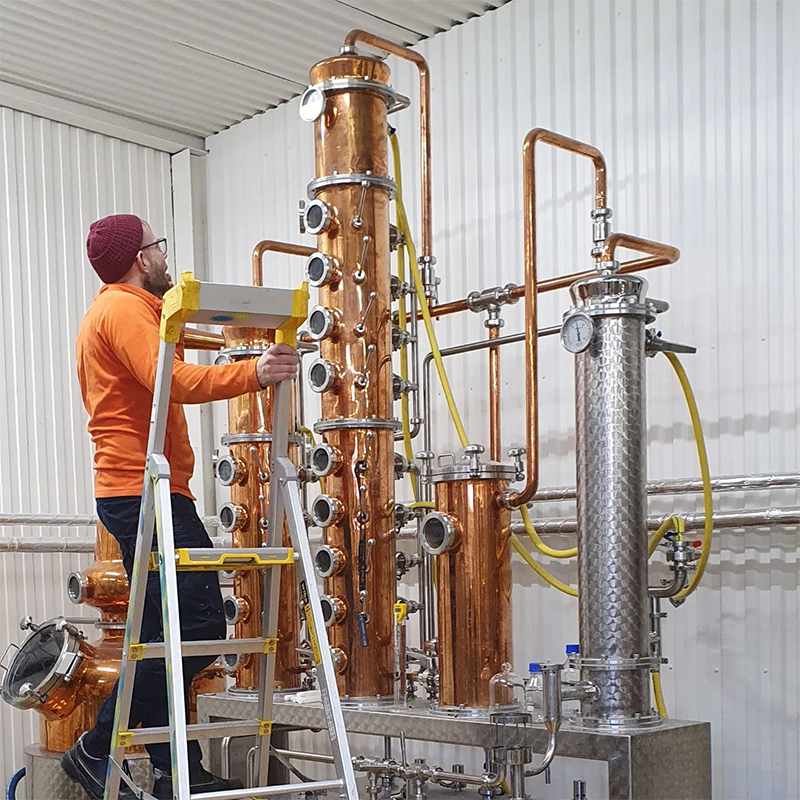
Currently, almost all distilleries around the world use copper materials throughout the entire process of mash and spirit distillation equipment. Although the still body, lyne arm, and condenser carry different liquids and gases and bear different temperatures during the distillation process, Tiantai’s professional design and material selection ensure that copper can play a stable role in every part. Adhering to the principle of “quality first”, we not only select high-quality copper materials but also optimize the design of distillation equipment based on years of production experience—whether it is the height of the swan neck or the improvement of the condenser, we are committed to maximizing the contact time between alcohol vapor and the copper wall, thereby removing impurities and optimizing the flavor of spirits.
In addition, we also focus on the upgrading of heating methods. In the early 20th century, distilleries used wood, coal, and natural gas to directly heat distillation equipment. This method required extremely high control of the fire and was prone to burning the bottom of the still due to impurity precipitation. In the mid-20th century, most distilleries in Scotland abandoned direct fire heating and adopted steam heating, which has high thermal efficiency and is easy to control, making the distillation workshop cleaner and tidier.
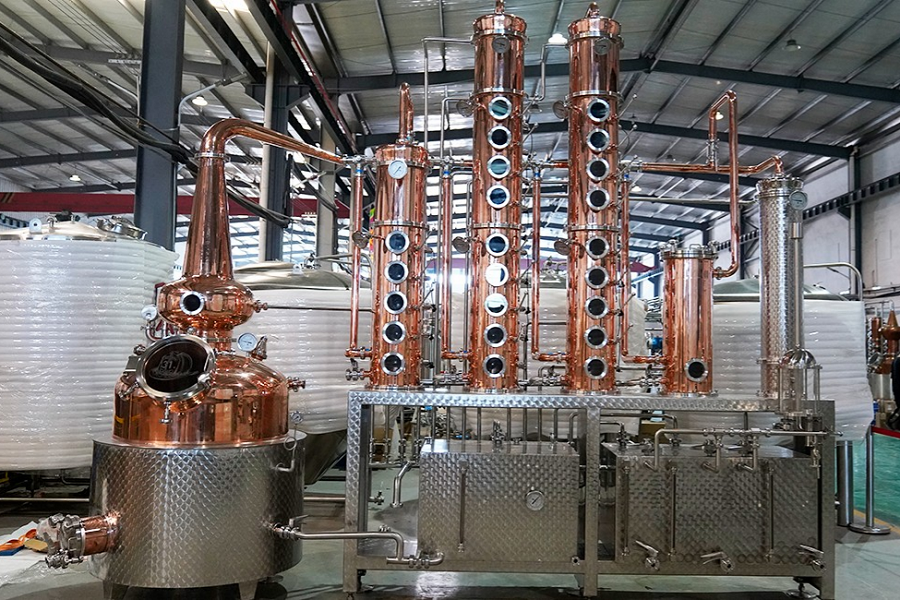
If you are looking for high-quality distillation equipment or want to learn more about the selection and customization of copper distillation equipment, please feel free to contact Tiantai—we will provide you with professional solutions according to your needs.