Functions of Distillation Trays and Their Effects on Spirit Quality
In the production of spirits such as whisky, vodka, rum, and gin, distillation is a critical process that determines alcohol concentration, the distribution of volatile compounds, and the final flavor profile. In continuous distillation systems, the structural design and operating performance of distillation trays affect not only separation efficiency and production capacity, but also energy consumption, operational stability, and the quality of the finished spirit.
So, how do distillation trays work? What are the differences between the main tray types? And how should spirits producers select the most suitable trays for their processes? In this article, Tiantai explores these questions from three perspectives: working principles, common tray types, and key selection criteria.
What Are Distillation Trays for Spirits?
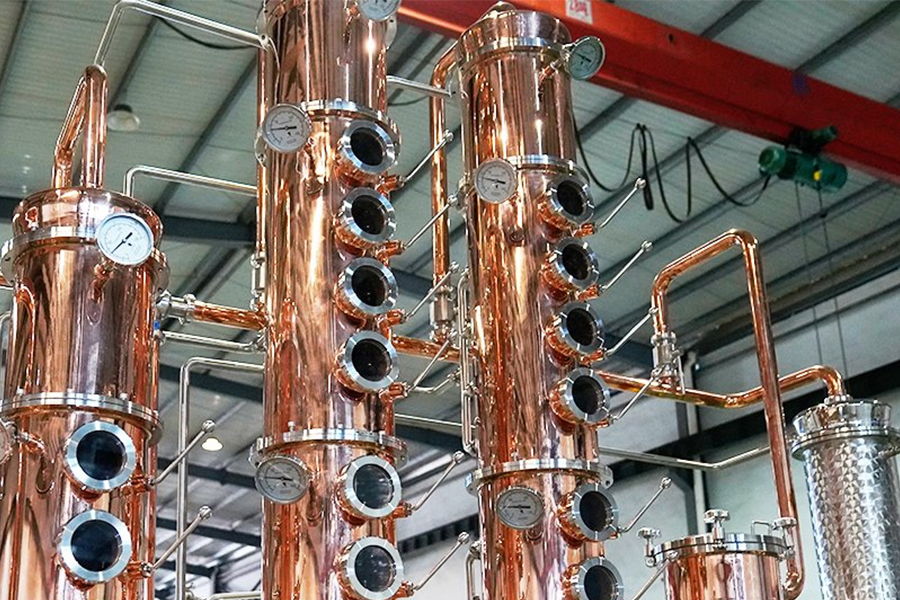
A distillation tray is an internal component installed at multiple levels along the height of a distillation column. Its primary function is to maintain a liquid layer, distribute rising vapor, and provide the conditions necessary for mass and heat transfer between the vapor and liquid phases.
In a typical continuous distillation column, vapor flows upward while liquid flows downward under gravity, passing from one tray to the next. Vapor rises through openings or dedicated vapor passages in each tray and comes into contact with the liquid retained on the tray. This contact allows alcohol, water, and other volatile compounds to exchange between the two phases.
Because different compounds have different volatility characteristics, repeated vapor–liquid contact across multiple stages gradually changes the composition of both phases at different points in the column. This process enables alcohol concentration and the separation of volatile components.
How Do Distillation Trays Affect Separation Efficiency and Spirit Quality?
Improving Vapor–Liquid Mass Transfer Efficiency
By maintaining an appropriate liquid layer and promoting vapor dispersion, distillation trays increase the contact area between the vapor and liquid phases, allowing more effective component exchange. Factors such as tray opening design, effective contact area, liquid retention characteristics, and vapor and liquid loading all influence actual mass transfer efficiency.
Under otherwise comparable conditions, increasing the number of effective separation stages generally improves component separation. However, the final result also depends on tray efficiency, reflux conditions, and the overall column design.
Controlling Alcohol Concentration and the Distribution of Volatile Compounds
Esters, higher alcohols, aldehydes, and other volatile compounds in spirits exhibit different volatility and vapor–liquid equilibrium characteristics. The number of trays, temperature profile inside the column, reflux ratio, and operating load all work together to determine how these compounds are distributed during distillation.
Proper tray configuration and operating conditions help producers achieve the desired alcohol concentration while managing the distribution of flavor-active compounds, supporting the target sensory characteristics of the finished spirit.
Influencing Throughput and Operational Stability
The vapor passages, effective open area, and liquid flow arrangement of a tray determine its operating performance under different load conditions.
At excessively low vapor loads, some trays may experience weeping, reducing effective mass transfer efficiency. At excessively high loads, entrainment, flooding, or a significant increase in pressure drop may occur. Proper tray design helps widen the effective operating range and improve production stability.
Affecting Energy Consumption and Maintenance Costs
Tray pressure drop influences the pressure profile and operating conditions of a distillation system. A well-designed tray system can meet separation requirements while balancing steam consumption, equipment investment, cleaning requirements, and long-term operating costs.
Common Types of Distillation Trays for Spirits
Bubble Cap Trays
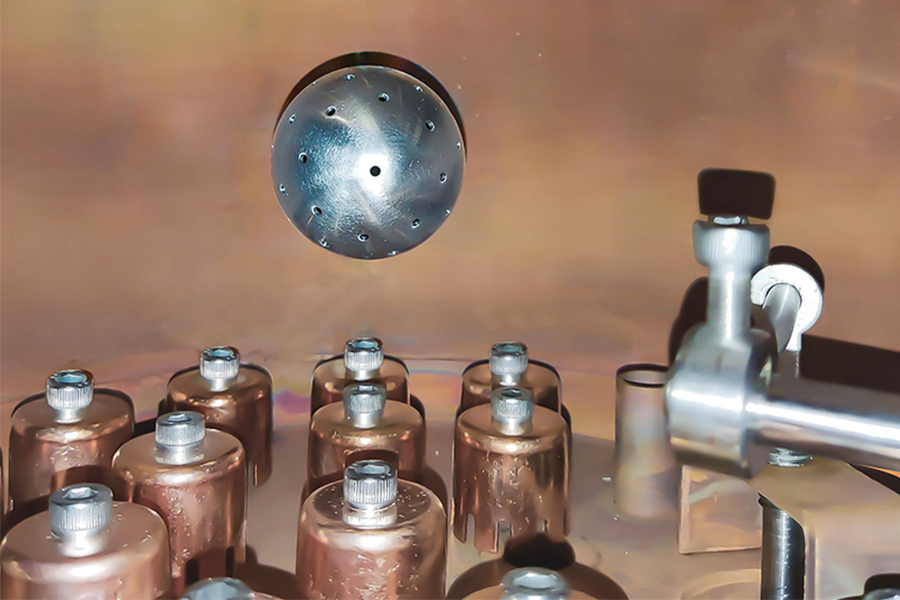
Bubble cap trays primarily consist of a tray deck, risers, and bubble caps. Vapor passes through the risers into the bubble caps and then flows through openings around the caps into the liquid layer, creating vapor–liquid contact.
Key characteristics:
· Generally offer good performance at low operating loads and, when properly designed, can reduce the risk of weeping.
· Provide a relatively wide operating range, making them suitable for applications that require operational flexibility.
· Have a more complex structure, typically resulting in higher manufacturing, installation, and cleaning and maintenance costs.
· Bubble cap trays are suitable for applications where stable operation at low loads and a high degree of operating flexibility are important. Their actual performance, however, depends on bubble cap design, tray layout, and operating conditions.
Sieve Trays
Sieve trays consist of a tray deck with evenly distributed perforations. Vapor passes directly through these holes into the liquid layer, creating vapor–liquid contact and enabling mass transfer.
Key characteristics:
· Simple structure and relatively low manufacturing costs.
· Lower structural complexity, making installation and maintenance relatively straightforward.
· More sensitive to operating load: weeping may occur at low loads, while entrainment or flooding may occur at high loads.
· Sieve trays are suitable for continuous distillation systems with relatively stable operating loads, where cost efficiency is a priority and operating conditions can be maintained within an appropriate range.
Valve Trays
Valve trays feature movable or fixed valve elements installed over openings in the tray deck. Some valve elements can adjust their opening in response to changes in vapor load, helping improve vapor distribution and vapor–liquid contact.
Key characteristics:
· Generally offer good operating flexibility and can accommodate a certain range of vapor load variations.
· Under properly designed and controlled operating conditions, can balance mass transfer efficiency and processing capacity.
· Have structural and maintenance requirements that fall between those of different tray types, depending on valve design and the operating environment.
· Valve trays are suitable for continuous distillation systems where operating loads fluctuate and both separation performance and production capacity must be maintained.
Overall, each of these three tray types has its own advantages. There is no universally optimal solution for every spirits production application. Actual selection should be based on design loads, separation requirements, pressure drop limitations, and total life-cycle costs.
How Does the Number of Trays Affect Distillation Performance
The number of trays is one of the key factors influencing the separation capacity of a distillation column. Under otherwise comparable conditions, increasing the number of effective separation stages generally improves alcohol concentration and component separation. However, more trays do not necessarily mean better overall performance.
The number and configuration of trays should be determined by considering the following factors:
Target alcohol concentration: Determines the required degree of separation and the number of theoretical stages needed.
Feed composition and flavor objectives: Influence the separation requirements for volatile compounds.
Reflux ratio and tray efficiency: Together determine actual separation performance and energy consumption.
Vapor and liquid loads: Determine the effective operating range and processing capacity of the trays.
Equipment height and pressure drop: Affect capital investment, system operating conditions, and maintenance costs.
How to Select the Right Distillation Trays for Spirits Production
When selecting distillation trays, producers should carefully evaluate the following aspects:
Define the process objectives: Determine the design requirements based on the target alcohol concentration, desired flavor profile, and separation objectives.
Evaluate the operating range: Select trays with appropriate operating flexibility based on feed rate, vapor load, and expected production fluctuations.
Verify column hydraulics: Assess weeping, entrainment, flooding, pressure drop, and liquid distribution.
Consider materials and maintenance requirements: Select suitable materials and structural designs based on the liquid-contact environment, cleaning methods, and hygiene requirements.
Evaluate long-term operating costs: Compare equipment investment, energy consumption, maintenance frequency, and service life rather than focusing solely on the initial purchase price.
For spirits producers, the ideal tray solution should strike a balance between separation efficiency, flavor requirements, processing capacity, operational stability, and operating costs.
Distillation trays are essential mass transfer components in tray-type distillation systems. Their structural design, number, and operating conditions collectively influence alcohol concentration, the distribution of volatile compounds, and overall equipment performance.
Tiantai provides distillation equipment and integrated system solutions tailored to spirits production processes, capacity requirements, and product quality objectives. We work with customers to optimize equipment configurations and improve operational efficiency.
If you are planning a new distillery production line or looking to upgrade an existing distillation system, contact Tiantai to discuss a distillation solution tailored to your production needs.