How should a distillery choose its distillation equipment?
Modern spirits distillation has entered an era of refined engineering-level process control. Spirits projects vary widely in requirements for flavour retention, distillate purity, batch-to-batch consistency and production flexibility. Equipment selection is far more than simply specifying tank volumes; it demands custom-engineered design based on your product positioning, production capacity roadmap and future expansion plans. As an experienced distillation equipment manufacturer, Tiantai shares key considerations drawn from numerous completed distillery projects.
Copper: More Than Material — A Process–Critical Component
Within spirits distillation systems, copper fulfils structural, heat-transfer and flavour-modulating roles, rather than acting merely as construction material.
Flavour catalysis and sulphur removal: Copper surfaces chemically react with sulphurous compounds within vapour streams, adsorbing and decomposing undesirable sulphurous off-notes. This delivers smoother, fuller, rounder distillate profiles — a functional benefit that stainless-steel hardware cannot replicate.
Thermal-transfer and mass-transfer performance: Oxygen-free copper exhibits excellent thermal conductivity. It enables even temperature distribution inside the still and stabilises vapour-liquid mass-transfer for effective separation of volatile fractions.
Important note: Copper does not chemically react with ethanol. Its process value originates primarily from catalytic adsorption of sulphur-bearing impurities.
Practical Engineering Design Notes
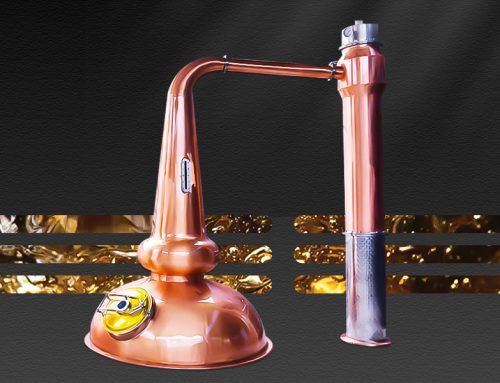
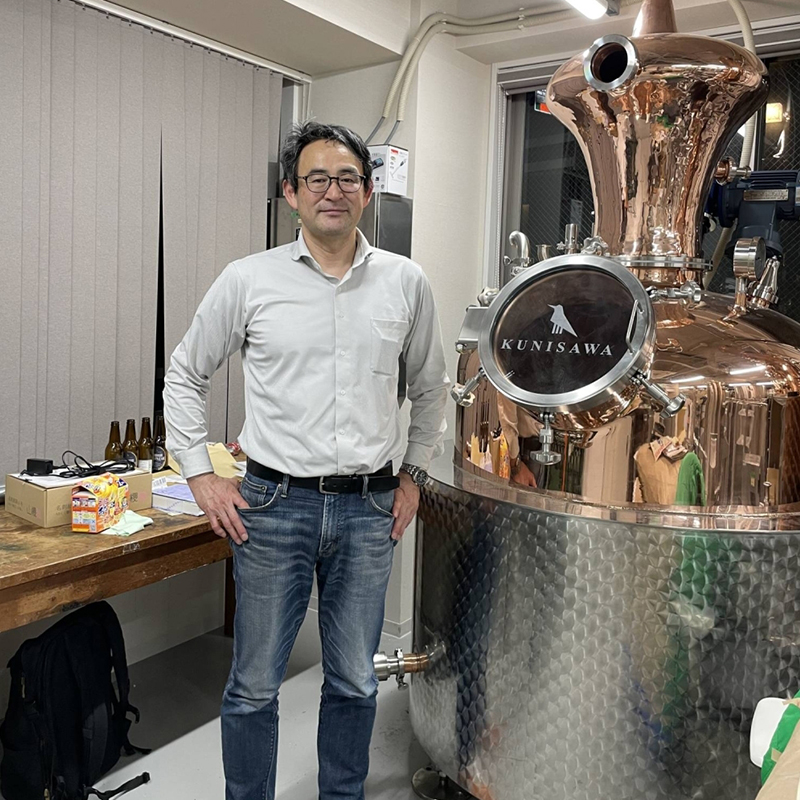
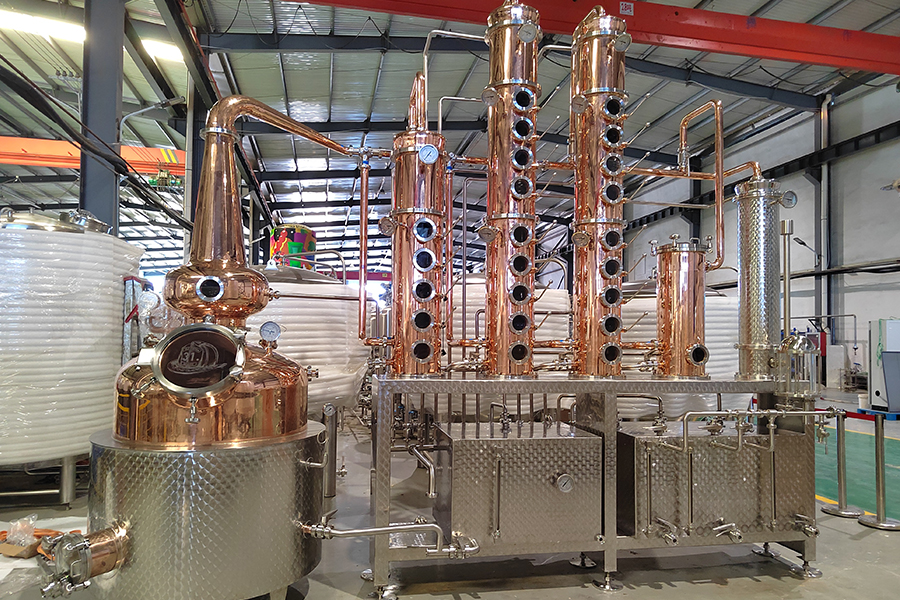
Pot still systems: Sulphur removal and flavour shaping are achieved via the boiling vessel, swan neck, lyne arm and full copper condensing circuit.
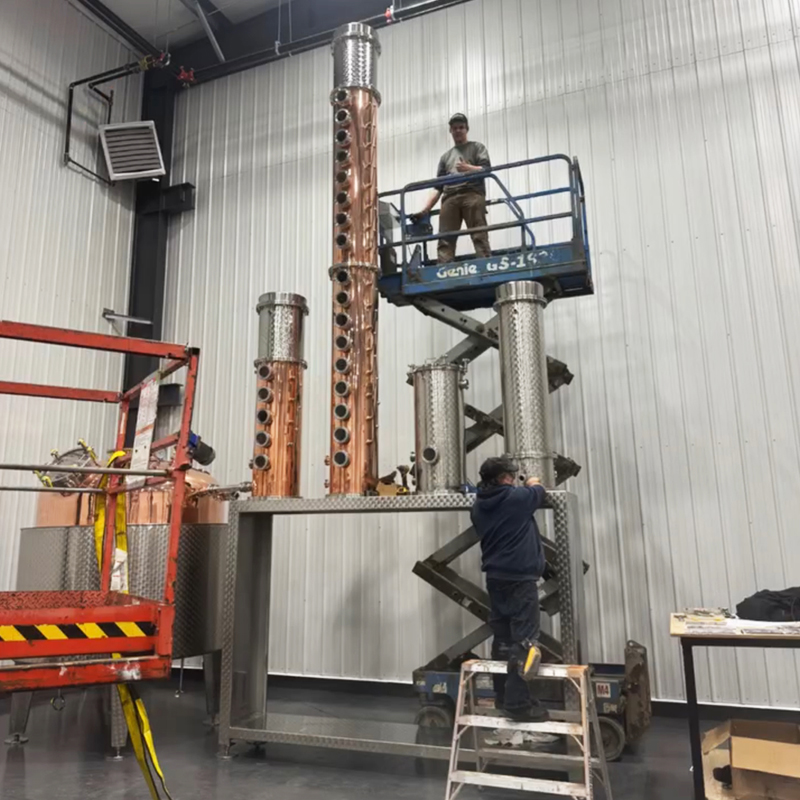
Column still systems: Sulphur purification is realised through internally fitted copper trays and copper packing elements.
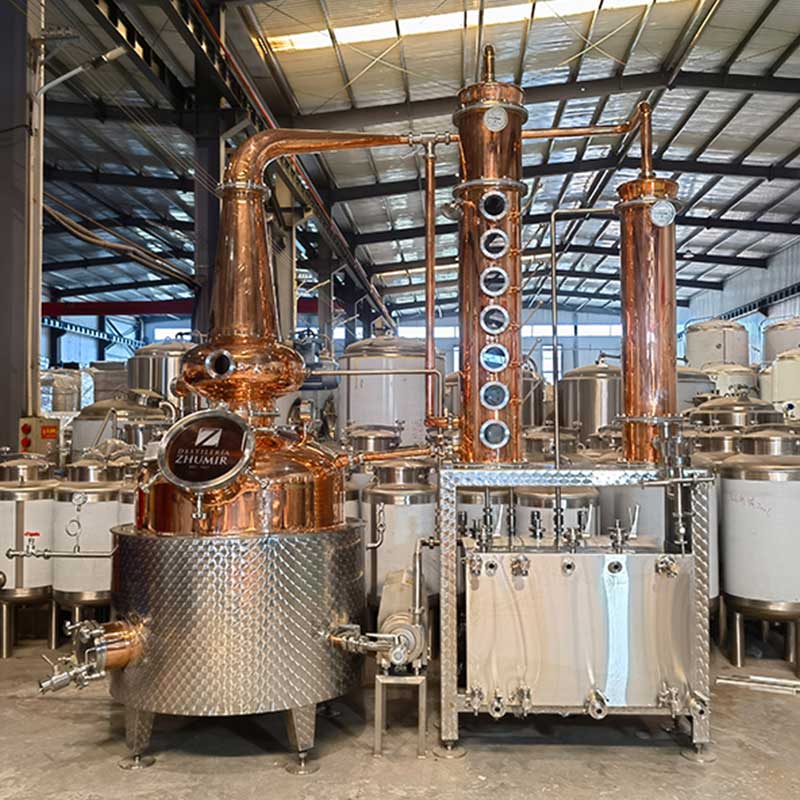
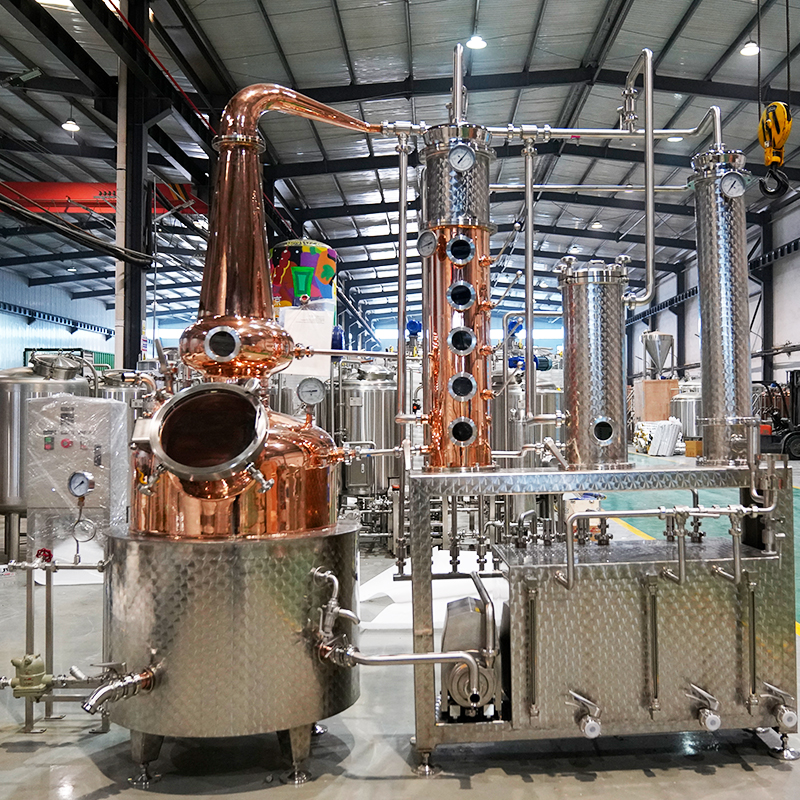
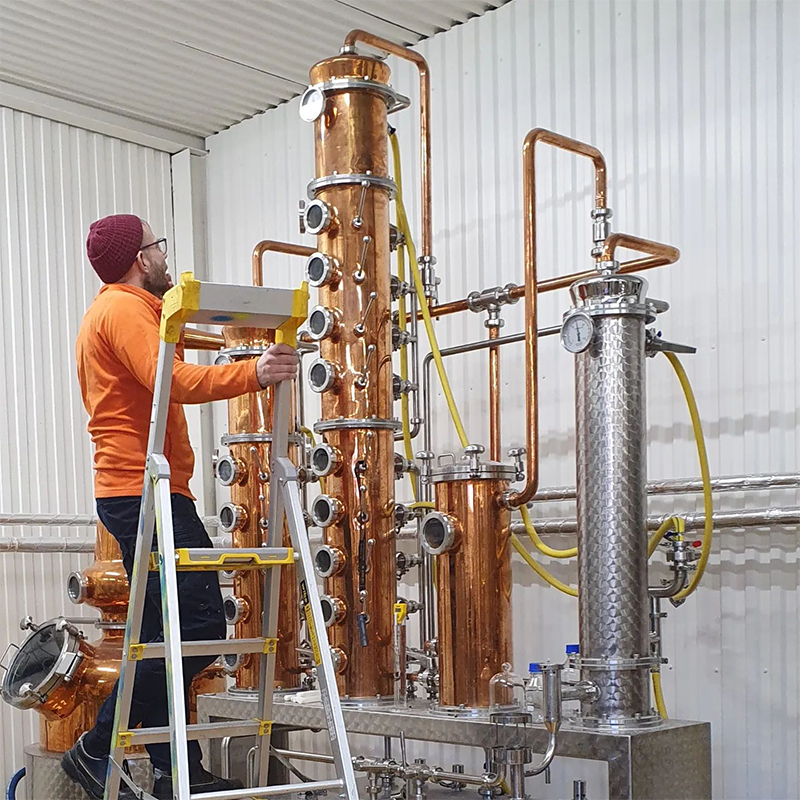
Pot-column hybrid still systems: Copper components can be flexibly configured to precisely tune the balance between flavour expression and distillate purity.
Many projects only focus on copper for the boiling vessel, yet neglect copper specification for necks, internal column internals and condensing assemblies. This oversight frequently results in excessive sulphur notes and failure to hit target flavour specifications.
Complete Process Auxiliary Units
A production-grade distillery setup extends well beyond the distillation still itself. It comprises integrated upstream-to-downstream process units covering fermented-wash handling all the way to finished-spirit output.
| Functional Unit | Equipment/System | Description |
| Pre-treatment | Wash pre-rectification column system | Performs initial stripping and alcohol concentration from low-strength fermented wash; removes most high-boiling residues |
| Core Distillation | Pot still/Rectification column/Pot-column hybrid still system | Carries out fraction separation, alcohol enrichment and impurity elimination; establishes final alcohol strength and base flavour profile |
| Post-Treatment | Filtration equipment | Removes trace suspended particles post-distillation to improve clarity; an optional downstream unit, not mandatory distillation hardware |
| Intermediate Storage & Buffering | Crude-spirit tanks, fraction receiver tanks, fermented-wash storage tanks | Buffers incoming wash; segregated storage for heads, hearts and tails for blending and re-distillation |
| Material Transfer | Hygienic centrifugal pumps, process piping and valve assemblies | Enables closed-loop stable transfer of wash, crude distillate and finished fractions across process stages while minimising oxygen ingress |
| Finished-Product Bottling | Bottling, labelling and packaging lines | Bottling and warehousing of finished spirits; downstream production-line accessory |
Equipment Configuration Guidance by Spirit Category
Three mainstream still architectures (pot still, column still, hybrid still) match different production strategies according to product positioning:
Flavour-forward spirits (Whisky/Bourbon/Rum)
Prioritise pot-still systems adopting double-pot distillation (stripping run followed by spirit run). All vapour-contact critical components shall utilise oxygen-free copper. If future capacity expansion or parallel neutral-base-spirit production is anticipated, select a pot-column hybrid configuration with adjustable rectification capacity.
Balanced-profile spirits combining flavour and neutral base (Gin)
Neutral base spirit can be generated by rectification columns. A gin basket fitted to pot-still hardware performs vapour-infused botanical extraction; column-type setups may also integrate botanical-injection assemblies. Pot-column hybrid stills are highly suitable for gin distilleries, allowing base-spirit production and botanical distillation within one unified system.
High-purity neutral spirits (Vodka/Neutral grain spirits)
Specify rectification columns with substantial tray counts operating under continuous distillation. Multi-stage reflux efficiently strips fusel oils and volatile off-flavours to yield high-purity neutral alcohol.
Multi-product flexible production (Common requirement for mid-to-large distilleries)
If your distillery intends to produce both flavour-rich spirits and high-purity base spirits, avoid standalone pot-only or column-only setups. The pot-column hybrid still represents the preferred solution. Operators can shift processing windows between flavour-focused and high-purity distillation by adjusting reflux parameters, avoiding redundant capital investment in duplicate hardware.
Engineering Considerations & Compliance for Project Implementation
Mid-to-large distilleries represent systematic engineering projects. Solely evaluating individual-unit parameters creates hidden operational risks. Key assessment items during project initiation are listed below:
Distillation efficiency and batch-to-batch repeatability
Stable steam supply, adjustable reflux-ratio range, plus multi-point closed-loop temperature-and-pressure control directly determine distillate yield and cross-batch flavour consistency. Mid-to-large-scale installations should avoid fully manual operation. Automated control systems shall store multiple product recipes for one-touch recall.
Sanitary design and CIP (Clean-in-Place) capability
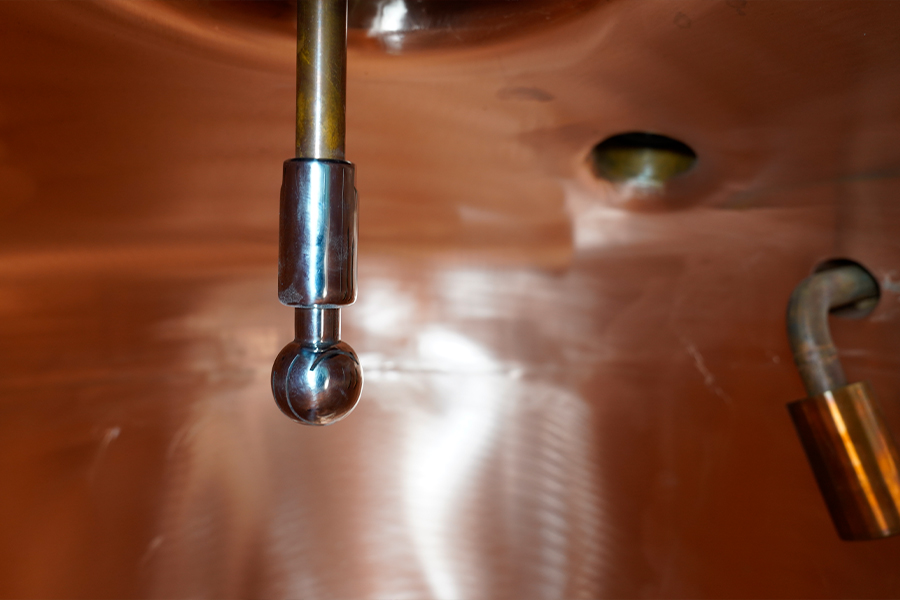
All copper and stainless-steel product-contact surfaces must satisfy food-grade hygiene standards. Complete CIP circuits, drain-and-vent geometry shall be engineered into equipment during manufacturing to eliminate dead-legs and mitigate cross-contamination risk, rather than retrofitted on-site post-delivery.
Pressure-vessel specifications and export-market compliance
Distillation kettles, rectification columns and buffer tanks mostly qualify as pressure-vessel assemblies. Equipment design at Tiantai incorporates relevant pressure-vessel codes from the outset. Hardware can be engineered to satisfy certification requirements of target export territories to meet local regulatory obligations.
Expandable modular design
Design-phase engineering shall reserve interfaces for future capacity upgrades. Process performance can later be upgraded by adding or removing trays, packing elements and gin-basket assemblies without full-unit replacement.
Factory Acceptance Testing (FAT)
All complete production-ready systems undergo full FAT prior to shipment. Weld integrity, pressure tightness, component interlock logic and control-system behaviour are fully validated to reduce commissioning risks at customer sites.
If you are translating distillation recipes into stable, large-scale distillery production, feel free to reach out to Tiantai. We deliver full-scope project support: process assessment, custom mechanical design, manufacturing, site installation & commissioning and operational training. Submit your product positioning, target batch capacity, site constraints and export-compliance requirements, and we will develop a tailor-made distillery project solution.