How to Prevent Foaming and Liquid Entrainment During Distillation?
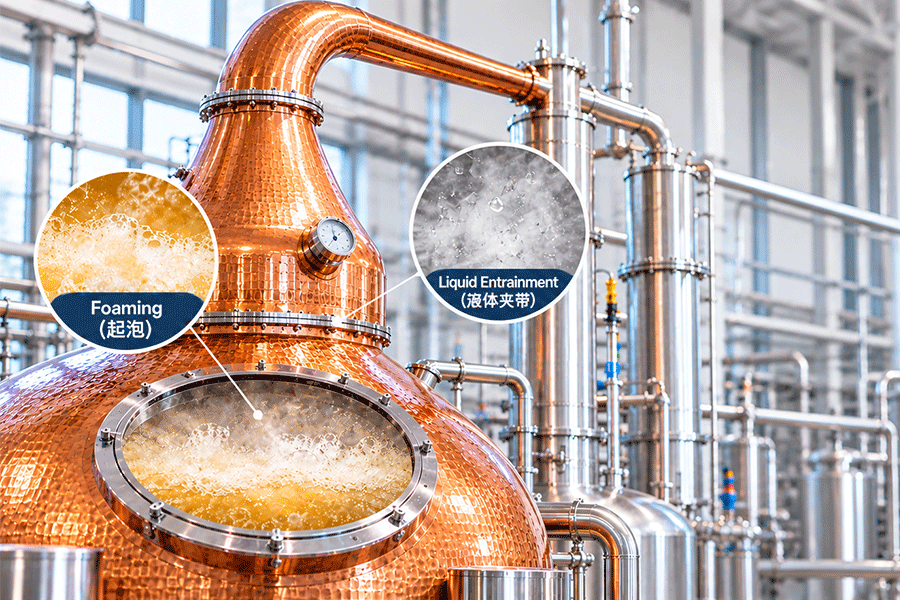
During the distillation process, foaming and liquid entrainment are common operational challenges, particularly in the distillation of whisky, brandy, and other fermented beverages. Excessive foam or liquid droplets carried along with the vapor into downstream pipes and condensers can reduce distillation efficiency, affect distillate quality, and compromise equipment stability.
So, why do foaming and liquid entrainment occur during distillation, and how can they be prevented?
Why Do Foaming and Liquid Entrainment Occur?
Foaming
Foaming occurs when excessive bubbles form during heating and boiling, creating a relatively stable layer of foam on the liquid surface. Common causes include:
· Raw Material Composition: Proteins, yeast, residual grains, and other surface-active substances in fermented liquids can · promote foam formation and increase foam stability.
· Rapid Heating: Excessive steam generation can cause vigorous boiling, increasing the risk of foam formation and overflow.
· Overfilling: Insufficient headspace inside the distillation kettle allows expanding foam to reach or enter the vapor outlet.
Liquid Entrainment
Liquid entrainment occurs when liquid droplets are carried by rising vapor into the distillation column, vapor piping, or condenser. Common causes include:
· Excessive vapor velocity, preventing liquid droplets from separating properly.
· Excessive heating power, causing the vapor load to exceed the equipment’s design capacity.
· Insufficient vapor-liquid separation space inside the distillation kettle or column.
· Improper demister selection, blockage, or insufficient separation capacity.
· Imbalanced vapor and liquid loads in continuous distillation columns, potentially leading to flooding.
It is important to understand that foaming and liquid entrainment are two different phenomena. Excessive foam increases the risk of liquid entrainment, but liquid droplets can also be carried over by high vapor velocity even when there is no obvious foaming.
How to Prevent Foaming and Liquid Entrainment During Distillation?
Ensure Proper Raw Material Pretreatment
For fermented liquids containing high levels of suspended solids, fruit pulp, or yeast sediment, filtration, settling, or centrifugal separation can be used according to process requirements. These methods help reduce unnecessary solid particles and minimize abnormal foaming and local accumulation.
However, not all distillation processes require complete clarification. For example, some whisky distillation processes retain certain solids depending on the desired product characteristics. Therefore, pretreatment methods should be selected based on raw material properties and process requirements.
Control the Heating Rate
Rapid heating can cause vigorous boiling and excessive foam formation. At the beginning of distillation, an appropriate heating rate should be used to bring the liquid gradually to boiling temperature.
During operation, heating intensity should be adjusted according to vapor generation and equipment load. Sudden increases in heating power should be avoided to maintain stable boiling conditions.
Control the Filling Level and Vapor Flow Rate
Before distillation, the filling level should be controlled according to the equipment’s design capacity, leaving sufficient headspace for foam expansion and vapor-liquid separation.
The vapor flow rate should also remain within the equipment’s designed operating range to prevent excessive vapor velocity.
For continuous distillation columns, the feed rate, steam load, and reflux ratio should be properly balanced to prevent liquid accumulation and column flooding.
Install a Suitable Demister
A demister is an important component for reducing liquid entrainment. It is typically installed at the top of a distillation column or at an appropriate vapor-liquid separation point.
Common types include:
Wire Mesh Demister: Uses a metal mesh to capture small liquid droplets in the vapor stream. The droplets combine into larger ones and fall back under gravity.
Vane Type Demister: Changes the direction of vapor flow, causing liquid droplets to collide with the vane surfaces, combine, and separate from the vapor.
Demisters can effectively reduce liquid carryover, but they cannot completely eliminate foaming. Proper selection should consider vapor flow rate, droplet size, medium characteristics, and allowable pressure drop. Adequate drainage and cleaning arrangements are also essential.
Clean and Maintain the Equipment Regularly
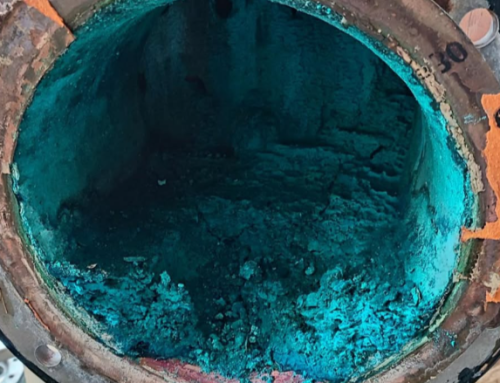
During distillation, raw material residues and deposits may accumulate on the surfaces of the distillation kettle, trays, packing, and demister, affecting vapor-liquid flow and separation performance.
Therefore, regular inspection and cleaning are necessary. Particular attention should be paid to the vapor outlet, pipelines, and demister to identify potential blockages or deposits.
Temperature, pressure, and liquid level monitoring instruments should also be checked regularly to ensure that operating parameters remain within the normal range.
If the above measures are insufficient for materials that tend to foam, a suitable antifoaming agent may be considered, provided it complies with food safety requirements and the applicable process standards.
What Should Be Considered in Distillation Equipment Design?
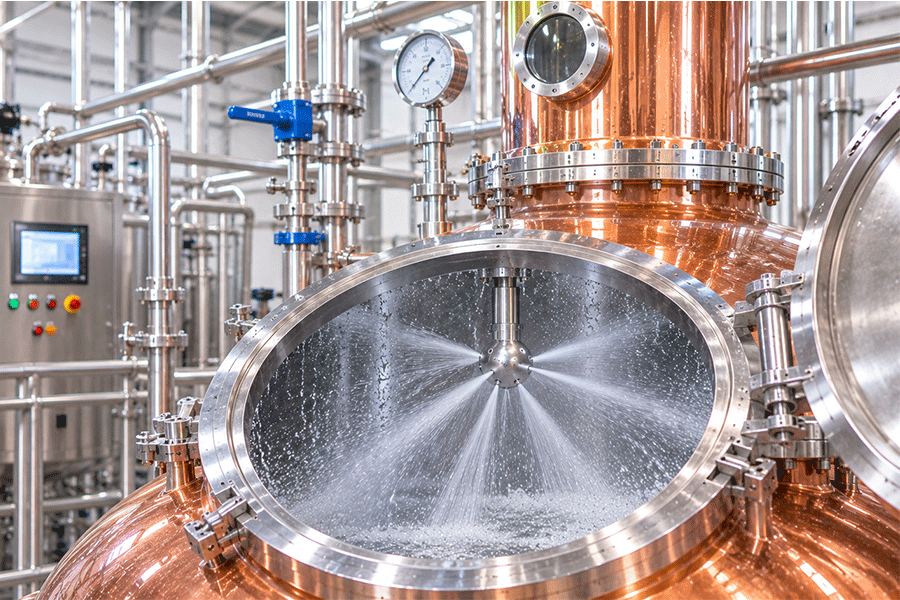
In addition to daily operation, proper equipment design plays an important role in reducing foaming and liquid entrainment. The following factors should be considered during the design stage:
· Headspace: Provide sufficient vapor-liquid separation space to reduce the risk of foam entering the vapor outlet.
· Vapor Outlet: Design the pipe diameter and outlet position properly to avoid excessively high local vapor velocity.
· Vapor-Liquid Separation Structure: Size the separation space and select suitable trays or packing according to the distillation capacity.
· Demister Installation: Select an appropriate demister based on the actual vapor load.
· Monitoring System: Equip the system with temperature, pressure, liquid level, and necessary flow monitoring instruments to identify abnormal operating conditions in time.
For continuous distillation columns, tray spacing, packing capacity, vapor-liquid distribution, and column pressure drop should also be carefully considered to prevent flooding and liquid entrainment caused by improper design loads.
Foaming and liquid entrainment during distillation are influenced not only by raw material properties and operating conditions but also by equipment structure and vapor-liquid separation capacity.
Proper equipment configuration and stable process control are essential for maintaining distillation efficiency and product quality.
Tiantai specializes in the design and manufacturing of distillation equipment and complete production lines. Based on different raw material characteristics, production capacities, and process requirements, we provide customized equipment configurations and complete distillation solutions. Our engineering approach focuses on practical production needs to help customers build stable, efficient, and reliable distillation systems.