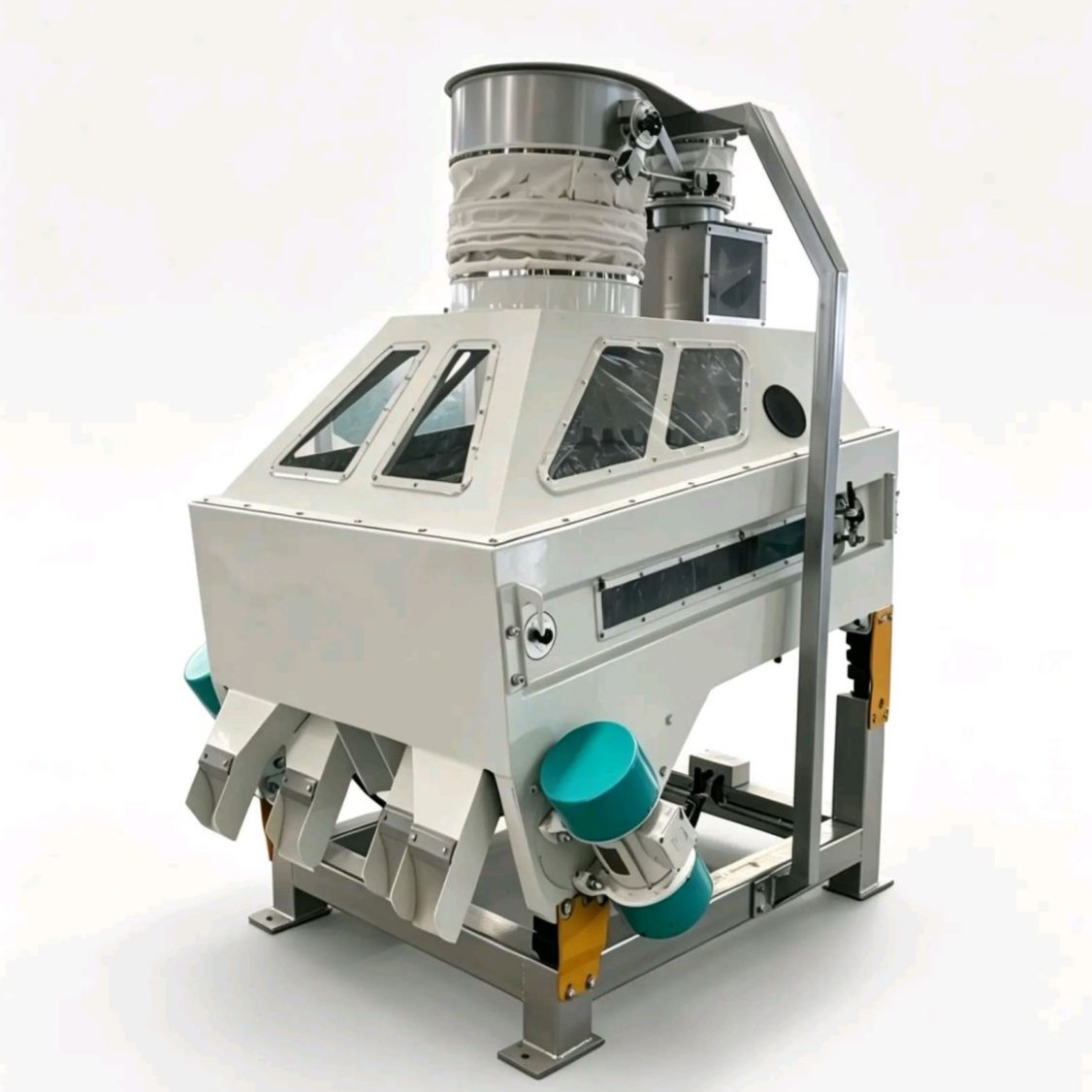
Grain Destoning for Distilleries
Grain quality has a direct impact on milling efficiency, mash consistency, and the long-term reliability of distillery equipment. Whether producing Scotch whisky, bourbon, rye whiskey, vodka, gin, or grain neutral spirits, every distillery begins with the same critical step—preparing clean grain before it enters the mill.
Barley, rye, wheat, corn, and other cereals can contain stones, gravel, glass fragments, metal particles, and compacted soil introduced during harvesting, transportation, or storage. These heavy contaminants are often similar in size to the grain itself, making them difficult to remove with conventional screens.
For this reason, modern distilleries install dedicated grain cleaning systems ahead of the milling process. A typical grain preparation line includes screening, aspiration, magnetic separation, and destoning to ensure only clean grain reaches the mill.
A typical grain preparation process is:
Grain Receiving → Screening → Aspiration → Magnetic Separation → Destoning → Milling → Mashing
Removing stones before milling helps protect roller mills and hammer mills from excessive wear, minimizes maintenance costs, and ensures consistent particle size for efficient starch conversion during mashing.
Stone removal is about density, not size
One common misconception is that stones can simply be removed with a screen.
In reality, this is rarely possible.
The most problematic contaminants are often called “companion stones”—stones that are almost identical to grain kernels in size and shape but significantly heavier. If the screen openings are small enough to retain the stones, they also prevent the grain from passing through. If the openings are large enough for the grain, the stones pass as well.
This is why industrial destoning systems rely on density separation instead of size separation.
Modern grain destoners separate heavy impurities by taking advantage of the difference in specific gravity between grain and stones, making them an essential part of grain preparation in flour mills, breweries, malt houses, and distilleries.
Two main destoning technologies
Industrial grain processing generally uses two categories of destoning technology:
- Dry destoning (gravity separation) – the preferred solution for distilleries
- Wet destoning (water separation) – mainly used in certain grain processing industries
Although both methods remove stones, only one is suitable for most distillery applications.
Dry gravity destoning: the industry standard
Dry gravity destoning is the most widely used stone removal method in modern distilleries.
Its operating principle combines three factors simultaneously:
- Controlled airflow
- A vibrating inclined deck
- The density difference between grain and heavy impurities
As grain flows across the vibrating deck, air passes upward through the perforated surface, creating a partially fluidized layer.
Because grain kernels are lighter, they move across the upper layer toward the clean grain outlet. Stones, gravel, glass fragments, and other heavy contaminants remain closer to the deck surface and are transported separately to the stone discharge outlet.
Unlike conventional screens, gravity destoners can remove stones that are almost identical in size to grain kernels but significantly heavier.
This is why gravity destoning has become standard practice throughout the grain, brewing, and distilling industries.
Types of dry gravity destoners
Suction-Type Gravity Destoner
The suction-type gravity destoner is the most common choice for medium and large distilleries.
Instead of forcing air upward, an external fan creates negative pressure that draws air evenly through the grain bed. This produces a stable fluidized layer and excellent separation performance.
Advantages
- High stone removal efficiency
- Excellent removal of heavy contaminants
- Better dust control
- Stable airflow
- Easy integration into automated grain handling systems
- Ideal for continuous distillery production
Limitations
Proper performance depends on correctly adjusting:
- Air volume
- Deck inclination
- Vibration frequency
- Feed rate
Different grains such as barley, rye, wheat, or corn may require minor operating adjustments.
Pressure-Type Gravity Destoner
Pressure destoners work using the same density separation principle but force air upward through the vibrating deck instead of drawing it downward.
Advantages
- Simple mechanical structure
- Lower initial investment
- Straightforward maintenance
Limitations
Compared with suction systems, pressure destoners generally produce more dust and require more careful airflow adjustment.
They are still suitable for smaller distilleries or projects with relatively simple grain handling requirements.
Closed-Loop Air Destoners
Some large grain processing facilities use closed-loop airflow systems.
By recycling and controlling process air, these systems improve energy efficiency, reduce dust emissions, and maintain highly stable operating conditions.
Because of their higher investment cost, they are generally used in large-capacity grain processing plants rather than typical craft distilleries.
Why wet destoning is rarely used in distilleries
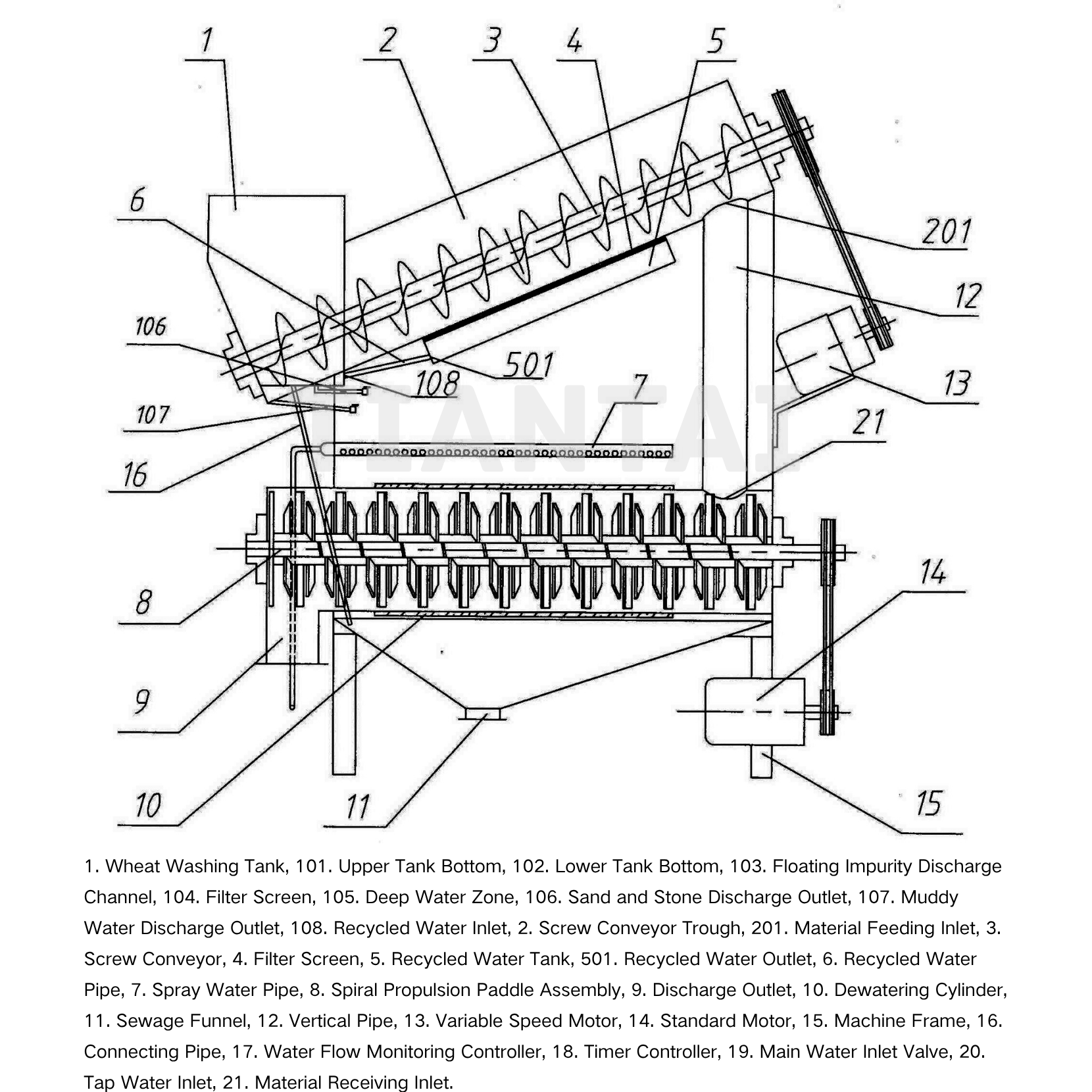
Wet destoning removes stones by separating materials in water according to their settling velocity.
Although effective in some grain processing industries, it is generally unsuitable immediately before milling in a distillery.
Introducing water before milling changes the moisture content of the grain, complicates conveying and storage, and may require additional drying or process control.
One common misunderstanding is that wet milling requires wet destoning.
In fact, these are completely different operations.
Even distilleries using wet milling systems normally clean, screen, magnetically separate, and destone the grain while it is still dry.
Water is only introduced later during the milling process to optimize particle size and starch accessibility—not during stone removal.
Does grain type change the destoning method?
Distilleries often process different raw materials depending on the spirit being produced.
These may include:
- Malted barley for Scotch whisky
- Corn for bourbon
- Rye for rye whiskey
- Wheat for vodka
- Mixed grains for grain neutral spirits
Fortunately, the grain variety has very little influence on the choice of destoning technology.
Because gravity destoners separate materials according to density rather than kernel size, the same machine can typically process different cereal grains with only minor adjustments to airflow, vibration, and feed rate.
This flexibility makes gravity destoners an ideal solution for distilleries producing multiple spirit categories on a single production line.
Choosing the right grain cleaning system
Selecting the correct destoner is only one part of designing an efficient grain preparation system.
Engineers should also evaluate:
- Production capacity
- Grain type
- Milling technology
- Automation level
- Dust collection requirements
- Future expansion plans
A properly designed grain cleaning line improves equipment reliability, protects expensive milling equipment, and ensures consistent grain quality before mashing.
Integrated grain handling solutions from Tiantai
Effective grain preparation involves much more than installing a single machine. Every stage—from grain receiving to milling—needs to work together as one coordinated system.
Tiantai designs complete grain handling solutions for craft and industrial distilleries, tailoring each project to the customer’s production capacity, raw materials, and automation requirements.
A complete system may include:
- Grain receiving and storage systems
- Bucket elevators and conveyors
- Vibrating screens
- Aspiration systems
- Magnetic separators
- Gravity destoners
- Roller mills or hammer mills
- Automated feeding systems
- Dust collection equipment
By integrating grain cleaning, conveying, destoning, and milling into one efficient process, Tiantai helps distilleries reduce equipment wear, improve operational stability, and maintain consistent grain preparation before mashing and fermentation.
Whether building a new whisky distillery or expanding an existing grain spirit facility, a properly engineered grain handling system provides long-term value through improved reliability, easier maintenance, and more efficient production.
Conclusion
Stone removal is a small but essential step in modern distillery production.
Because stones and grain kernels often share similar dimensions, effective separation depends on density rather than size. This makes dry gravity destoning the preferred solution for nearly every distillery.
Among available technologies, suction-type gravity destoners offer the best balance of cleaning efficiency, dust control, and integration with automated grain handling systems, while pressure-type units remain a practical option for smaller facilities.
By removing heavy contaminants before milling, distilleries can protect valuable equipment, reduce downtime, improve mash consistency, and establish a more reliable production process from grain receiving to spirit production.