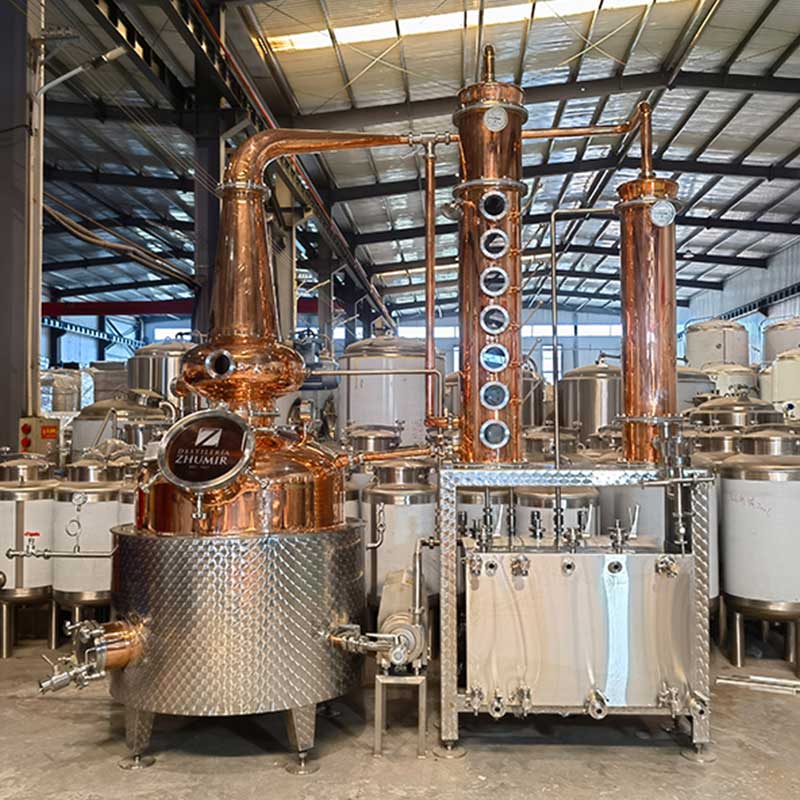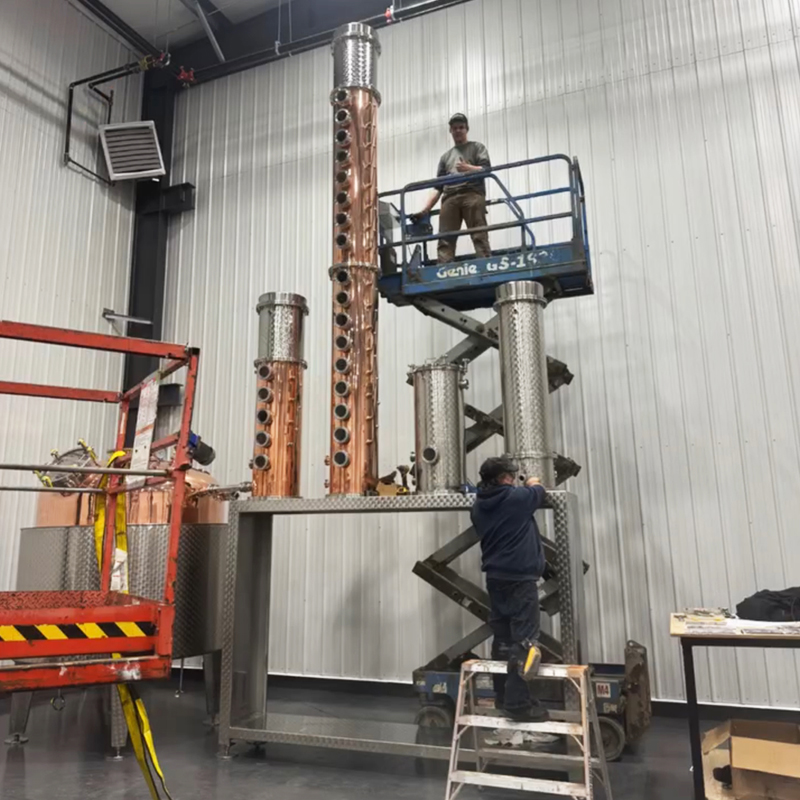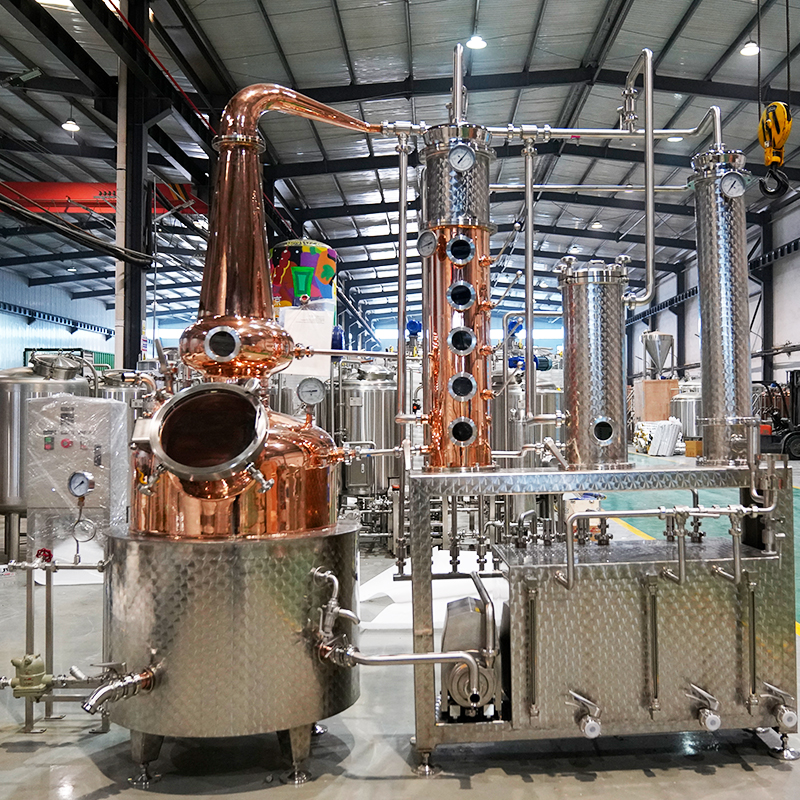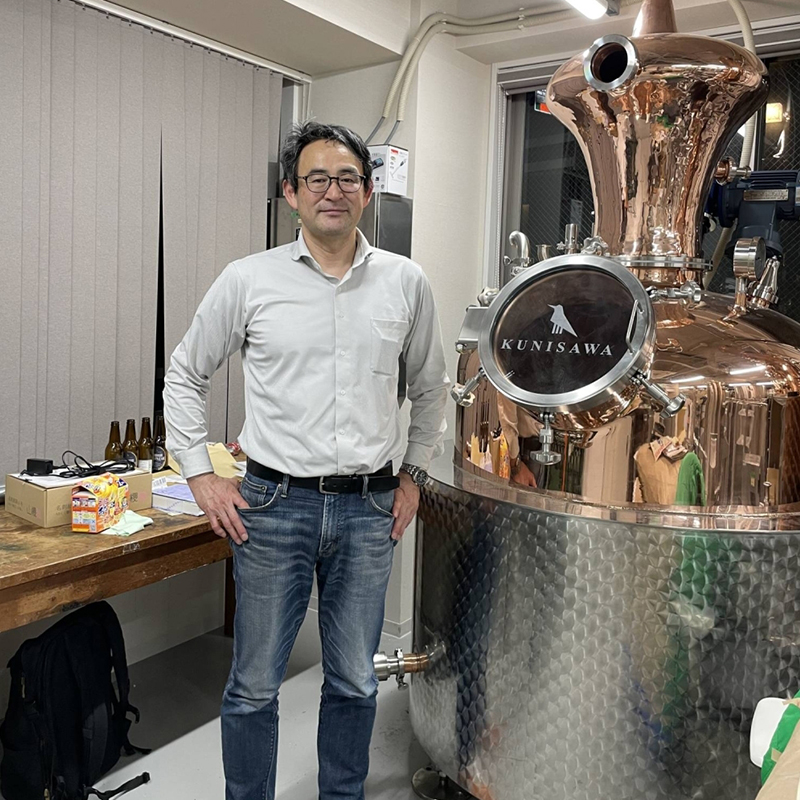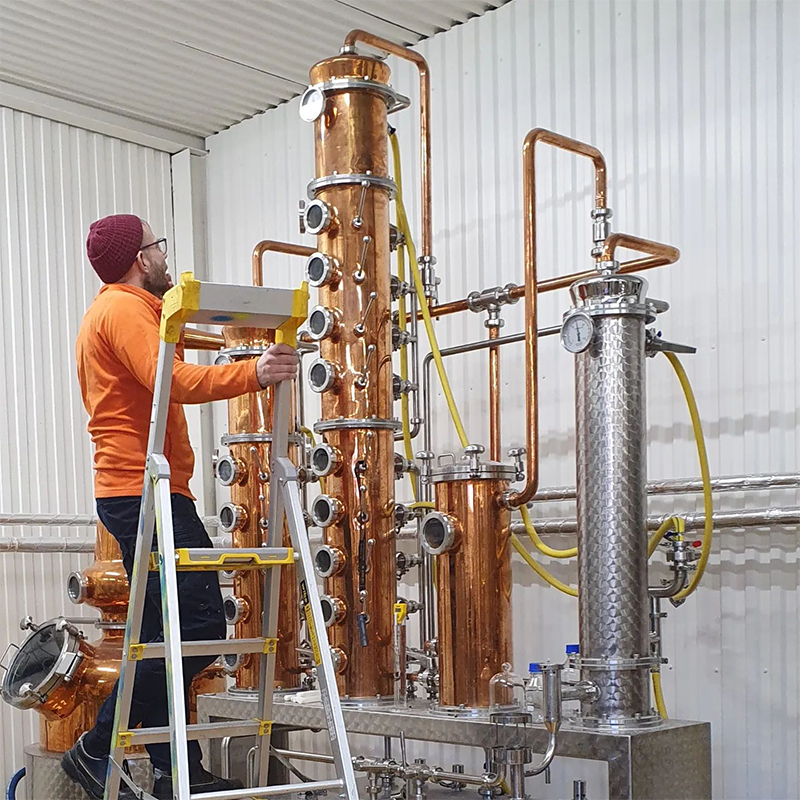

Distillery Heating System Design: Direct Fire & Steam
Heating is one of the most important considerations in distillery design. It determines how quickly a still reaches boiling temperature, how consistently heat is supplied during a distillation run, and[...]
Understand Spirits, Understand Distillation
Spirits differ from fermented beverages, where yeast converts sugar into alcohol, by incorporating an additional distillation stage. Fundamentally, distillation leverages the difference in boiling points between ethanol and water to[...]
What kind of liquor would you get if you distilled hopped beer?
Distilling beer into spirits may seem like a straightforward way to turn an existing alcoholic beverage into a new product. In practice, the result can be surprisingly different from what[...]
Impacts of Different Storage Conditions on Spirit Profile
Aged aromas in whisky, including vanillin, eugenol, whisky lactone and other compounds, are developed during maturation. Maturation constitutes an essential unit operation within distilled spirits production. For distilleries, cask maturation[...]
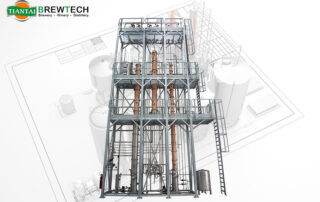
Column Stills and Their Application in Spirits Distillation
When we refer to “column distillation”, “tower distillation” or “continuous distillation”, we are describing the same distillation technology. Relying on multi-stage separation structures inside the column, it enables non-stop, high-efficiency[...]
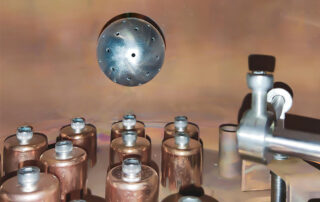
Functions of Distillation Trays and Their Effects on Spirit Quality
In the production of spirits such as whisky, vodka, rum, and gin, distillation is a critical process that determines alcohol concentration, the distribution of volatile compounds, and the final flavor[...]
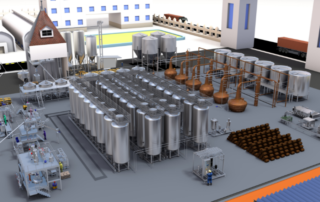
Heating Methods for Distillation Equipment
Many assume distillation is simply a three-step process: boil the fermented wash, condense vapour, and collect spirit. However, distillers know that spirit cannot be collected in one single run. Instead,[...]
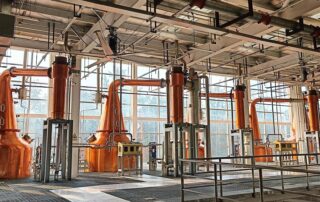
Starting a Whiskey Distillery: What to Plan Before Buying Equipment
Starting a whiskey distillery often looks simpler on paper than it is in practice. There is a still, a mash system, some fermenters, a few storage tanks, and eventually a[...]

What makes a new distillery stand out?
Starting a distillery is relatively easy to describe: choose a spirit, install a still, ferment your raw materials, distill the spirit, put it into bottles, and start selling. Building a[...]
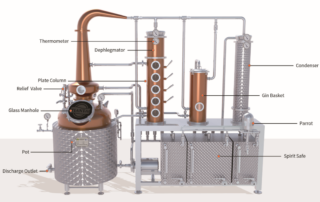
Gin for Micro Distilleries
For a new micro-distillery, choosing the right spirit to produce is not only a matter of taste. It is also a question of capital investment, production flexibility, inventory turnover, and[...]
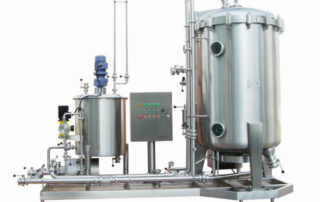
How to Choose the Right Filtration System for Spirits Production
Filtration is not a single operation in spirits production. Depending on the type of spirit, filtration may be required to remove solids before distillation, clarify the spirit after distillation, remove[...]
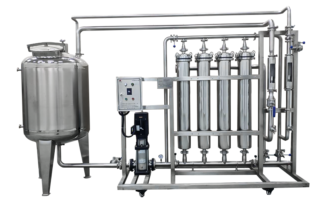
Common Filtration & Separation Equipment for Spirits Production
Distillation does most of the work in a spirits production line, but it does not necessarily leave the spirit ready for storage or bottling. Depending on the spirit and the[...]
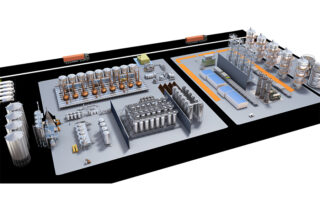
Distillery Construction: From Process Planning to Equipment Selection
Establishing a commercial distillery is not simply a matter of purchasing a still and configuring a few fermentation tanks. A complete commercial distillery is actually a systematic production system comprised[...]

How Fermentation Affects the Flavor of Distilled Spirits
Fermentation is the process in which yeast converts sugars into alcohol and carbon dioxide, and it is the first step in the production of all alcoholic beverages. Simply put, without[...]

Grain Destoning for Distilleries
Grain quality has a direct impact on milling efficiency, mash consistency, and the long-term reliability of distillery equipment. Whether producing Scotch whisky, bourbon, rye whiskey, vodka, gin, or grain neutral[...]

How Does a Pot Still Shape the Flavor of Spirits?
The flavor of a spirit does not begin to develop only after distillation is complete. From the selection of raw materials and the fermentation process to the rising, condensation, and[...]

The Pros and Cons of Chill Filtration: How Distilleries Make the Right Choice
In our previous article, What Is Chill Filtration in Whisky Production?, we explored how chill filtration works and why many distilleries use it before bottling. Understanding the process, however, is[...]

Understanding Chill Filtration in Whisky Production: Process, Purpose, and Practical Applications
Whisky enthusiasts often debate whether a bottle labeled "Non-Chill Filtered" offers a more authentic drinking experience. For distilleries, however, the discussion extends far beyond marketing. Chill filtration is a production[...]

How Much Whisky Can Your Malt Produce?
A Practical Method to Estimate Distillery Output Before Production Begins Suppose you are planning a whisky distillery that will process 100 tonnes of malt every week. Before choosing a mash[...]

Commercial Rum Production Process: From Molasses to Premium Rum with Modern Distillery Equipment
Rum is one of the world's most popular distilled spirits, enjoyed in cocktails, premium sipping expressions, and culinary applications. While traditional rum-making techniques differ across the Caribbean, Latin America, and[...]

Mastering Grape Fermentation Technology: Creating High-Quality Brandy
For distilleries and wineries planning to produce brandy, fermentation is one of the most critical stages influencing the quality of the final spirit. While distillation concentrates flavors and aromas, these[...]

The Brewing Process of Honkaku Shochu
What is Shochu? Shochu is a traditional Japanese distilled spirit, highly esteemed for its light, smooth, yet complex flavor profile. Unlike brewed sake, Shochu is produced through a distillation process;[...]

How to Choose the Right Condenser for Your Distillery
While perhaps not as visually striking as the still itself, the condenser is one of the most critical components in the distillation process. Its function is simple yet vital: to[...]

Copper: The Undisputed Material for Distillation Equipment
We frequently receive inquiries from distilleries around the world: What is the best material for distillation equipment? Do different materials affect the taste of spirits? After countless tests, comparisons, and[...]